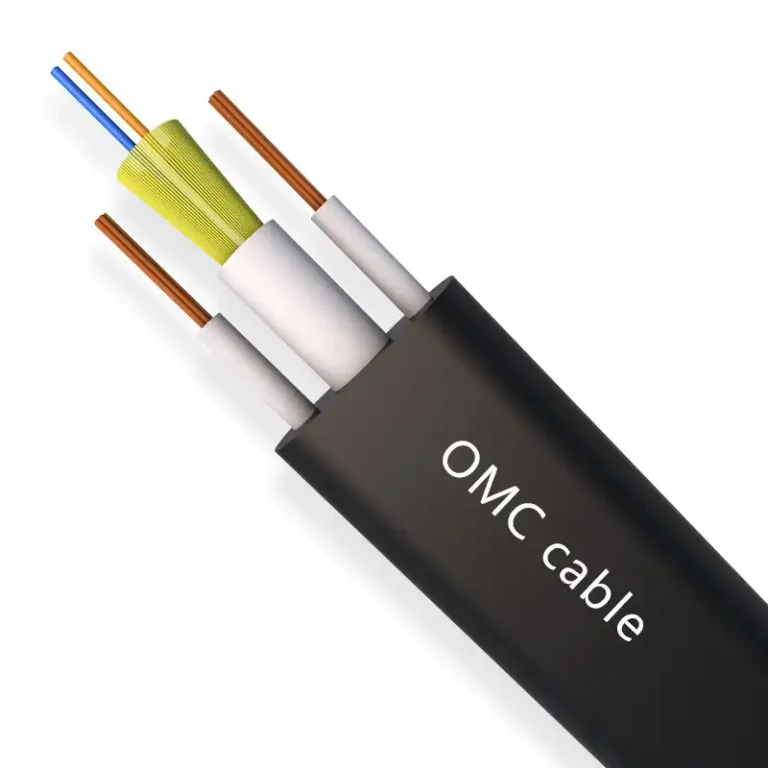








When selecting the proper fiber optic solution, one should be aware of the difference between outdoor and indoor cables. Both cables are intended for specific environments and use. The Outdoor Cable is constructed to withstand harsh weather and direct exposure, whereas indoor armored cables are emphasized on flexibility, guarding, and ease of installation. Among them, the Armored Outdoor Cable is highlighted by its protective jacket that protects the fibers from adverse conditions.

What Is an Armored Outdoor Cable?
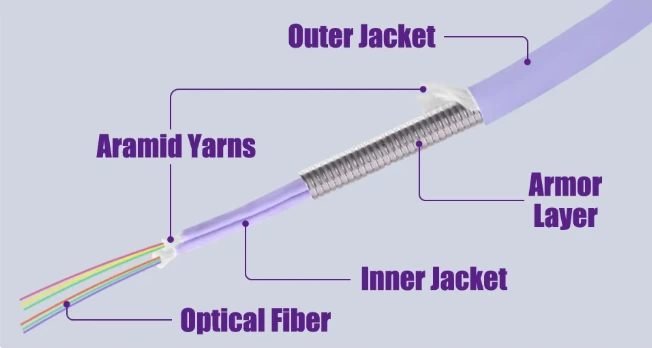
An Armored Outdoor Cable is stress-resistant to the environment. It is usually constructed of a steel or aluminum layer over the optical fibers, serving as armor. The protection coating is resistant to moisture, rodent chew, and pressure. Outdoor cables are usually fixed on building facades, ducts, or aerial paths. Their outer jacket, which is usually polyethylene, is rugged and has better UV and weathering resistance, enabling the cable to deliver its best in prolonged runs.
What is an Armored Indoor Cable?
Armored indoor cables are designed for indoor applications. They are lighter in weight and more flexible than their outdoor versions, with jacketing from flame-retardant compounds to meet requirements for safety standards in indoor installations. Metal armor on an indoor cable prevents accidental bending or crushing that occurs in walls, ceilings, or data centers. Indoor cables don’t need to withstand extreme weather conditions and therefore possess smoother and more flexible sheaths for easier and neater installation.
Major Indoor vs. Outdoor Armored Cable Differences
(1) Environmental Protection
The largest difference lies in the protection of the environment. Outdoor Cable is built to withstand rain, sun, and temperature changes. An indoor cable, on the other hand, will be less concerned with weathering and more concerned with flame resistance and smoke suppression. Indoor cables, for example, will likely be LSZH (Low Smoke Zero Halogen) rated for greater fire protection.
(2)Material and Structure
Outdoor armored cable and indoor armored cable differ in content and internal construction. The outdoor cables usually include water-blocking tape, steel tape, and a hard shell of high-density polyethylene. Indoor cables use soft substances like LSZH or PVC so that it can be easily run inside buildings.
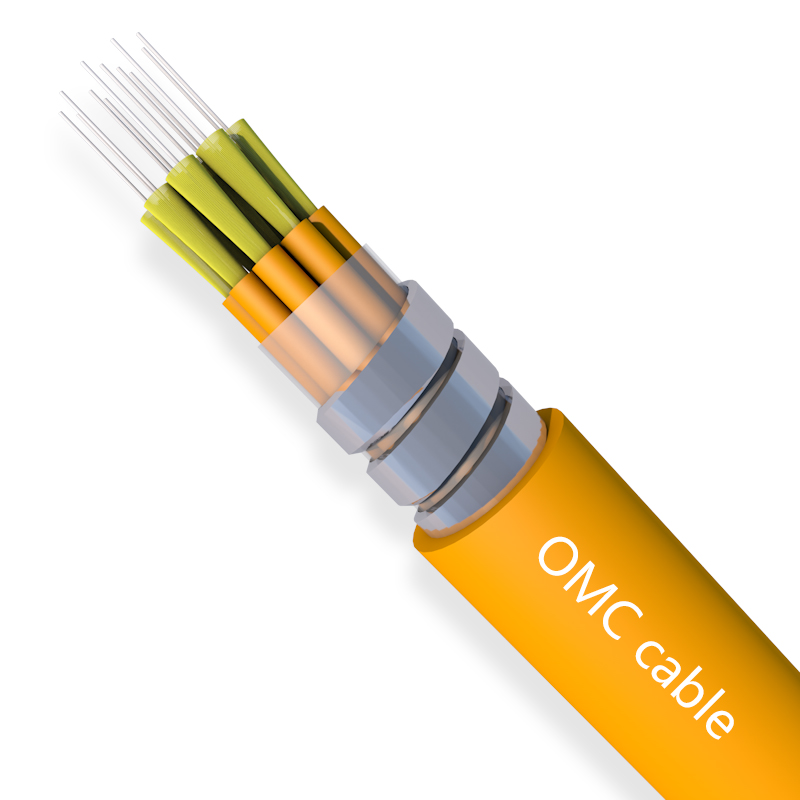
The product exemplar of armored indoor cable is OMC’s 12F Breakout Armored Cable Fanout 2.0mm. It is composed of twelve sub-units of 2.0mm armor in a flexible metal tube and an LSZH jacket. The latter two give it the strength it requires and are simple to mount on walls, conduits, or data rooms.
Major Features:
- High anti-tensility; High anti-pressure
- High bent Resistance; Anti-bite from rodent animals
- Small OD stainless steel protection tube
- Don’t worry about damage to the project
- Easy to maintain
(3)Position and Method of Installation
The armored indoor cables are mounted in safe environments such as server rooms, walls, and ceilings. The Outdoor Cable, on the other hand, is pole-mountable or burial. It can be earthed to offer lightning protection, which indoor cables do not need.
(4)Lifespan and Maintenance
Both are designed to be rugged, but the Armored Outdoor Cable is more resistant to mechanical stress, water, and sunlight. Indoor cables, being housed, concentrate more on flexibility and ease of use.
For instance, OMC 12F Stranded Loose Tube Armored Cable GYFHTS displays the durability of armored outdoor cable against harsh weather. It contains loose PBT tubes and water-blocking gel, overlaid with corrugated steel tape and terminated with a PE sheath for ultimate protection.
Key Features:
- PE outer sheath is UV light- and weather-resistant outside.
- Protection against rodents and impacts through corrugated steel armor.
- Moisture-blocking construction guards against water damage to fibers.
- Most suitable for direct burial or extended-distance installations.

Comparison of Indoor and Outdoor Armored Fiber Optic Cables
| Feature | Armored Outdoor Cable | Armored Indoor Cable |
| Environmental Protection | Designed to withstand rain, sun, UV exposure, and temperature changes | Focused on flame resistance, low smoke, and fire safety; weather resistance is not required |
| Material & Structure | Steel or aluminum armor, water-blocking layers, high-density PE jacket | Flexible metal or steel armor, LSZH or PVC jacket for easy indoor routing |
| Flexibility & Weight | Thicker and less flexible due to rugged construction | Lighter and highly flexible for installation in walls, ceilings, and server rooms |
| Installation Location | Mounted on poles, ducts, aerial paths, or direct burial; may require grounding | Installed in walls, ceilings, conduits, or data rooms; easy to mount and maintain |
| Durability & Maintenance | Highly resistant to mechanical stress, water, and sunlight | Durable in indoor environments; prioritizes flexibility and low maintenance |
When to Choose Each Type
Choosing between an indoor and outdoor cable depends on where and how it will be used.
- Use an Armored Outdoor Cable for long-distance connections, between buildings, or in open-air installations.
- Choose an indoor armored cable when cabling within offices, server rooms, or apartment buildings where flame retardance and aesthetics matter.
Some hybrid designs—known as indoor/outdoor cables—combine both properties, offering flexibility for projects where cables run through both environments.
Conclusion
Understanding indoor and outdoor armored cables helps users choose the right solution for network stability. OMC provides reliable options for both environments, ensuring long-term performance, stable transmission, and peace of mind. With years of experience in cable manufacturing, OMC delivers quality and consistency that professionals can trust.