







Mini Fibre Cable is popularly used for modern communications and data transmission because of its small size and high efficiency in transmitting signals. It offers high-bandwidth, low-latency connections in confined areas, making it appropriate for places where high-density cabling is required, such as data centers, communication systems, and special applications. This article highlights the various types of Mini Fibre Cable to help you know about their types and when they are used.
1.SingleMode Mini Fibre Cable
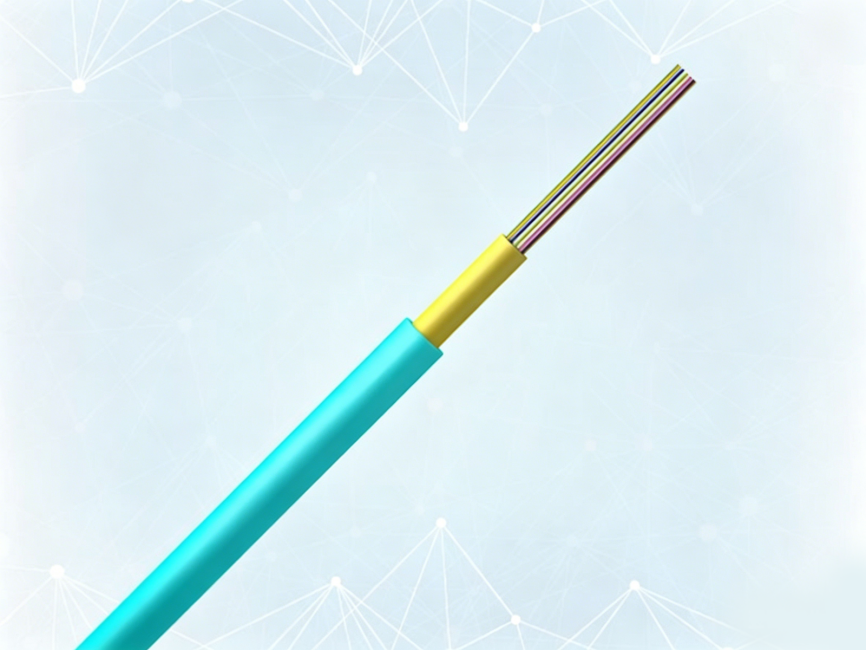
Single-mode Mini Fibre Cable consists of a small-sized core that can transmit light signals through one mode only. This reduces signal loss in transmission, which makes it possible for long-distance transmissions. The transmission offers high bandwidth and less attenuation.
Application Areas:
Telecom systems: Since single-mode cables are appropriate for long-distance communications, they are used in fibre broadband and other telecommunications companies’ data transmission services.
Corporate networks: They work well for corporate communications that connect one building to another in cities or towns.
FTTH: Widely used in FTTH since it does not experience signal attenuation at long distances.
Advantages:
1. Appropriate for long distances
2. High bandwidth, thus high transmission speeds
3. Minimum signal attenuation
Disadvantages:
1. Expensive compared to MultiMode fibre
2. Strict installation specifications
2.MultiMode Mini Fibre Cable
The MultiMode Mini Fibre Cable has a bigger core and enables several modes of light signals to be transmitted at once. Although the cable has a relatively short transmission distance compared to the single-mode fibre, it is cheaper and easier to use.
Application Areas:
Data Centres: Typically used for connecting server farms.
Local Area Networks (LAN): Enable effective connections inside buildings or campus LAN.
Industrial Control: Useful for short interconnections in industrial automation environments.
Benefits:
1. Cheaper to buy, hence can be deployed on a large scale
2. Easy to deploy since the technical requirements are low
3. Effective in short distances
Disadvantages:
1. Limited transmission distance compared to single-mode fiber
2. Prone to reflections
3. Armoured Mini Fibre Cable
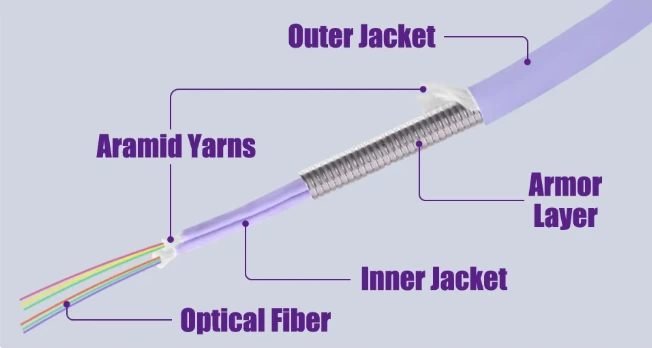
Armoured Mini Fibre Cable offers an additional layer of protection to the fibre using steel wires or any other materials that provide strength and durability. This type of fibre cable offers excellent protection from physical harm during installation or use over time. This is ideal for challenging conditions.
Application Areas:
Outdoor installation: Ideal for urban installations, underground communication systems, and other outdoor locations.
Industrial environment: Suitable for applications in challenging physical conditions such as high mechanical friction and impact, including mining sites and construction sites.
Electricity industry: Fibre cables used in electricity communication systems need to withstand more pressure and resist interference; armoured mini fibre cables have this capability.
Advantages:
1. High resistance to compression, tension, and tearing
2. Ideal for tough environmental conditions
3. Improves fibre cable longevity
Disadvantages:
1. Weightier compared to other fibre cables
2. Difficult installation
4.Plenum-Rated Mini Fibre Cable
This type of fibre optic cable is used where there is a higher possibility of fire occurrence. It is more resistant to fire and is made from a material that does not emit toxic gases when exposed to fire.
Application Areas:
For commercial buildings, it can be installed in office buildings, malls, etc., where it is to be used inside ceilings and air handling systems.
For data centres, it enhances the safety of the system inside data centre rooms.
For airports and subways – these places have higher traffic and need cables that do not pose any fire hazards.
Pros:
1. Meets high safety standards, reducing fire risks
2. Suitable for high-traffic or high-risk environments
3. Provides higher fire safety
Cons:
1. Expensive
2. Not required in all scenarios
5. Hybrid Mini Fiber Cable
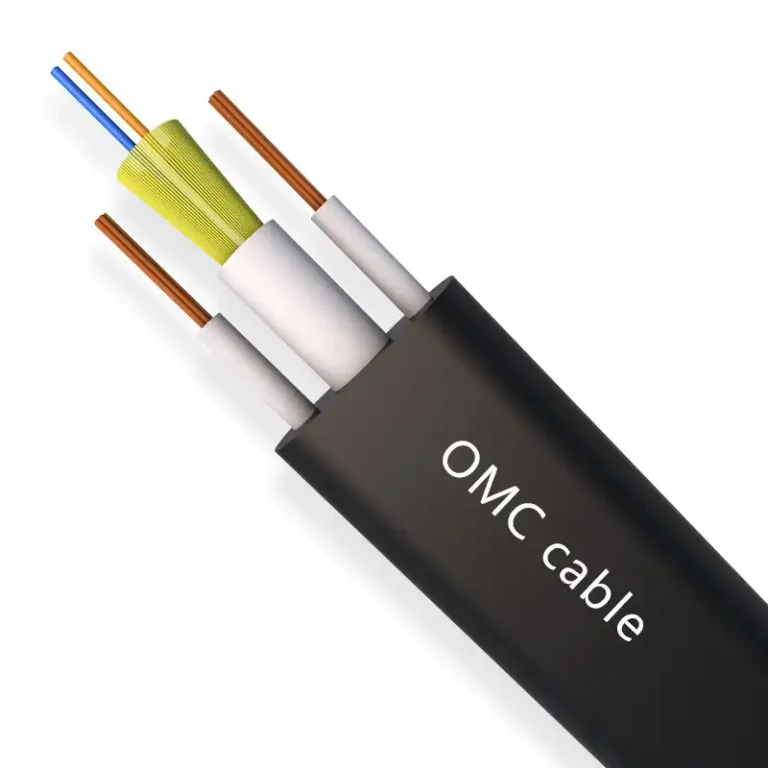
Hybrid Mini Fiber Cable comprises fiber as well as copper wires, providing the possibility to simultaneously transmit both electricity and information through one medium. It is used wherever the application needs both power and data transfer.
Applications:
Outdoor usage: Installation at public places, surveillance systems, etc.
Devices requiring both data and an electricity supply: For example, telecommunications base stations and other equipment.
Pros:
1. Transmission of both electricity and data through one wire simplifies cabling.
2. High efficiency during installation due to reduced space consumption.
Cons:
1. Complicated installation and maintenance process when compared to regular fiber or power cables.
2. Increased cost.
6. Specialized Mini Fibre Cable
Mini Fibre Cables with special characteristics that can be used in environments with extremely harsh conditions, such as low temperature, high temperature, and radiation-resistant cables are required here.
Applications
Aerospace and military: These fields require cables with high-temperature, low-temperature, and radiation-resistant properties.
Medical equipment: High-precision fibre cables used for transmitting medical images and monitoring signals.
Advantages
1. Designed for specific environments to meet specialized needs
2. Provides high reliability and safety
Disadvantages
1. Higher price
2. Installation and maintenance require professional expertise
7. Air Blown Mini Fiber Cable (ABF Cable)
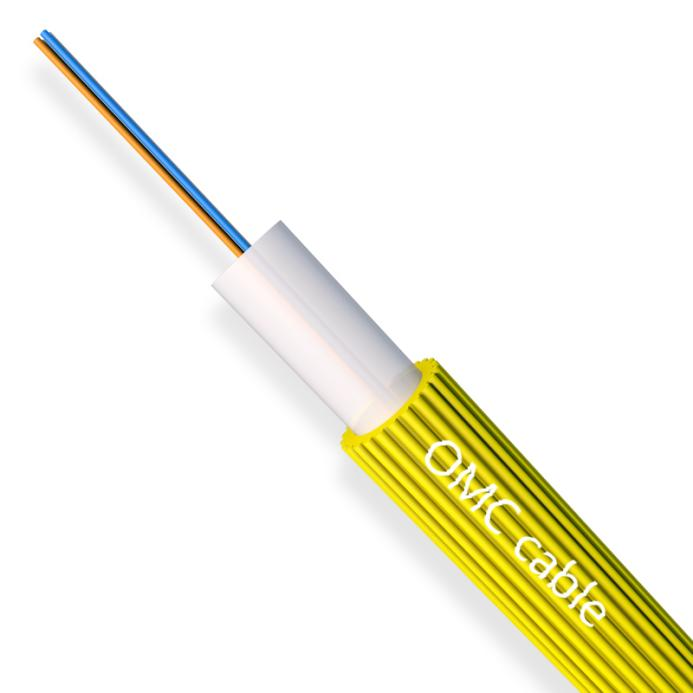
Air-Blown Mini Fibre Cable (ABF Cable) is designed for quick and easy cable installation. It uses a low-friction outer jacket, allowing the cable to be blown into place using air, which significantly reduces manual intervention and wiring time.
OMC’s 2-12F Mini Air-Blown Fibre Optical Cable (ABF Cable) falls under this category of Air-Blown Mini Fibre Cable. It provides an efficient, flexible solution for high-density environments and situations requiring fast deployment.
Applications:
Data centers: Installation that is quick and flexible for environments that require a lot of density.
Fibre to the Home (FTTH): Suitable for quick and flexible installation of fiber in homes.
Telecommunications: Environments where quick installation and flexible expansion are required.
Advantages:
1. Quick installation and wiring process
2. Ideal for environments where a lot of density is required.
3. Design that is special due to low surface friction.
Disadvantages:
1. Special blowing device used during installation.
2. Expensive due to the blowing process being used.
Conclusion
Different types of Mini Fibre Cable have their own special features and benefits, making them suitable for specific situations. Choosing the appropriate fibre cable requires consideration of factors such as transmission distance, required bandwidth, and environmental conditions. OMC offers expertise in Mini Fibre Cable solutions and can help guide you to the most suitable cable for your specific needs.