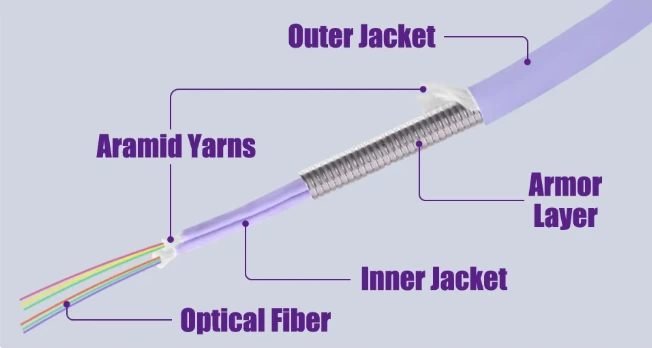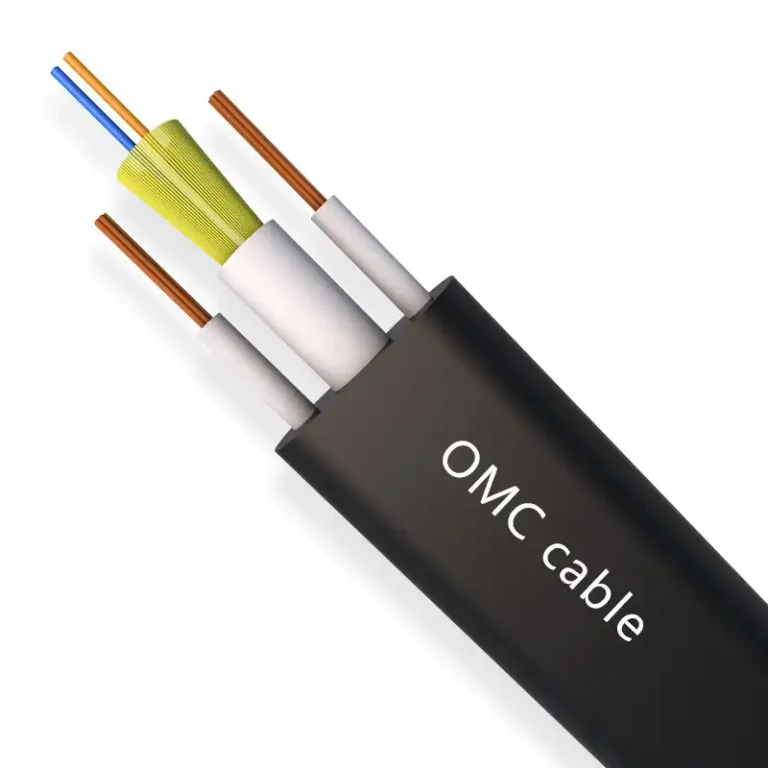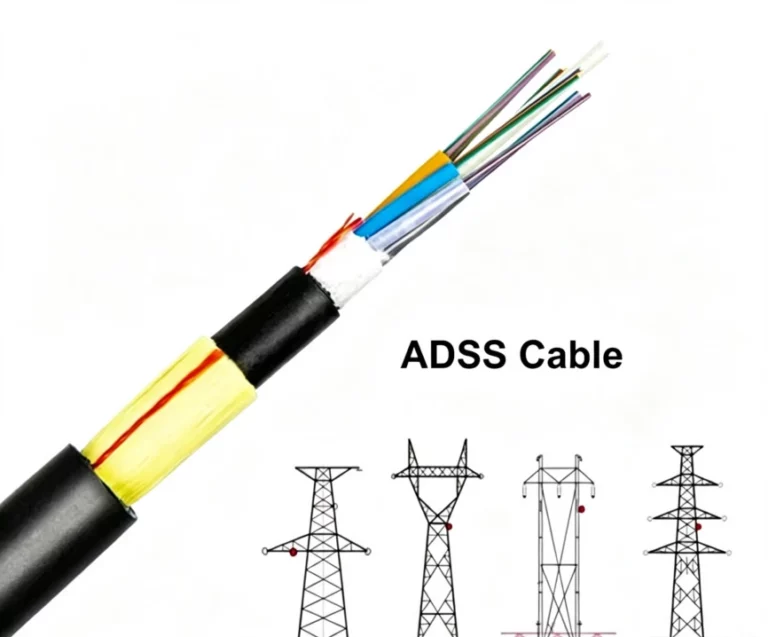








In high-speed broadband networks today, and especially in fibre-to-the-home (FTTH) installations, selecting the right cable for the “last mile” portion is increasingly important. The All Dielectric Flat Drop Cable has become a popular choice to fill that need. The term “all dielectric” means that with this cable, the strength members and structural materials are completely non-metallic (dielectric) and is advantageous for both performance and installation. The “flat drop” form means that it has been constructed with a thin and low-profile cross section, therefore allowing it to be placed close to surfaces, making it easier to install indoors or for exterior wall routing.
What exactly is an all dielectric flat drop cable?
An All Dielectric Flat Drop Cable is a fibre-optic “drop” cable that is designed to provide the service provider’s network (or outdoor enclosure) to a residence or other end-user property. Its strength members and structural materials are dielectric (non-conductive) thus, no conductive materials are included. In doing so, the resulting cable is lightweight, corrosion-resistant, and is safer in some situations (for example, grounding or conductor bonding are irrelevant). For example, one product description states, “all-dielectric…means that it’s made only of non-metallic materials; for example, plastic strength rods, aramid yarns, and an outer jacket”.

Essential structural and operational attributes
Dielectric strength components: Since the cable is all-dielectric, strength is provided by non-metallic materials (such as aramid yarns, fiberglass rods), rather than steel or copper. For example, some designs for flat drops feature two parallel non-metallic rods that are located on either side of the fibre core and provide tensile strength while self-supporting.
- Flat jacket/profile: The jacket is extruded in a flat shape, creating a slim profile for mounting against surfaces, while providing generally useful mechanical protection under the flat shape. The flat jacket also aids routing in confined spaces or along building exteriors.
- Flexibility in installation: The All Dielectric Flat Drop Cable is designed to be installed in applications including aerial, direct burial, inside the wall or duct, or along building facades. Specific designs are rated for UV-resistance for outdoor jackets, extreme temperature situations (e.g., -40°C to 70°C), crush resistance, unsuitable for last-mile applications.
- Absence of metallic conductors: The absence of metal means that there is no bonding/grounding that would otherwise need to be done, had there been any metallic aspects (e.g., tracer wire). The wiring feature simplifies installs in specific environments, while reducing the chance for corrosion or electrical interaction.
What are the advantages of an All Dielectric Flat Drop Cable?
- Ease of installation/appearance: With a flat shape, the cable can be run along building facades, under gutters, along walls, or within slender conduit with less visual disruption. Their low profile also means easier concealment or mounting, which could be important in residential or multiple dwelling type installations.
- Flexibility of installation: Many of these cables are rated for aerial or direct burial, allowing flexibility to the network operator installing the cable in various environments. The all-dielectric configuration helps negate the challenges posed by metal conductors in areas where grounding is difficult or caused interference with metal tracers.
- Durability and performance: Regardless of their low-profle form factor, thoughtfully designed flat drop cables exhibit significant mechanical performance attributes; tensile strength, crush resistance, UV resistance, temperature rating and low attenuation over time. These factors lead to dependable connectivity in the “last mile” where the cable may undergo more mechanical and environmental stressors compared to core backbone cabling.
- Lower cost and complexity: The absence of metal conductors or supporting messenger wires means less components to manage, less potential points of failure and often decreased material and installation cost. Less requirement for grounding or tracing allows for simplified installation.
- Optimized for last-mile fibre to the home: As stated in industry guidance, drop cable (the last segment that connects to end-user premises), has various needs from backbone cable. The All Dielectric Flat Drop Cable was built specifically for that use-case – short runs, frequently outside or exterior to the building’s interior, and needing ease of termination, etc., but good characteristics mechanically.
Conclusion
The All Dielectric Flat Drop Cable is a refined and practical solution for the last mile delivery of fiber to the home and similar broadband networks. It provides network operators with an efficient way to deliver high quality fiber connectivity to the ultimate end affixed user. With the expansion of FTTH applications, accurately understanding and selecting the right drop cable, such as the All Dielectric Flat Drop Cable, can ensure a reliable, cost effective installation and long term performance.