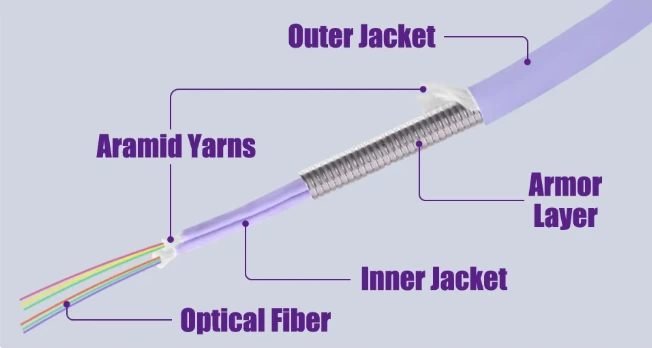








Indoor armored cable plays a vital part in ultramodern network structures, ensuring safe, stable, and high-speed data transmission within structures. Choosing the right indoor armored cable is essential for guarding filaments from mechanical stress, bending, or accidental impacts, while also supporting long-term network trustability. This composition provides a detailed overview of inner armored string types, their operations, crucial features, and the reasons to choose OMC results.
1. Classification of Indoor Armored Cables
Indoor armored cable can be classified based on three main criteria: fiber arrangement, string structure, and defensive design. Each bracket addresses different installation conditions and network demands.
(1) Classification by Fiber Arrangement
- Single-mode filaments optimized for long-distance inner connections, furnishing minimum signal loss and high-speed performance.
- Multi-mode filaments are Suitable for shorter inner runs, generally used in data centers, services, and lot networks. Multi-mode filaments are cost-effective for high-bandwidth operations over limited distances.
(2)Classification by Cable Structure
- Uni-Tube/ Single Tube Armored Cable filaments are housed in a single central tube, defended by an armored subcaste. This type is flexible and easy to route through conduits or tight corners, making installation simpler.
- Multi-Tube/ Distribution Armored Cable contains multiple sub-tubes inside a single armored jacket, allowing advanced fiber counts while keeping filaments organized. Ideal for large structures or backbone networks.
- Micro-Fiber Armored Cable Compact and high-viscosity, designed to repel bending and minor crushing. frequently used in data centers or surroundings, taking thick fiber deployment.
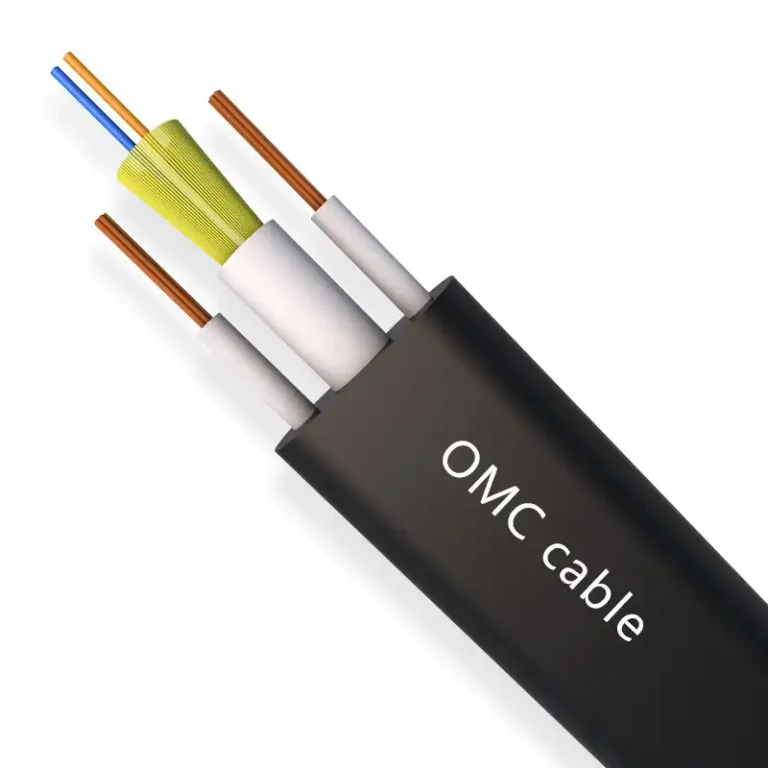
- Strip/ Flat Armored Cable filaments are arranged in a flat or strip configuration inside the armored subcaste, easing mass splicing and effective high-viscosity fiber operation.
(3) Classification by Protective Design
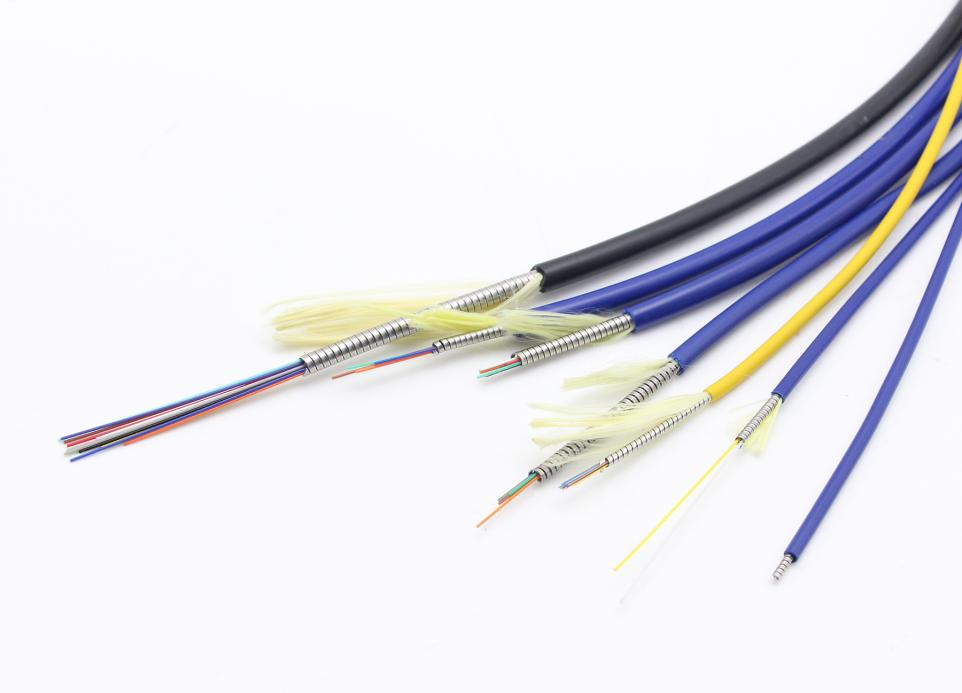
- Armored lines include a sword or aluminum armor subcaste that provides strong mechanical protection, precluding fiber damage from accidental impacts or crushing.
- Non-armored lines rely substantially on the string jacket for protection. Lighter and easier to handle, suitable for low-threat inner areas.
By understanding the bracket grounded on fiber arrangement, structure, and protection, designers can efficiently select indoor armored cable that meets installation and performance conditions.
2. Applications of Indoor Armored Cables
Indoor armored cable serves a wide range of indoor surroundings. Depending on the network viscosity and installation requirements, certain string types are more suitable for specific operations.
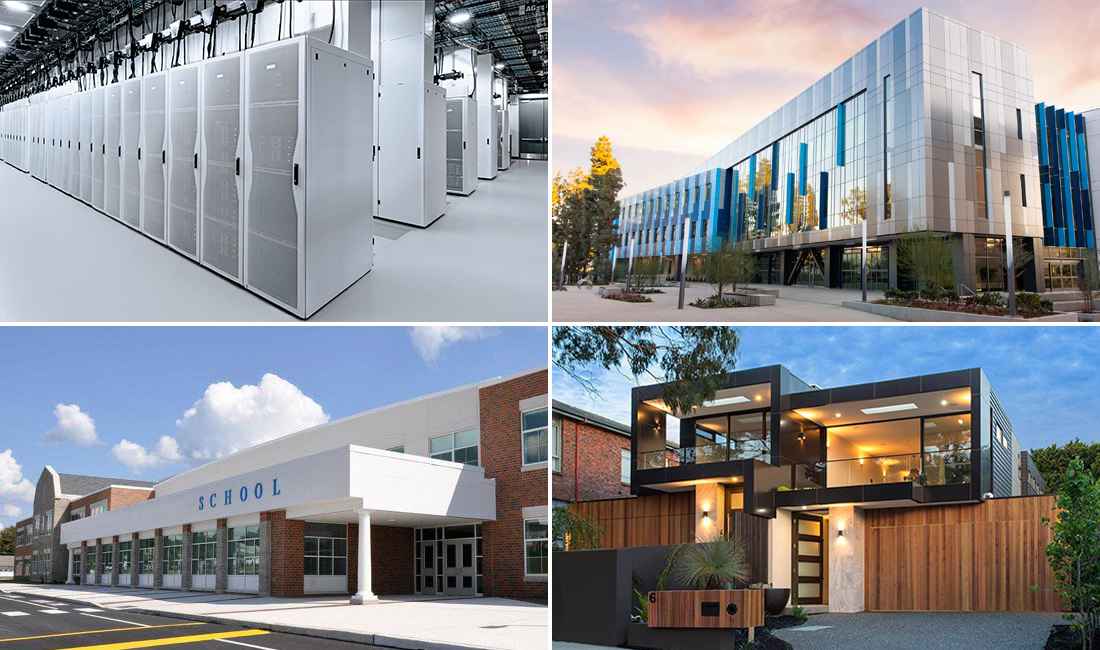
- Offices and Data Centers
Indoor armored cable gives dependable connections for waiters, switches, and backbone networks. For these surroundings,uni-tube or micro-fiber armored lines are frequently preferred due to their flexibility and capability to handle moderate to high fiber counts efficiently.
- Industrial and Commercial Buildings
lines in these surroundings must repel minor mechanical stress and temperature variations. Multi-tube or distribution armored lines are suitable then, as they allow advanced fiber counts and organized routing for larger network setups.
- Schools and Institutions of Learning
Networks in classrooms, laboratories, and lot installations bear easy conservation and support for high-bandwidth operations. Strip or flat armored lines work well because they simplify mass splicing and fiber operation in medium to high-viscosity deployments.
- Residential and Smart Home Networks
For FTTH installations or smart home networks,uni-tube or micro-fiber armored lines are recommended. These lines give protection from minor bending or mechanical pressure while remaining easy to install in homes.
3. Key Features of Indoor Armored Cables
Indoor armored cables have distinct features that make them reliable and suitable for various indoor environments. Understanding these features helps in selecting the most appropriate cable type.
- Mechanical Protection
Armored cables are designed to resist crushing, bending, and accidental impacts, protecting the internal fibers from physical damage during installation or routine maintenance.
- High Fiber Density
Micro-fiber and ribbon designs allow more fibers within a smaller diameter, supporting high-density indoor deployments without occupying excessive space.
- Flexibility and Easy Installation
Single-tube cables offer excellent flexibility for routing through conduits or tight spaces. Multi-tube and ribbon designs maintain organized layouts, simplifying installation in larger networks.
- Durable Jacket Materials
Indoor armored cables can have PVC, LSZH (Low Smoke Zero Halogen), or TPU/PU jackets. These materials provide protection against fire, smoke, abrasion, or chemical exposure, depending on the installation environment.
4. Why Utilize OMC Indoor Armored Cable
OMC indoor armored fiber optic cables are designed specifically for indoor environments, offering long-term reliability, stable transmission, and superior protection.
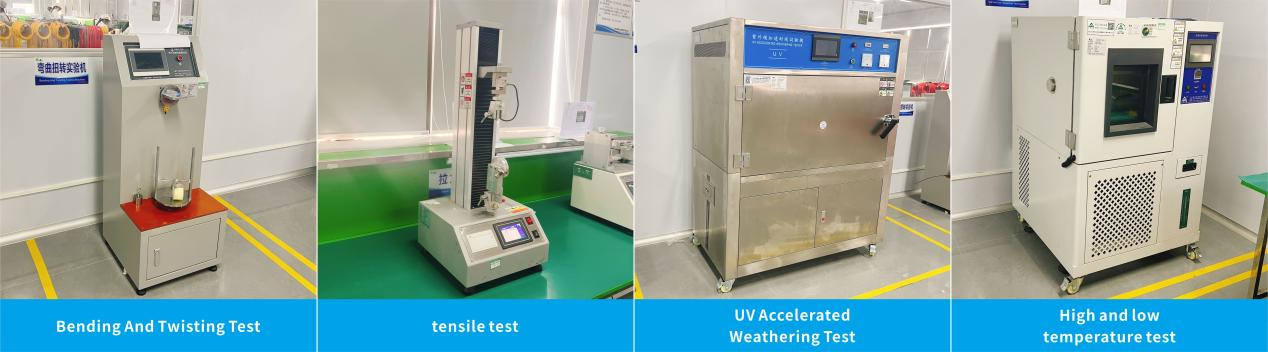
- Consistent performance: Each cable undergoes rigorous optical and mechanical testing to ensure dependable operation in any installation.
- Batch uniformity: Production batches maintain high consistency, providing reliable quality across multiple projects.
- Strict quality control: All indoor armored cables comply with ISO and IEC standards, ensuring safety and reliability in building networks.
- Flexible customization: Available in single-mode and multimode fibers, with customizable LSZH or PVC jackets to meet various project requirements.
5. Conclusion
Indoor armored cables are classified primarily by fiber arrangement, cable structure, and protection type. Understanding these categories helps in selecting the most suitable cable for different indoor environments, ensuring safety, efficiency, and reliable network performance in offices, data centers, commercial buildings, schools, and residential installations. OMC provides high-quality indoor armored cables with consistent performance, flexible options, and long-term reliability. For more information or to find the right indoor armored cable solution for your project, please contact us.