







Although single-sheathed optical cables and ADSS cables double-sheathed, seem similar in structure, they perform very differently when exposed to environments including wind, UV radiation, tension, and electric fields. This article will explain the differences between these two cable types, why double-sheathed optical cables are used extensively in power line environments, and what factors can help you choose the right cable for your project.

Understanding the Structure of ADSS Cable Double Sheath
An ADSS cable double sheath is specifically built for aerial routes and high voltage corridors. ADSS means All-Dielectric Self-Supporting, meaning there is no metal in this cable, and it does not need grounding. The double-sheath design has two protective layers instead of one.
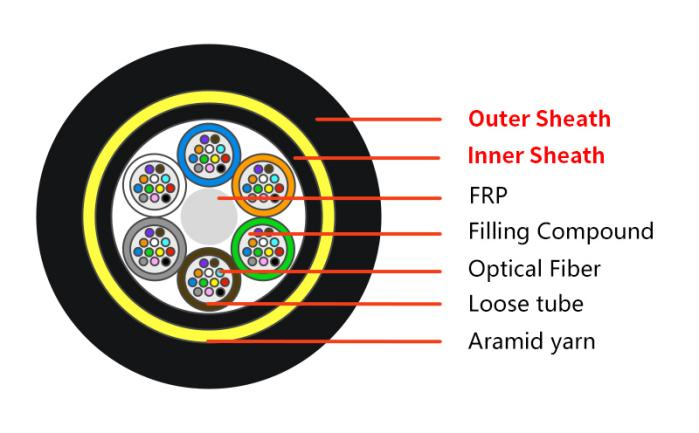
A typical ADSS double-sheath cable includes:
- A fiber core within loose tubes with water-blocking gel
- Aramid yarn strength members that support long-span tension
- It forms an inner sheath that protects the yarn from moisture and friction
- An outer sheath made from anti-tracking and UV-resistant materials
It is this extra layer that constitutes the essential difference between the ADSS cable double sheath and its single-sheath counterparts.
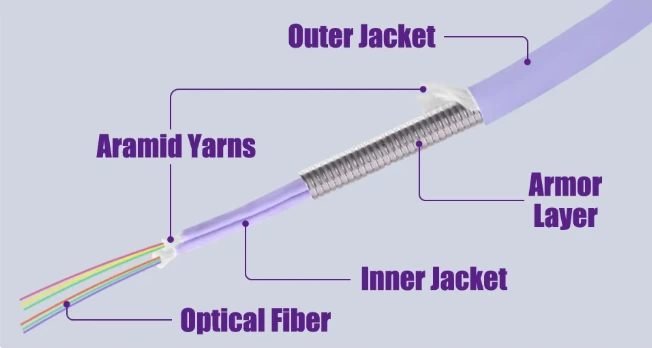
What makes Single-Sheath Cables different?
A single-sheath cable has only one protective outer layer. It may be sufficient for shorter runs, duct installations, and low mechanical stress. Yet, it cannot stand up to the electrical fields produced by lines carrying power and the long-term effects of strong UV radiation and wind.
Single-sheath cables are lighter and usually cheaper, but they offer limited protection against:
- Surface discharge near high-voltage lines
- Long-term UV exposure
- Mechanical abrasion during long-span installation
- Moisture infiltration in harsh climates
For general outdoor communication routes with mild conditions, single-sheath fiber may be enough. But for demanding environments, it does not provide the same longevity.
Why ADSS Cable Double Sheath Performs Better Near Power Lines
The biggest distinction appears when cables are installed beside high-voltage transmission lines. In these environments, electrical fields can interact with the cable surface. A single-sheath cable may crack or age prematurely, but an ADSS cable double sheath is designed to resist these issues.
Key advantages of the double-sheath design include:
1. Higher Tracking Resistance
Anti-tracking outer materials reduce surface discharge damage, especially on 110kV, 220kV, or 500kV lines.
2. Stronger Weather Protection
Two layers slow down UV aging, resist rain erosion, and protect internal strength members from temperature cycling.
3. Better Mechanical Durability
Long spans place high tension on fiber cables. The double-sheath system protects aramid yarn from abrasion and stress, ensuring the cable maintains stable optical performance.
Because of these advantages, the ADSS cable double sheath is considered the standard choice for transmission line communication.
Where the ADSS Cable Double Sheath Works Best
Although ADSS cables are used in many aerial installations, the double-sheath structure becomes essential in harsh or demanding environments. Engineers generally select it when:
- The route passes through high-voltage utility corridors
- The area experiences strong winds or long pole spans
- The installation site has high UV radiation or seasonal storms
- Mechanical vibration occurs due to the weather
- The project requires a long service life with minimal maintenance
Some projects use solutions from major suppliers such as OMC, but the cable type matters more than the brand. The goal is to match structure to environment.
Cost and Engineering Considerations
A single-sheath cable costs less initially, so it may be chosen for projects with short spans or indoor-to-outdoor transitions. However, installation in harsh conditions often leads to earlier replacement or higher maintenance costs.
When comparing both options, engineers typically evaluate:
- Span length and pole spacing
- Electrical field intensity
- Expected UV exposure
- Local weather patterns
- Projected service life
- Maintenance accessibility
In most high-voltage or heavy-wind environments, the ADSS cable double sheath provides better long-term value.
Conclusion
The difference between a single-sheath cable and an ADSS cable double sheath mainly lies in protection and durability. Understanding these differences helps ensure stable fiber-optic performance and reduces long-term maintenance for any aerial communication project.