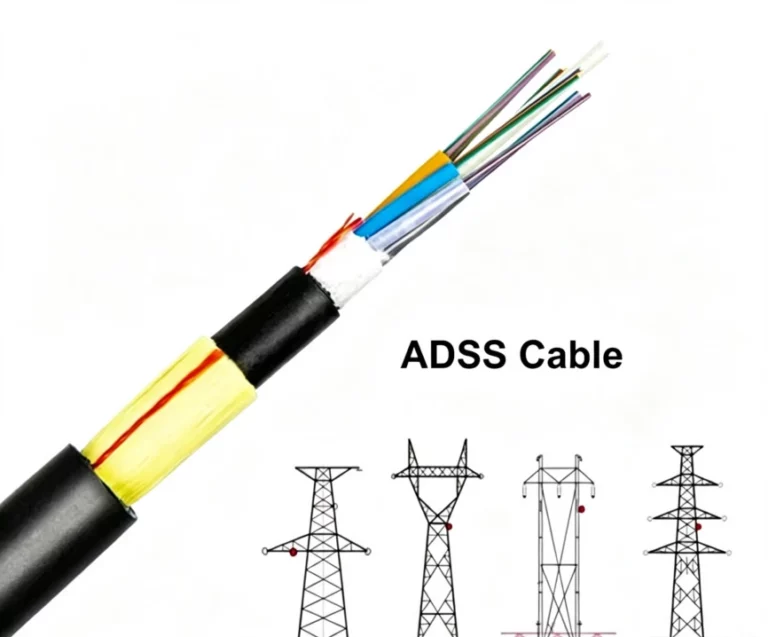








As power systems and communication infrastructures keep expanding, ADSS optical cables serve as the optimal choice for aerial fiber deployment. Unlike other types of optical fiber that need some metallic construction to provide a safe and stable structure, ADSS cables are constructed without any metal elements.
For power companies, telecommunication companies, and network infrastructure companies, knowledge of the ADSS cable specification is the first step to choosing an appropriate cable type. The number of fibers, tensile strength, diameter, temperature resistance, and installation location will directly influence network stability and the lifespan of the optical cable.
ADSS Cable Specification: Understanding the Cable Structure and Design
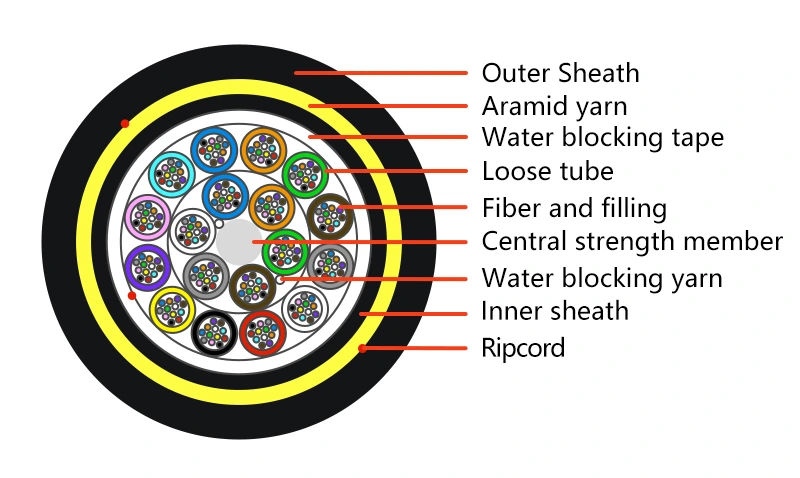
The construction of the ADSS cable has been developed in such a way that mechanical stability and electrical safety have been achieved.
 All-Dielectric Structure for Power Network Applications
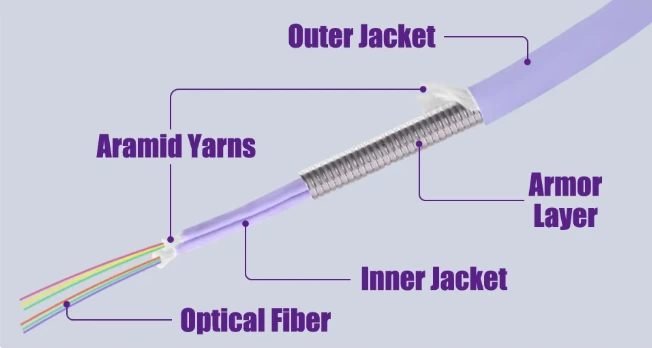
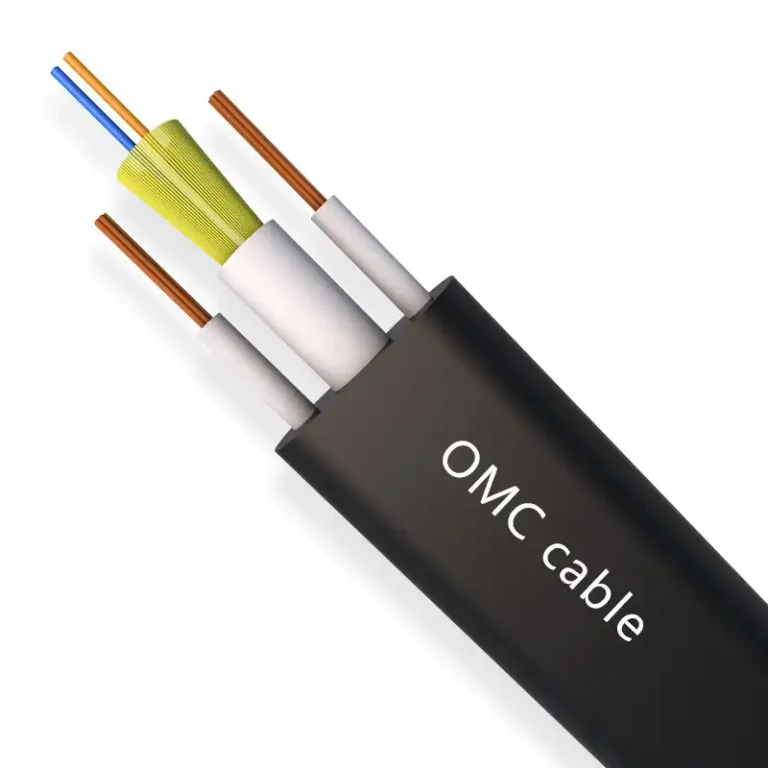
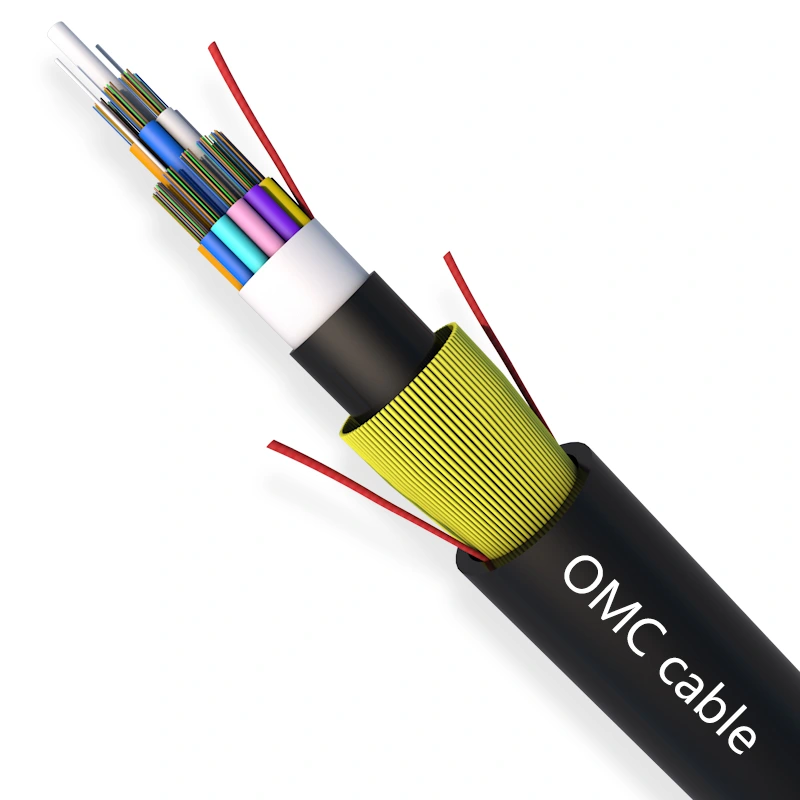
The construction of an ordinary ADSS optical cable has four elements – optical fibers, a core strength element, an aramid fiber strengthening layer, and an external layer. With the use of lightweight materials and strong components, it can hold its weight independently of any auxiliary messenger wires.
Installation of the ADSS cable, in comparison with other aerial fiber optic cables, has less complexity. According to its applications, the length of the cable may be from several dozen meters up to over 1,000 meters in special cases. The chosen ADSS cable should correspond to such parameters as tower distance, line voltage level, etc.
How Cable Design Affects Network Reliability
The construction of ADSS optical cable directly affects its service life and signal transmission performance. High-quality cables are water-resistant and immune to various environmental conditions such as temperature changes and physical strain. For instance, loose tube construction is common since it permits movement of the optical fiber due to temperature changes and physical tension.
ADSS Cable Specification: Key Mechanical Parameters
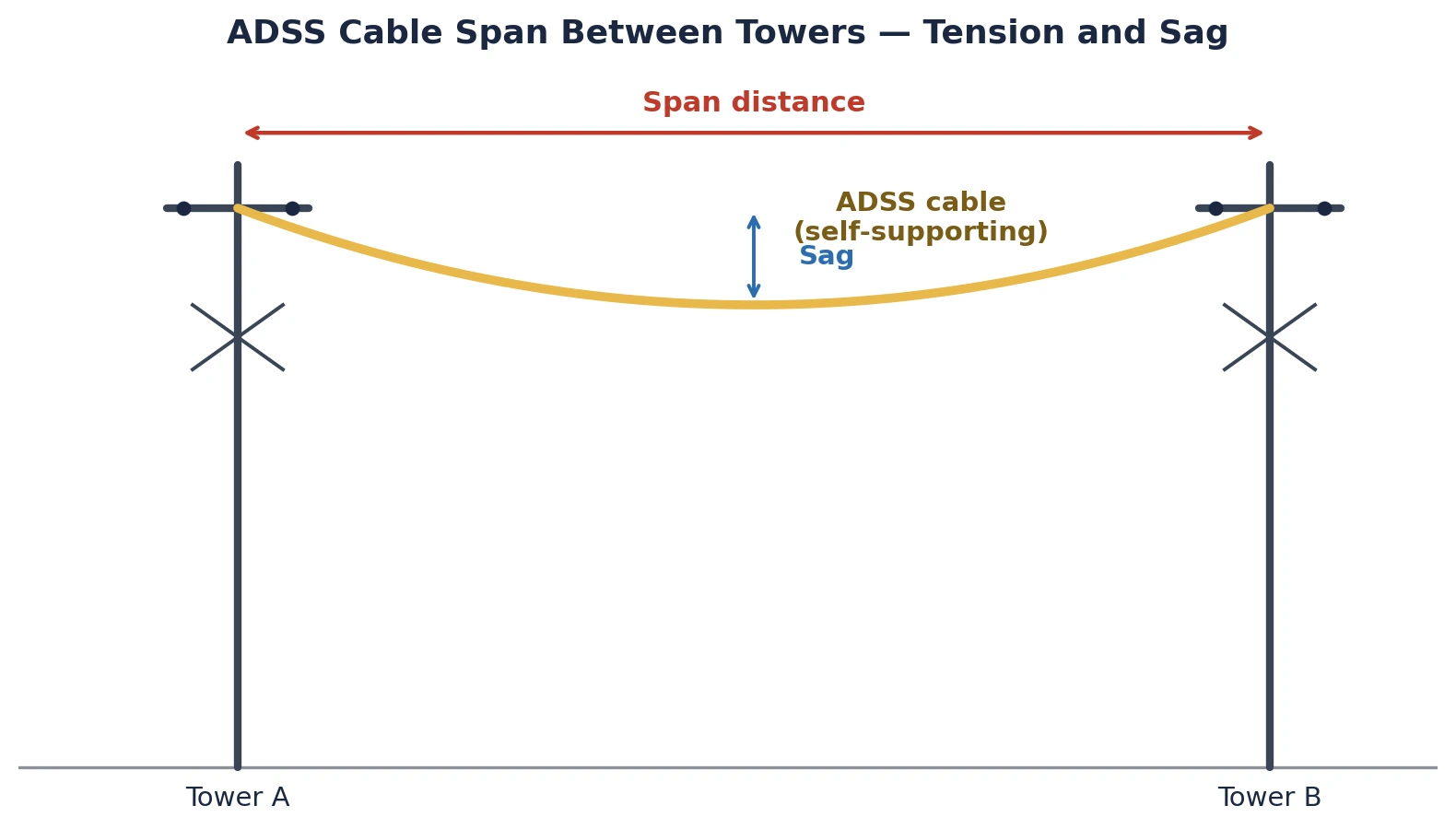
Another vital factor in overhead fiber installation is mechanical strength. It should be able to withstand the forces exerted by its own weight, wind load, ice load, and tension without affecting optical performance.
Tensile Strength and Maximum Span Distance
Tensile strength dictates the maximum amount of pull force that the cable can endure in its installation and operation process. Some of the common ADSS cables have tensile strengths from about 10 kN to over 100 kN.
Longer installation distances require higher mechanical strength. For example, a cable installed between widely spaced transmission towers may need a reinforced design to maintain stable sag control and prevent excessive stress on optical fibers. When evaluating an ADSS cable specification, engineers usually consider maximum span length, installation tension, and safety margins to ensure reliable performance.
Cable Diameter and Weight Requirements
The size and weight of the cable will affect the ease of installation and the load of the tower. The lighter-weight ADSS cable is favorable for overhead installations as it decreases the mechanical stress on existing structures. The sizes of ADSS cables can range from 8 mm to 20 mm, while their weight can be between 70 kg/km and 250 kg/km depending on the number of fibers and the structure of the cable.
ADSS Cable Specification: Fiber Capacity and Optical Performance
The optical performance will be crucial for ensuring that the ADSS cable can fulfill its requirements in modern communications networks. Projects will need to have different fiber capacities as well as different transmission requirements.
Fiber Count Selection for Different Applications
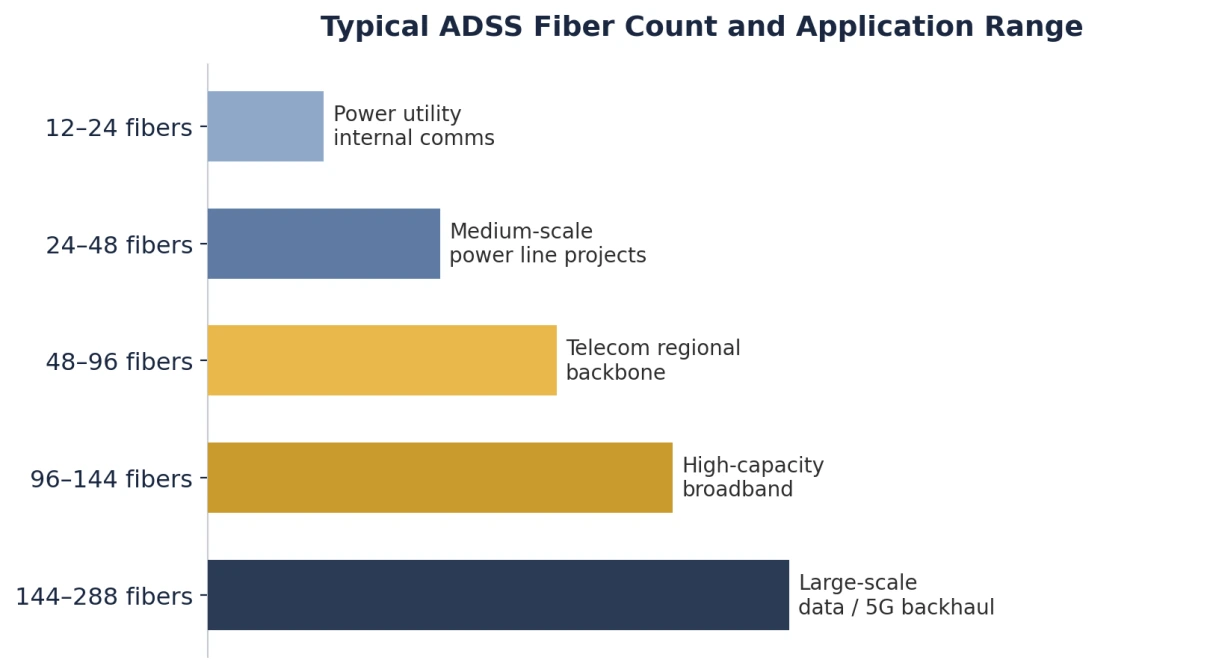
ADSS cables are available in various fiber capacities, typically ranging from 12 to over 288 fibers. Power companies may use lower fiber counts for internal communication, while telecom operators often require higher capacities for broadband and data transmission. The right fiber capacity should consider both current needs and future expansion.
Medium-scale overhead power line projects commonly use 24-core or 48-core ADSS cables, providing sufficient fiber capacity for current communication needs while allowing room for future expansion. The 24-core or 48-core G.652D ADSS cable is a typical example, with a 200 m span and a single-sheath design for aerial installation. This type of configuration can provide a practical balance between fiber capacity, mechanical performance, and installation requirements.
Optical Loss and Transmission Performance
The attenuation of the fiber is yet another significant factor. Conventional single-mode fibers usually have lower attenuation, with values normally ranging from 0.35 dB/km at 1310 nm and 0.20 dB/km at 1550 nm. Reduced optical losses will ensure that the signal travels further without needing amplification. In large communication projects, it is necessary to ensure good performance in transmission.
ADSS cable specification: Environmental Tolerance and Long-Term Service Span
Given that outdoor optical cables must operate over the long term under conditions of fluctuating weather, their resistance to environmental aging is a key factor in product selection.
Temperature and Weather Adaptability
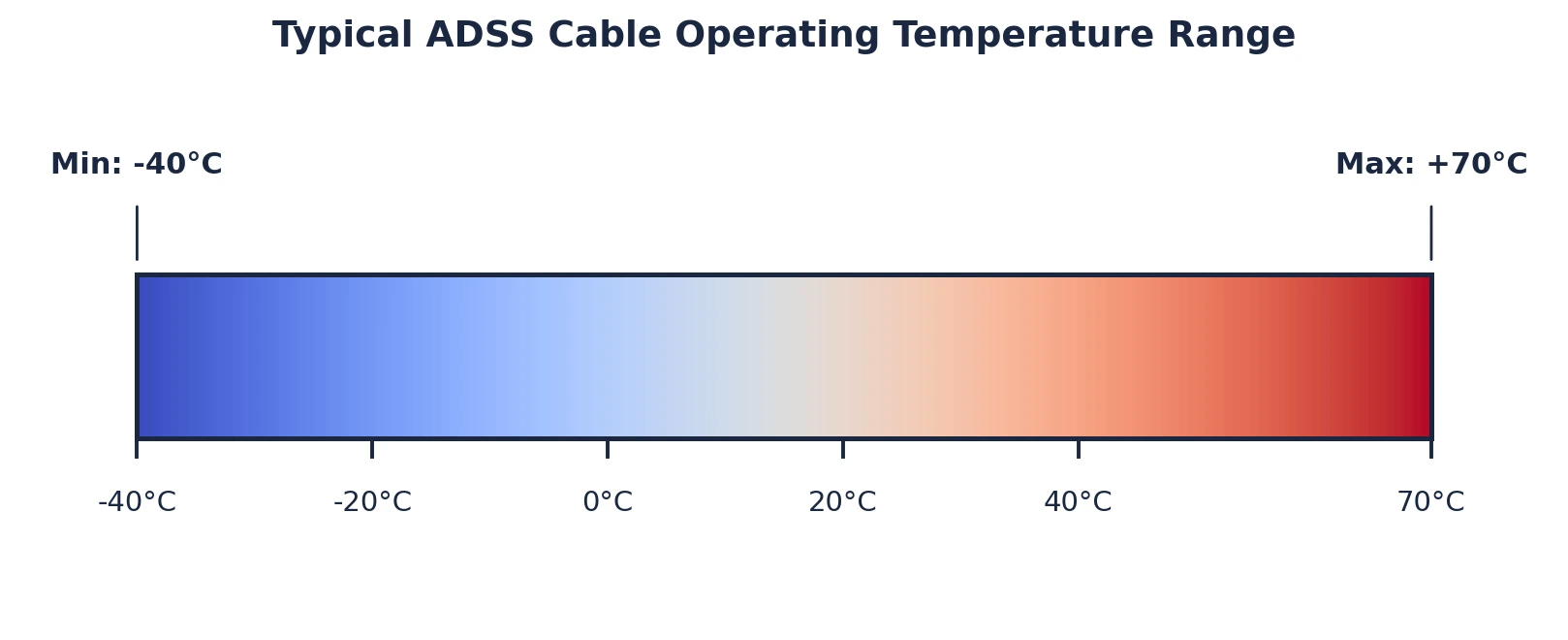
In the majority of cases, the ADSS optical cables are designed to perform well in conditions with significant temperature changes. The majority of cable types can work within the temperature range of approximately -40°C to +70°C, which makes the cables convenient for any kind of climate. The materials of the external protection layer of the cable have been created to withstand ultraviolet radiation, moisture, and aging.
Wind and Ice Load Performance
In regions with strong winds or heavy ice accumulation, cable design must consider additional mechanical loads. Strong wind pressure and the weight of ice buildup add extra tension to the optical cable, impacting its sag once mounted. A professional ADSS cable specification should include environmental load calculations based on local installation conditions. Proper selection helps reduce maintenance requirements and improves network safety.
ADSS Cable Specification: How to Select the Right Cable
Choosing the right ADSS Cable calls for a more thorough investigation of the project specifications, rather than concentrating on just one factor.
Evaluating Installation Conditions
For various projects, different cable structures could be required even within the same application group. Before choosing the cable, one should investigate:
- Tower spacing and installation height;
- Required fiber capacity;
- Maximum expected mechanical load;
- Local temperature and weather conditions;
- Power line voltage environment.
Planning for Future Network Expansion
Communication demand continues to increase due to smart grids, industrial automation, and broadband development. Selecting a cable with additional fiber capacity can provide flexibility for future upgrades. A reliable ADSS cable specification should not only meet current requirements but also support long-term network development. This approach can reduce replacement costs and improve infrastructure efficiency.
Conclusion
ADSS is one of the significant types of cables used in modern electricity and telecommunication systems because of its light weight and electrical safety. Some of the important factors that must be considered when selecting the appropriate cable include mechanical strength, fiber count, optical loss, and environmental stability.
A well-designed ADSS cable can provide reliable transmission, easier installation, and long-term outdoor performance. Our ADSS cable solutions are designed to meet different network requirements and installation conditions, helping customers build reliable and cost-effective communication networks. If you need help selecting the right ADSS cable specification or have specific project requirements, feel free to contact OMC for more information and professional assistance.