








In developing an aerial communication network in the contemporary world, one of the most frequently asked questions among engineers is: What are the major kinds of ADSS optical cables? The reason why an ADSS fiber optic cable is all-dielectric and self-supporting, and hence free of any metallic messenger wires, makes it capable of being installed without any interference right below the high-voltage power lines. But not all designs can serve well everywhere. However, because outdoor deployment environments vary drastically in terms of span lengths, meteorological loads, and topographical challenges, manufacturers have engineered distinct variations of the ADSS fiber optic cable. Depending on whether it is a normal span or a tough one passing through mountains, it is critical to select the correct variation. This article provides you with information on the major kinds of ADSS fiber optic cables available today—including single-sheath, double-sheath, armored, and ASU configurations!
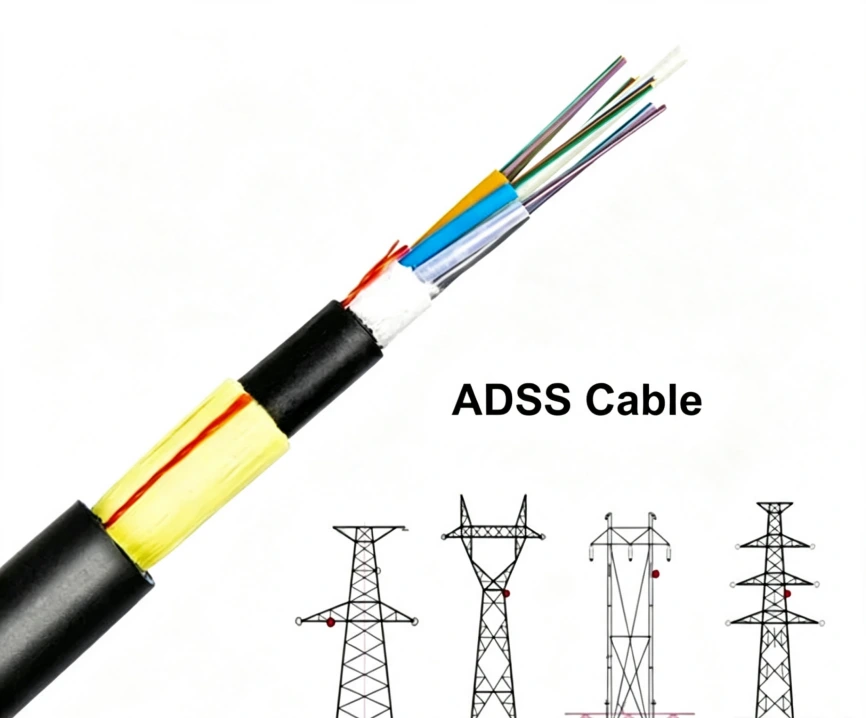
1. Single Sheath ADSS Fiber Optic Cable
The single-sheath ADSS fiber optic cable is engineered specifically for standard outdoor aerial deployments, short-to-medium spans, and moderate environmental conditions.
Structural Composition
It usually consists of an FRP strength member in the center, loose buffer tubes filled with 250-micron optical fibers covered with PBT and water-blocking gel, aramid yarns to provide intermediate tensile strength, and an outer PE jacket. The design results in low weight of the cable and ease of installation.
Deployment Characteristics
For routine pole-to-pole routing where distances and mechanical stresses are relatively controlled, this cable style offers unmatched cost-efficiency. A prime example is the OMC 80m Span 24F & 48F SM ADSS Cable. Custom-tailored for 80-meter spans, it accommodates 24 or 48 single-mode fibers, provides a maximum tensile load resistance of 1400N, withstands short-term crush loads up to 1000 N/100mm, and operates reliably across extreme ambient temperatures ranging from -40℃ to +70℃, making it ideal for municipal broadband and local loop distribution.
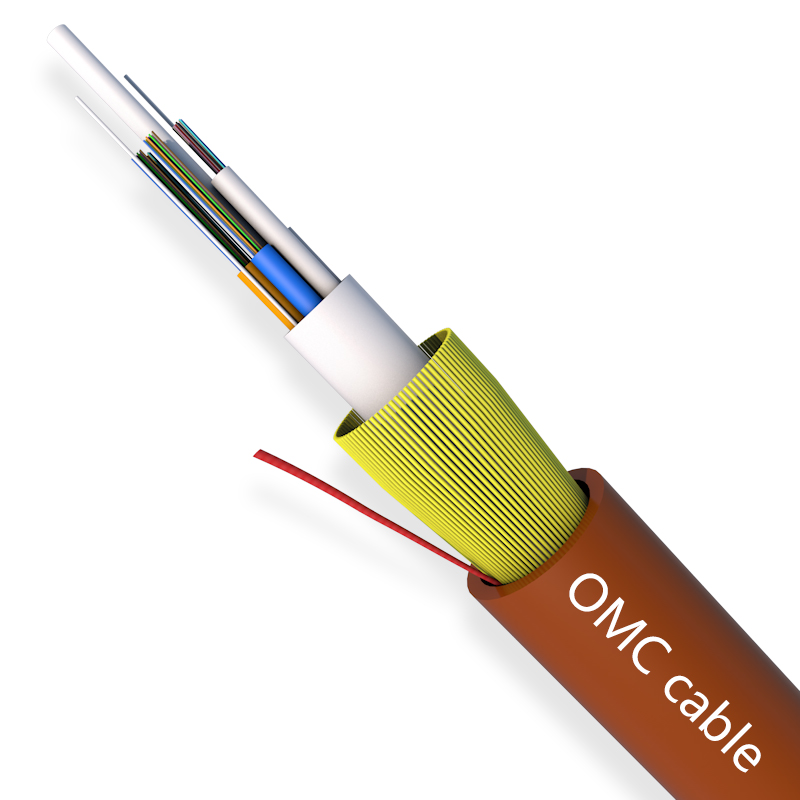
2. ASU Cable
The ASU cable represents another specialized variation in self-supporting aerial solutions, widely valued for its streamlined profile and deployment speed.
Structural Composition
It generally features a centralized loose tube design integrated with a non-metallic or metallic structural support lobe, combining the optical transmission components and the load-bearing element into a single figure-eight or closely bound footprint.
Deployment Characteristics
Because of its ultra-compact cross-section and reduced wind-load profile, the ASU variant excels in “last-mile” Fiber-to-the-Home (FTTH) architectures and rural distribution networks. It minimizes the physical weight exerted on utility poles, reduces specialized hardware requirements, and significantly cuts down overall deployment labor hours and capital expenditure.
3. Double Sheath ADSS Fiber Optic Cable
When network routes traverse harsh geographic terrains, severe weather corridors, or areas prone to heavy ice accumulation and high-velocity winds, standard single-jacket designs fall short. This is where double-sheath configurations become vital.
Structural Composition
The double-sheath ADSS fiber optic cable comprises a combination of an inner polyethylene (PE) sheath, a highly robust bundle of aramid fibers for tensile strength, and an external sheath that protects the core from high abrasion, ultraviolet rays, and environmental stress cracking.
Deployment Characteristics
Designed to bear heavy mechanical loads over extended distances, these robust cables secure critical backbone links. A benchmark product within this tier is the OMC Cable 6000N 4-432cores ADSS Cable-Double sheath. Capable of supporting massive scalability from 4 up to 432 fibers, this high-strength double-sheath ADSS fiber optic cable boasts an impressive maximum tension capacity of 6000N. It effectively neutralizes the dynamic stresses caused by mountain gales and seasonal icing, ensuring zero downtime for critical infrastructure corridors.
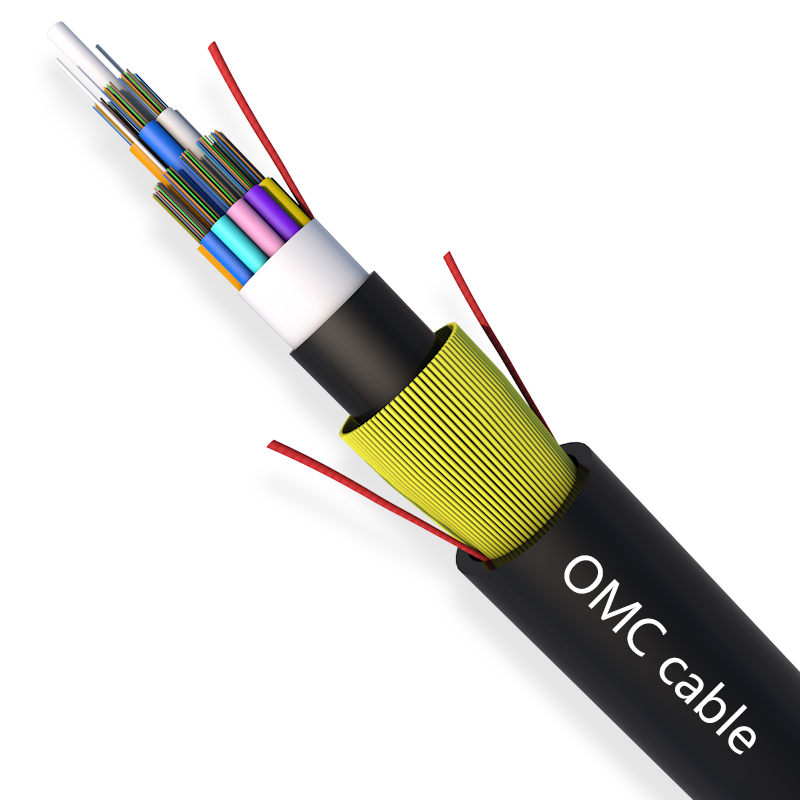
4. Armored ADSS Fiber Optic Cable
The armored ADSS fiber optic cable is a particular type that is designed for use in tough conditions, where physical attacks by animals, like rodents, woodpeckers, or even vandals, may occur, jeopardizing the stability of the network.
Structure: It features an inner layer of polyethylene tubing, a layer of high-tensile aramid yarn, and another protective layer of armor material, which may consist of stainless steel or corrugated steel tape (CST), enclosed in an extra-thick outer coating. The multi-layer structure allows providing excellent protection against crushing and impacts without hindering the optical capabilities of the core.
Usage Features: Due to the improved mechanical and puncture resistance, the armored type of fiber optic cable is best used in Rural forests and agricultural areas, where regular cable damage by wildlife occurs.
5. How to Choose the Right ADSS Fiber Optic Cable?
The selection process of the best ADSS fiber optic cable for a particular capital project demands detailed engineering assessment of some key variables as follows:
- Span Length Specifications: While short spans of up to 100 meters can use the standard single-sheathed cables, longer spans in terms of river crossings or canyon spans over hundreds of meters may require the use of rugged double-sheathed high-tension cables.
- Fiber and Bandwidth Requirements: The planners of the system should assess the existing and future network traffic to determine the optimal number of cores, starting from simple 2-fiber cables to complex 432-fiber cables.
- Environmental and Mechanical Loading: By evaluating the local weather conditions such as maximum wind speed, ice loading, and solar UV exposure, the selected ADSS fiber optic cable will operate comfortably within its temperature range (-40℃ to +70℃).
6. Conclusion
Understanding and identifying the right kinds of ADSS fiber optic cables play a vital role in establishing effective and dependable communication systems. Be it an economical solution of a single-sheath cable for local access or an engineered double-sheath cable for severe conditions, scientific cable selection is key to successful implementation. For any query related to cable selection and core configuration, please contact OMC Cable!
-768x576.webp)
-768x290.webp)