


Choosing optical cable suppliers is not just about comparing prices. From network design to final installation, optical cable selection affects both infrastructure performance and project expenditure. Important considerations include fiber capacity, manufacturing consistency, environmental suitability, testing procedures, and transportation arrangements. Different Optical Cable Manufacturers address different needs, supplying everything from compact, high-density data center cables to FTTH access network products. This comparison provides industry professionals with a clearer starting point for Optical Cable Manufacturers evaluation.
1. What to Look for in Optical Cable Manufacturers?
Product Range and Application Compatibility
First of all, it is necessary to choose the type of cable according to the installation conditions. Indoor cable construction prioritizes compliance with fire safety regulations, while outdoor cable designs focus on weather resistance and environmental durability.
When assessing Optical Cable Manufacturers, pay attention to:
- Fiber type: Single-mode fiber is used for telecommunications over long distances, while multimode fibers are preferred in short-distance data center connections.
- Fiber Count: Standard fiber counts include 12, 24, 48, 72, and 144 cores, allowing buyers to match cable capacity to network demands.
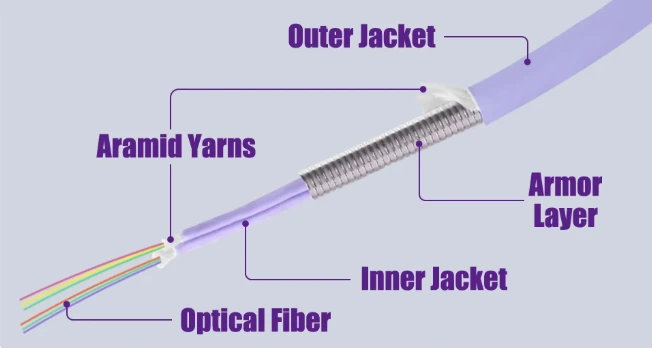
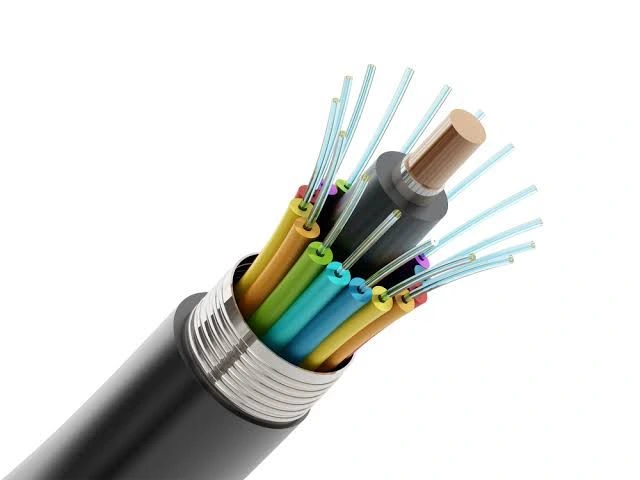
- Cable Construction: Cable structures vary by use case and include loose-tube, ribbon, armored, microduct, and drop configurations.
- Connectivity: Pre-assembled products and appropriate connectors will make field termination unnecessary.
Manufacturing Capacity and Quality Control
Production volume becomes relevant when a project demands huge amounts of cables and/or several deliveries. However, production volume does not necessarily guarantee quality. Inquire about material control, process control, testing of the finished cables, and test report traceability. Important quality parameters include signal loss, tensile strength, bending performance, and environmental stability.
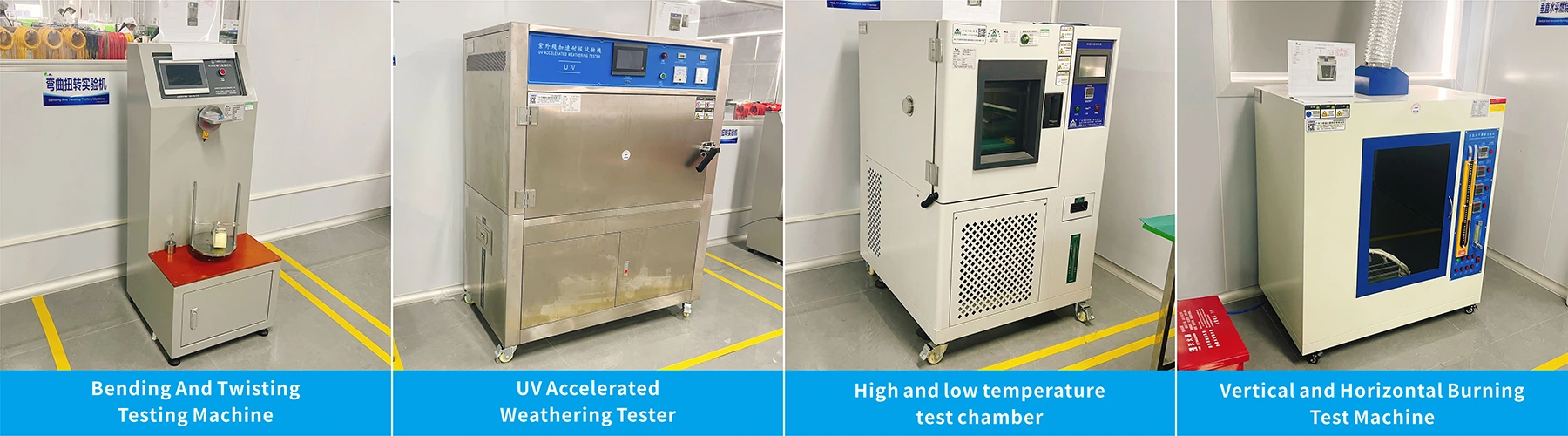
For reference, conventional single-mode optical fiber typically follows a 9/125 µm core/cladding specification. Attenuation limits and mechanical characteristics should conform to the corresponding fiber standard and cable specification. It is necessary for reliable Optical Cable Manufacturers to identify what tests are carried out on each product and to supply the test report of the purchased cable.
Customization and Delivery Support
There may be requirements for fiber counts, outside diameter, type of jacketing, cable length, printing, and connector type. Get confirmation that the supplier can manufacture based on the approved drawing, with samples sent for evaluation.
Make sure you understand the minimum quantity required, production lead time, packaging and transportation arrangements, and replacement arrangements. Before manufacturing customized cables, buyers should approve the technical specifications and samples in writing to prevent dimensional or material changes from disrupting installation or cable performance.

2. Five Optical Cable Manufacturers Worth Considering
The manufacturers below vary in their product portfolios, technical expertise, and target markets. This overview compares their publicly presented product strengths rather than ranking every supplier in the industry.
| Manufacturer | Main Strength | Relevant Products | Potential Application |
| Corning | Fiber optic products and cable system solutions | Indoor, outdoor, and indoor/outdoor installations | Telecom networks and data center infrastructure |
| OMC Cable | Customized cable solutions | FTTH drop, armored, microduct, and hybrid cables | Telecom projects and OEM orders |
| Prysmian | Integrated network infrastructure solutions | Optical cables and connectivity solutions | FTTH, aerial, underground, and access networks |
| Sumitomo Electric | Advanced and high-density cable designs | High-fiber-count ribbon and microduct cables | Data centers and long-haul networks |
| YOFC | Integrated optical fiber and cable supply | Optical fibers and fiber optic cables | Telecom networks and large-scale deployment |
1. Corning
Best suited for: Network providers, data center applications, and corporate infrastructure requiring a variety of cable types.
Corning incorporates optical fiber technology with various kinds of fiber optic cables and connectivity solutions. Corning’s cable portfolio includes ALTOS® loose tube cables, RocketRibbon® cables, and MiniXtend® micro cables suitable for different capacity and installation conditions.
The cable offering includes both indoor and outdoor cables, as well as indoor/outdoor cables intended for aerial, duct, direct burial, and microduct installations. Corning also provides matching cable and closure solutions.
2. OMC Cable
Best suited for: Distributors, telecom installers, and OEMs looking for custom cable solutions.
The specialty area of OMC Cable involves fiber optic cable manufacturing, encompassing FTTH drop cables, indoor/outdoor cables, as well as hybrid cables. The OMC Cable range consists of products such as armored cables, ADSS cables, microduct cables, among others.
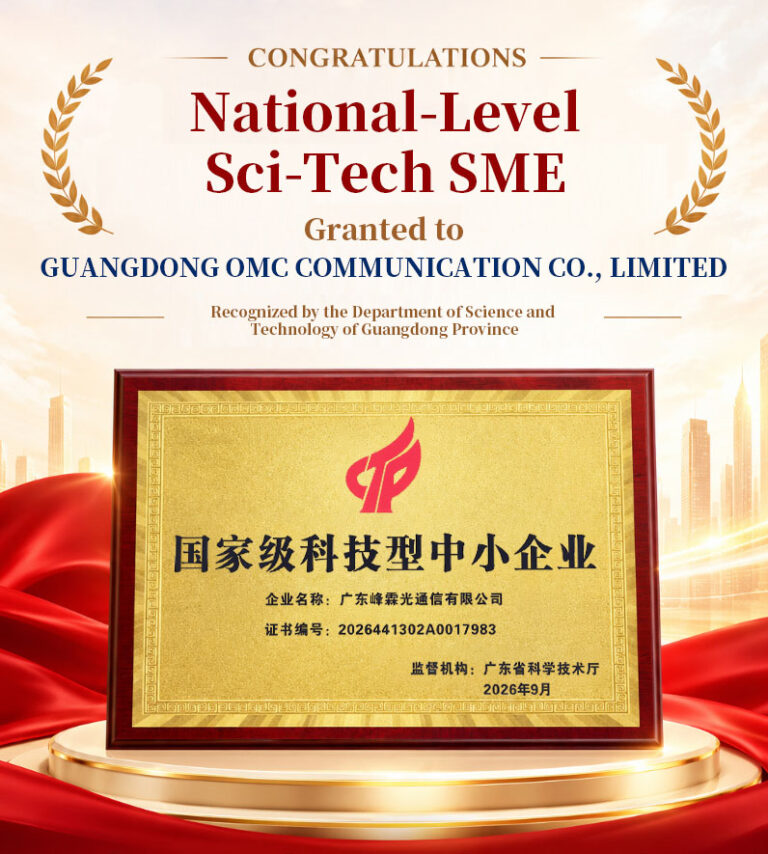
One very important thing to look out for when selecting a manufacturer is customization. OMC provides a tailor-made process starting from requirement analysis, solution design, sample validation, manufacturing, testing, and delivery. OMC also has a certificate page on management systems, including ISO 9001, ISO 14001, and ISO 45001. It also has details concerning compliance with various products. Buyers looking for customized cable specifications are advised to look at the Optical Cable Manufacturers.

3. Prysmian
Best suited for: Network operators, infrastructure builders, and FTTH projects on a large scale.
Prysmian provides a wide range of optical cables, which include indoor, outdoor, indoor/outdoor, and specialty cables. The product line offered by Prysmian comprises loose tube, ribbon, microduct, flat drop, armored, and hybrid types of cables, suitable for deployment in building networks, data centers, metro, and long-haul infrastructures.
Prysmian also provides OASys connectivity solutions, which include management systems for aerial and underground networks, central offices, and customers’ premises. Prysmian offers pre-terminated FTTH drop cables, splice enclosures, patch cords, splitters, and special assemblies with high fiber counts.
4. Sumitomo Electric
Best suited for: Most appropriate for: Data centers and telecommunication projects that need high-fiber-count or compact cable construction.
Sumitomo Electric provides products such as high-fiber-count optical cables and microduct cables, which allow for densely packed networks. Their ribbon cables offer many fiber options, while microducts enable air-blown installation and use less space in cable construction.
They also provide products for applications in access, metro, long haul, and data centers. Each of these applications has different specifications with respect to fiber density, attenuation, mechanical strength, and installation process. Therefore, the buyer needs to examine the respective product catalog to choose the right cable. Sumitomo Electric is among the best Optical Cable Manufacturers for this type of buyer.
5. YOFC
Best suited for: Telecom carriers, data center projects, and network infrastructure companies.
Among others, YOFC (Yangtze Optical Fiber and Cable) provides a variety of products including optical fiber preforms, single-mode optical fibers, multi-mode optical fibers, communication cables, specialty cables, and submarine cables. The cable line includes loose tube, armored, fire-retardant, aerial, and microduct cables.
Moreover, it offers innovative technologies for fiber optic cables, including bend-insensitive optical fiber solutions that are needed for reliable signal delivery where compactness is important. In terms of its product line-up, it covers telecommunications, data center, transport, power grid, and submarine communications. YOFC’s international market coverage reaches more than 100 countries and regions in the world, according to its official website.
Conclusion
The optical cable manufacturers presented above have unique advantages in fields like optical fiber technology, customization of cables, large-scale network solutions, high-density cabling, and product availability. By comparing products of optical cable manufacturers, buyers can choose a suitable supplier for telecommunications, data center networks, and other networking needs.