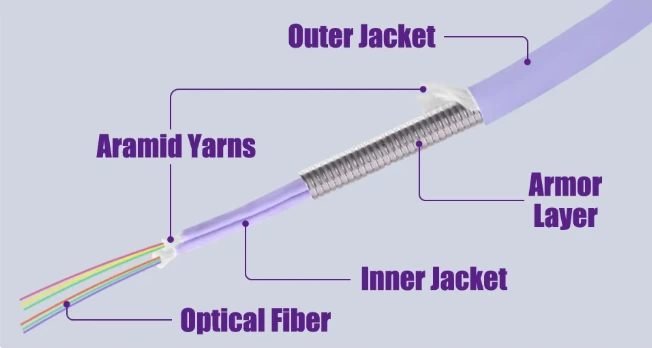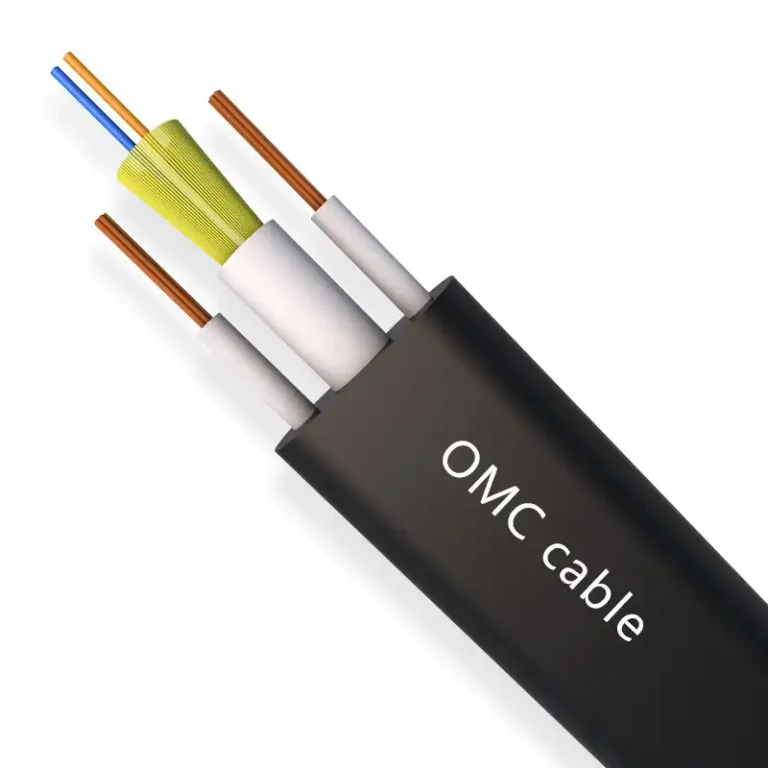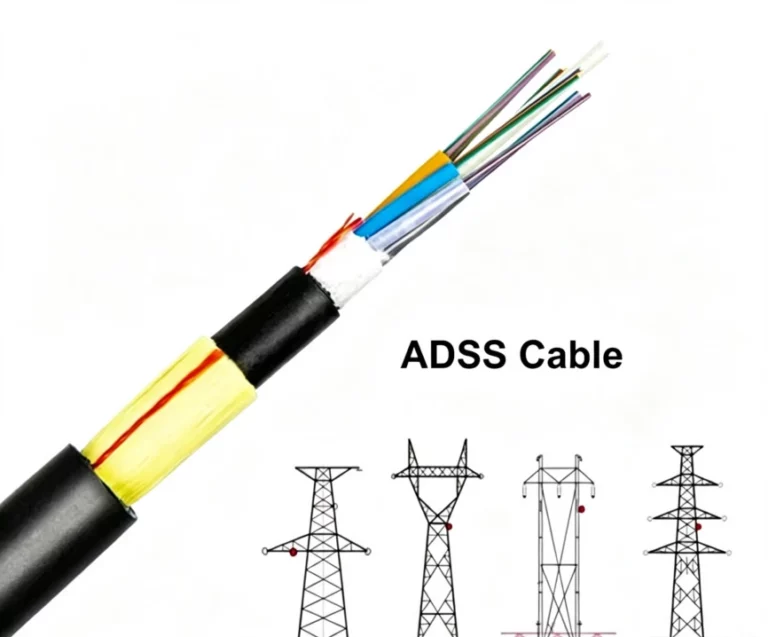








The fiber optic cable plays an essential role in today’s telecommunication industry and data center networking. With increasing requirements for densification, high speed, and reliability, the structure of the fiber cable also keeps developing and updating. The most commonly used fiber cable in the data center, FTTH projects, and dense cabling environment is the flat ribbon fiber cable. In this article, the distinctions between flat ribbon fiber cable and round fiber cable will be introduced, and the advantages of using the flat ribbon structure will be discussed.
1. Structural Differences
- Flat Ribbon Fiber Cable
The flat ribbon fiber cable organizes multiple optical fibers in a flat and parallel manner. The fibers are located side by side in a single plane, surrounded by strength members and jackets. Thus, the fiber cables can be efficiently spliced, cut, and installed in multi-fiber adapters.
Description of the OMC The Flat Fiber Ribbon Cable (4-12 fibers): This type of cable comprises 8/12F flat ribbon bare fibers that have been covered by an aramid yarn. These fibers have been color-coded for identification and are encapsulated by an outer sheath made from either LSZH, PE, PVC, or TPU material.
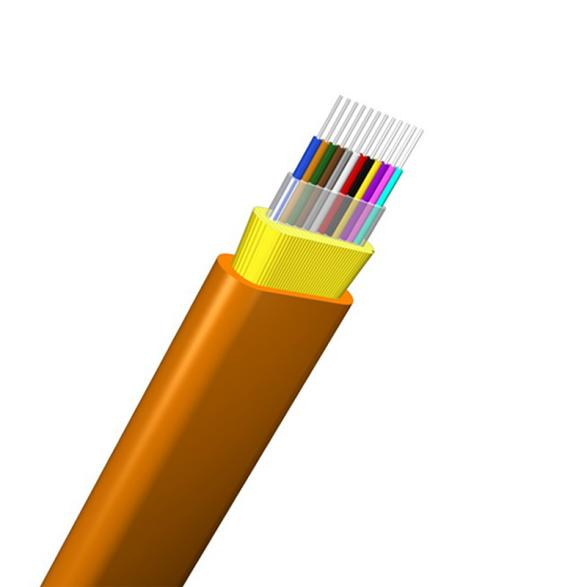
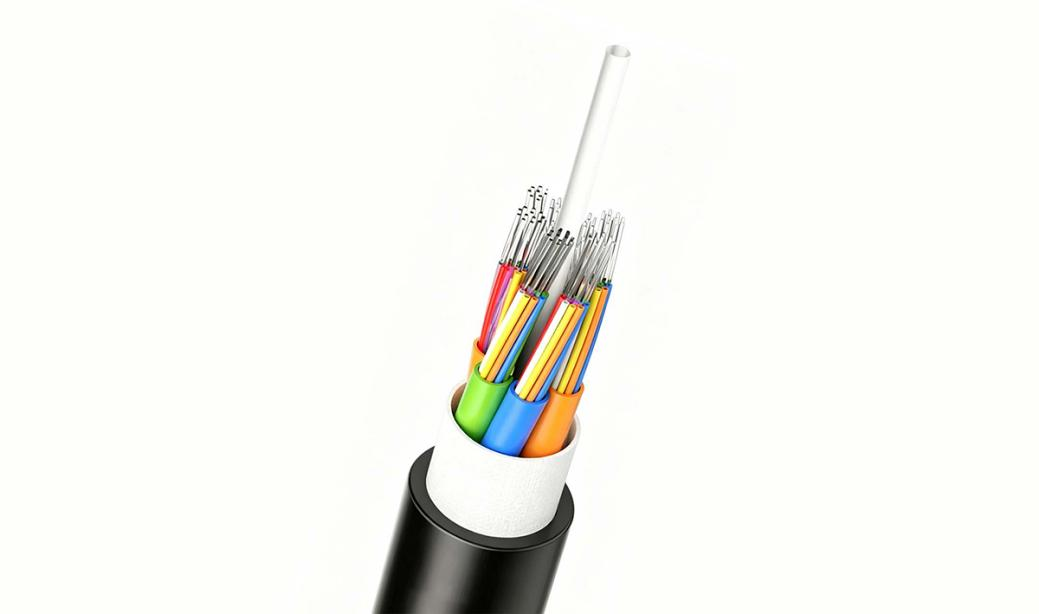
In contrast to the flat ribbon fiber cable, round fiber cables consist of fibers placed in a cylinderical or bunch form. Fiber arrangement in the cross-section, thus affecting density and making high-core-count cabling more difficult.
Conclusion: The flat ribbon fiber cable is suitable for high-density arrangement, while the round fiber cable adopts the conventional design with low density.
2. Performance Comparison
- Transmission Performance
The arrangement structure of a flat ribbon fiber cable results in constant attenuation. This makes it less susceptible to losses when performing multi-fiber splices. In turn, it is able to handle high-speed and high-bandwidth requirements.
Round fiber cables are subject to micro-bends and interference when there are many fibers routed in the same way.
- Bend Loss
Contemporary flat ribbon fiber cables have bend-insensitive fibers. Regardless of how tight or curved the bends are, these fibers will remain at low attenuation levels. Round fiber cables are vulnerable to bend loss in this scenario.
- Temperature and Interference
The fibers in a flat ribbon fiber cable remain evenly spaced, providing superior heat dissipation and reduced interference. Bundled fibers in a round cable might retain the heat, affecting their performance in the long term.
3. Installation and Maintenance Benefits
- Easy Cabling
A flat ribbon fiber cable is easy to install and organize inside conduits and racks. This makes it convenient for use in data centers and high-density patch panels.
Round fiber cables need more effort for proper cabling.
- Fast Splicing
Multiple fibers contained in a flat ribbon fiber cable can be spliced simultaneously, enhancing construction speed.
In the case of round fiber cables, single-fiber splicing becomes necessary.
- Simplified Troubleshooting
With clear fiber alignment, flat ribbon fiber cable simplifies fault identification and maintenance. Round fiber cables with intertwined cores can be more challenging to inspect and repair.
4. Common Uses of Flat Ribbon Fiber Cable
Given the merits associated with flat ribbon fiber cable, it can be used in different high-density situations as follows:
- Data Centers: High-density cables and patch panels need orderly placement of flat fibers.
- FTTH Networks: Flat ribbon fiber cable makes installation easier from the central office to subscribers.
- High-Density Racks: It helps save space in busy network racks.
- Fiber Trunks: Facilitates mass splicing, making construction quick.

Round fiber cables are ideal for normal telecommunication wires or those requiring lesser efforts, but they are being superseded by the use of flat ribbon fiber cable in recent times.
5. Conclusion
In general, flat ribbon fiber cable is superior in contemporary communication networks because:
- High Density helps save space on cabinets and trays.
- Bend-insensitive fibers; ideal for busy areas.
- Multi-Fiber Splicing makes construction efficient.
- Easy to maintain; reduces the time to detect any faults.
Even though round fiber cables are ideal for conventional communication systems, the flat ribbon fiber cable is gaining popularity in recent days.
Choosing OMC ensures not only superior performance and installation convenience but also compliance with industry standards for safety and longevity, making it a trusted solution for data centers, FTTH networks, and other optical communication infrastructures.