








With the fast advancement of high-speed communication networks, 5G network construction, and intelligent applications, fiber optic cables are an indispensable component in current data transmission systems. When choosing fiber cables for various projects, however, some consumers might have trouble telling the difference between outdoor fiber and indoor fiber.
Despite being used for similar purposes of transmitting optical signals, they come with different structures, materials, and other requirements because they were created for different environments. Choosing the wrong one might influence the reliability of your network, as well as its costs and lifespan.
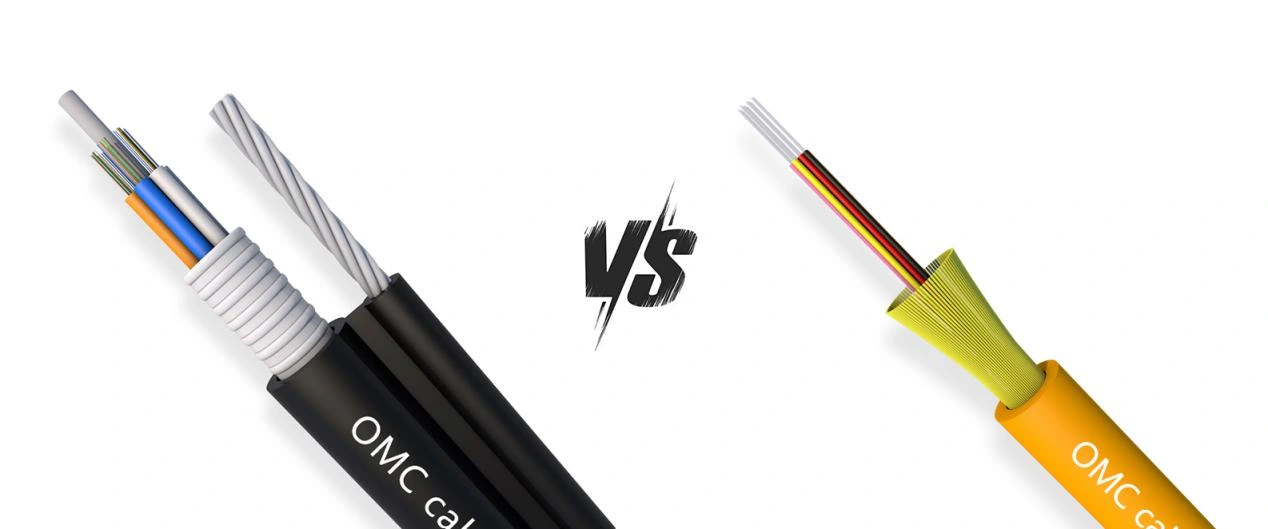
1. What Is Outdoor Fiber and Indoor Fiber?
Definition and Features of Outdoor Fiber
Outdoor fiber refers to fiber optic cables made for outdoor use, such as being buried underground or deployed overhead, used in telecommunication systems and building interconnections.
Due to the harsh environment faced by outdoor cables, outdoor fibers are made with enhanced protection mechanisms. Outdoor fibers employ loose tubes and waterproofing techniques as well as protective jackets to ensure proper functioning in harsh conditions.
Good-quality outdoor fiber cables may generally work in a broad temperature range ranging from -40° C to +70° C.
Definition and Features of Indoor Fiber
Indoor optical fiber cables are mostly used inside buildings such as data centers, offices, server rooms, or other structured cabling systems.
In comparison to outdoor optical fiber cables, indoor optical fiber cables give greater importance to flexibility, installation, and safety concerns. Indoor settings are more controlled environments and therefore less likely to have a need for water and UV protection.
2. Main Differences Between Outdoor Fiber and Indoor Fiber
Different Environmental Protection Capabilities
The biggest difference between outdoor fiber and indoor fiber is their ability to withstand environmental conditions.
Outdoor cables need to handle:
- Direct sunlight exposure
- Rain and moisture
- Temperature changes
- External mechanical pressure
- Underground installation conditions
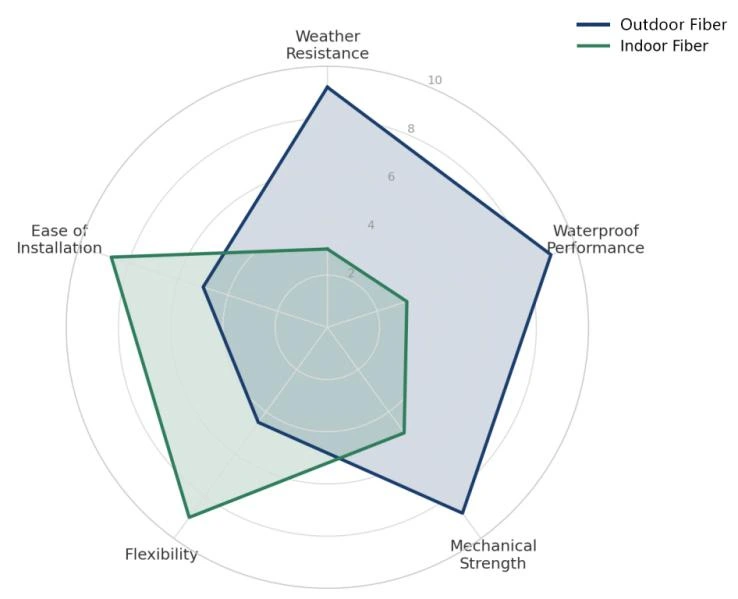
In order to increase the strength of the cable, outdoor fiber optic cables have an outer coating made of PE (polyethylene) and a waterproofing structure. Unlike outdoor fiber, indoor fiber is installed in a relatively stable environment where there is no need for such protection from the environment.
Different Cable Structure Designs
Outdoor fiber typically adopts a loose tube structure. Fiber in this case is enclosed in PBT tubing, which contains special substances. The empty space will allow movement of the fibers when there is a change in temperature or any other stress on the fibers, thus minimizing their damage.
The tight buffered configuration is mostly used for indoor fiber, whereby the protective coating is tightly coupled with the fiber.
Different Waterproof Performance
Water resistance is another important distinction.
Outdoor cables often include:
- Water-blocking filling materials
- Waterproof tapes
- Sealed loose tubes
These characteristics will help to inhibit water spreading along the cable length and are particularly important for underground or outdoor usage.
On the other hand, indoor fibers have minimal waterproofing, as there is no need for this in normal indoor conditions.
Different Mechanical Strength
Because outdoor cables are installed in more challenging conditions, outdoor fiber generally provides higher mechanical strength.
Common protective features include:
- Central strength members for tensile resistance
- Strong PE outer jackets
- Reinforced structures for installation protection
Outdoor fibers can be designed to endure hundreds of Newtons of pulling forces, and they can thus be used in long-haul networks.
In contrast, indoor fibers pay greater attention to flexibility, which makes it easier to route the fiber cable through racks, conduits, and equipment interfaces.
3. How to Choose the Right Outdoor Fiber?
Choosing the correct outdoor fiber depends on installation conditions, transmission requirements, and future network expansion plans.
Consider the Installation Environment
Different applications require different cable features:
- Underground pipelines require cables with strong waterproof capabilities.
- Aerial installations require better tensile strength and weather resistance.
- Building-to-building connections require stable and durable fiber solutions.
Consider Fiber Count Requirements
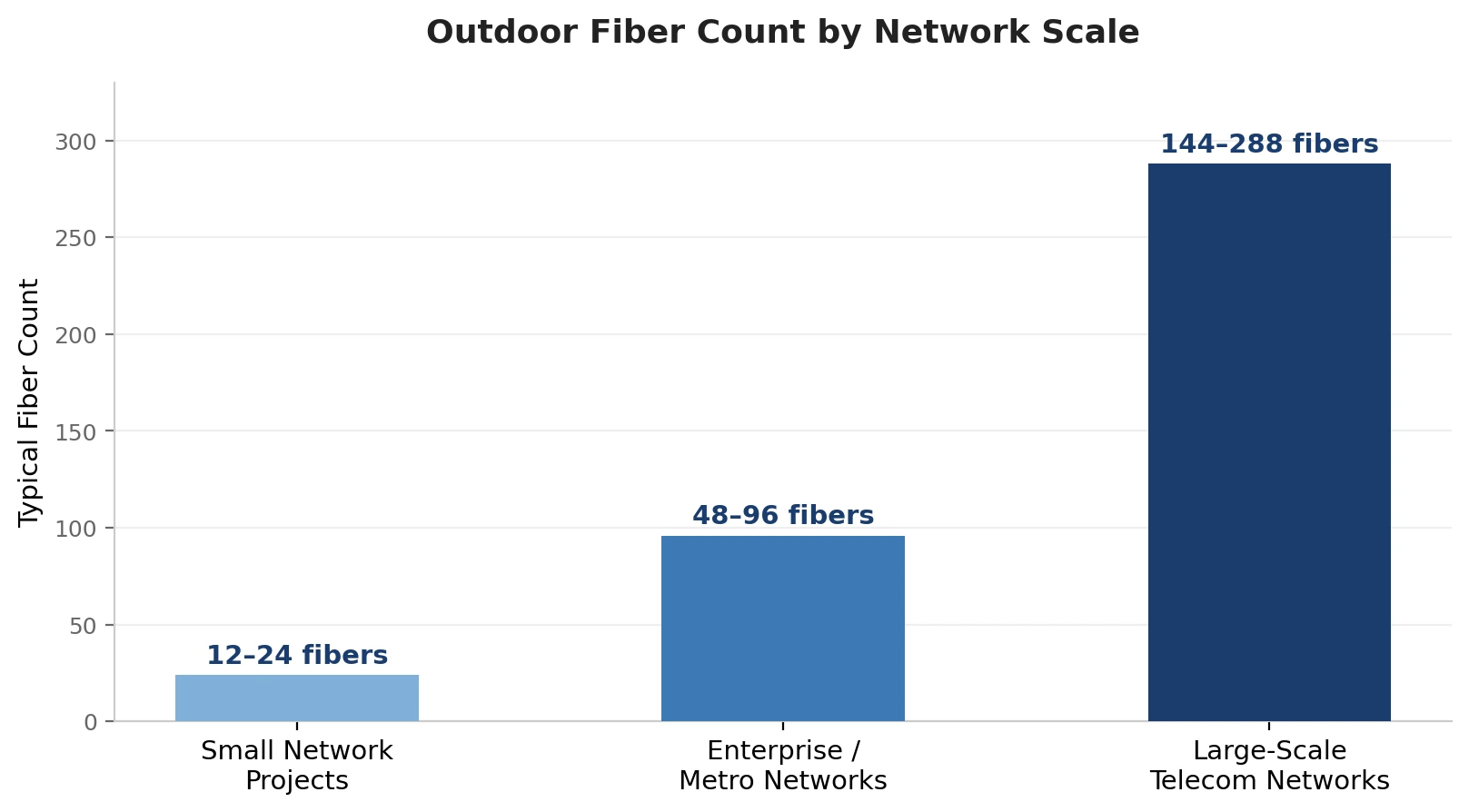
Fiber count is another important factor when selecting an outdoor cable.
Small network projects may only need 12 or 24 fibers, while large-scale telecommunications systems may require 144 or 288 fibers to support future growth.
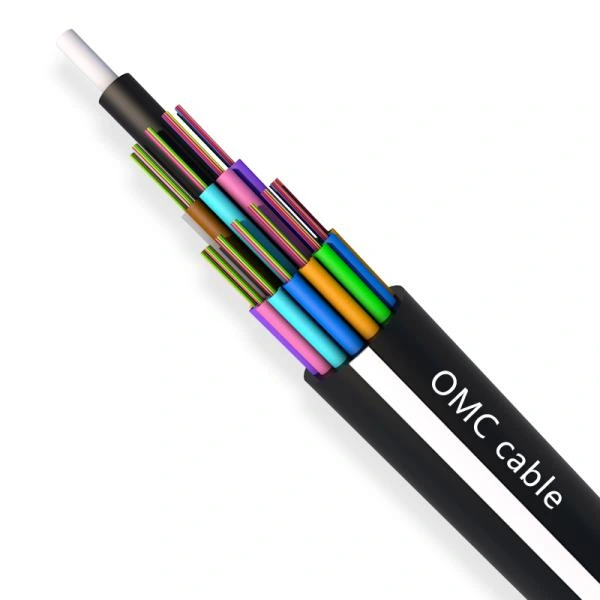
For example, OMC provides the 12-288F Stranded Loose Tube No-Armored outdoor cable-GCYTY, which features a central FRP non-metallic strength member. The single-mode or multimode fibers are placed inside PBT loose tubes filled with compound, while a PE layer improves compactness and longitudinal water-blocking performance. With fiber counts ranging from 12 to 288 cores, this product offers flexible solutions for telecom networks, metropolitan area networks, and various outdoor communication projects.
4. How to Choose the Right Indoor Fiber?
When selecting indoor fiber, users should focus on safety standards, installation requirements, and network performance.
Consider Building Safety Requirements
For offices, hotels, and public buildings, LSZH fiber cables are often preferred because they produce less smoke and fewer harmful gases during combustion.
This makes them suitable for environments with strict fire safety requirements.
Consider Cabling Requirements
Indoor installations usually require cables with:
- Better flexibility
- Smaller diameter
- Easy termination features
For example, data centers often prioritize high-density cabling, while office networks may focus more on convenient maintenance.
Consider Transmission Performance
Both single-mode and multimode fibers are widely used indoors:
- Single-mode fiber is suitable for longer distances and higher bandwidth applications.
- Multimode fiber is commonly used for short-distance data transmission.
With increasing demand for 10Gbps, 40Gbps, and 100Gbps networks, selecting the right fiber type helps ensure future scalability.
5. Conclusion
Even though both outdoor fiber and indoor fiber are essential components in an optical communication system, they operate in totally different environments.
Outdoor fiber takes into account factors such as weather resistance, waterproof protection, and mechanical strength, making it suitable for use in outdoor networking, underground network installations, and big communication networks. On the other hand, indoor fiber considers aspects of flexibility, safety, and easy installation inside buildings.
For any inquiries regarding outdoor fiber solutions, cable specifications, or any other fiber optic needs, do not hesitate to contact OMC. We have the expertise to serve your communication project needs effectively.
-768x290.webp)
.webp)