







Proper choice of fiber optic cabling has proven vital in performance, scalability, and stability in the long term in the modern network infrastructure. Commonly used options are breakout cables and distribution cables. Although both of them support fiber connections, they vary in terms of their structure, installation process, and common applications. These differences are useful in guiding the choices made by the network planners and installers.

Understanding Distribution Cable
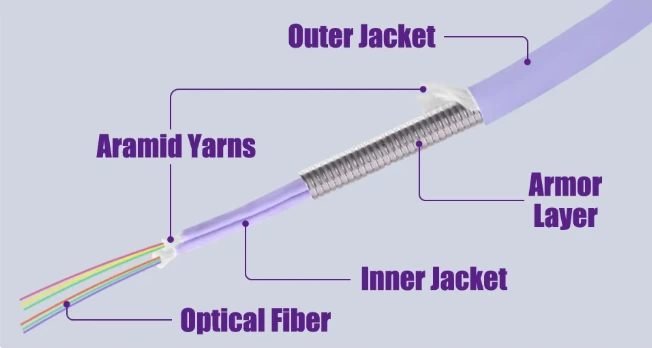
A distribution cable consists of several buffered fibers within one outer jacket. The fibers are interlocked, not heavily jacketed, and this makes the cable light and flexible. This design is what makes Distribution Cable appropriate in cable trays, conduits, and indoor backbone systems where the fibers end in patch panels or in distribution frames.

What Is a Breakout Cable?
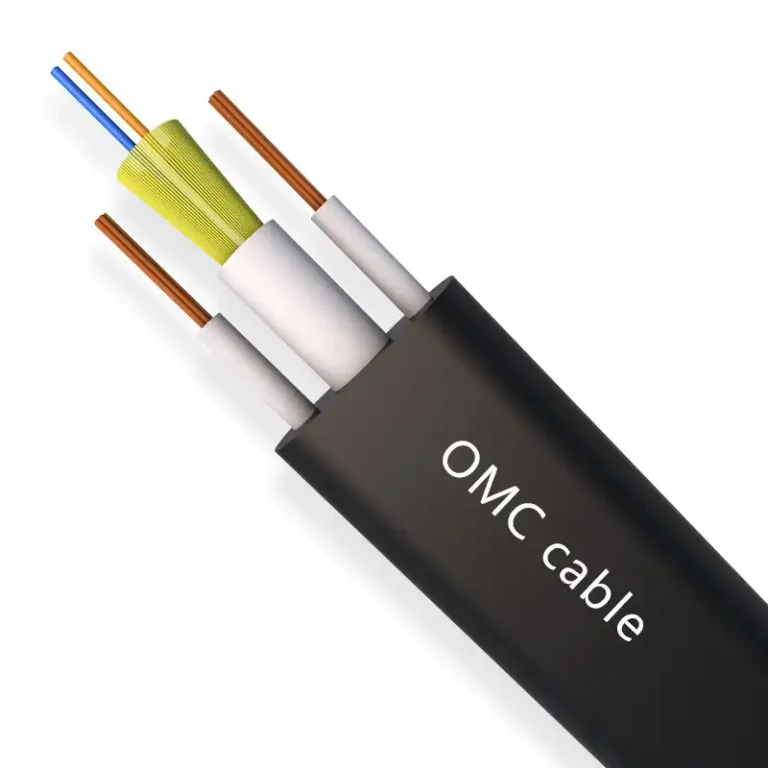
Breakout cables use a different structure. Each fiber is enclosed in its own secondary jacket inside the main sheath. This provides stronger mechanical protection and allows direct termination without fan-out kits. Breakout cables are often used for direct equipment connections and in environments where added fiber durability is required.

Key Differences Between Breakout and Distribution Cable
Although both cable types support fiber distribution, their internal design and practical use differ in several important ways.
- Cable Structure
- A distribution cable contains multiple buffered fibers grouped under a single outer jacket.
- A breakout cable encloses each fiber in its own secondary jacket, offering added mechanical protection.
- Flexibility and Size
- Distribution cable is thinner and more flexible, making it easier to route through tight conduits and trays.
- Breakout cable is thicker due to individual fiber jackets, which increases durability but reduces flexibility.
- Termination Method
- Distribution cable usually requires a patch panel or fan-out kit for proper termination.
- Breakout cable allows direct termination of each fiber without additional breakout hardware.
- Installation Environment
- Distribution cable is commonly used in structured cabling systems, offices, data centers, and indoor backbone networks.
- Breakout cable is preferred in industrial, equipment-level, or harsh environments where fibers need stronger protection.
- Cost and Installation Time
- Distribution cable is generally more cost-effective for high-fiber-count installations.
- Breakout cable may reduce labor time during termination, but it often comes at a higher material cost.
Applications and Use Cases
Both breakout and distribution cables have distinct application niches. Distribution cable is ideal in structured cabling systems for office buildings, data centers, and campus environments. Its design supports dense fiber counts and organized routing to patch panels.
Breakout cable finds strength in environments that demand rugged individual fiber protection. These are automation in industry, military communications, and direct connections to devices without patching. It is used in specialized networks, edge deployments, and high-stress environments due to its inherent durability as well as simple termination.
Choosing the Right Cable
The choice between a breakout and a distribution cable is based on the requirements of the particular network. When the key factor of consideration is flexibility, high fiber counts, and centralized termination, then it is common to consider a distribution cable. In case individual fiber ruggedness and direct termination are paramount, a breakout cable typically can produce better results. These two types are important in properly designed fiber networks, and their application should be based on the targeted environment and installation plan.
Conclusion
Fiber optic infrastructure needs to strike a balance between performance, longevity, and cost. The ability to distinguish between breakout and distribution cable allows for informed decisions. Distribution cable is used in high-density networks that are flexible and have their termination requirements centralized. Breakout cable provides individual fiber protection and direct connection, where strength is the first requirement. Making cable choice and installation objectives consistent with one another helps network designers acquire reliability, scalability, and efficient deployment in a broad spectrum of environments.