







The rapid development of digital services has led to the need for a stable and fast connection for both home use and businesses. The widespread deployment of FTTH has been caused by its advantages in terms of increased bandwidth, lower losses, and reliability in comparison with traditional copper cables.
Selecting the appropriate type of FTTH fiber optic cable is not an easy task since different installations require cables of various types. The use of the wrong cable is likely to create problems during installation, increase maintenance costs, or even compromise the reliability of the whole system. Knowledge of the main principles of cable selection can be useful in constructing a reliable FTTH network.
1. What Is FTTH Fiber Optic Cable and How Does It Work?
Ftth Fiber optic cable refers to the communication cable that is intended for fiber-to-the-home networks. The connection between the optical distribution point in the service provider’s location and the optical network terminal installed in the user’s place.
The following is the procedure of data transmission in a normal FTTH network:
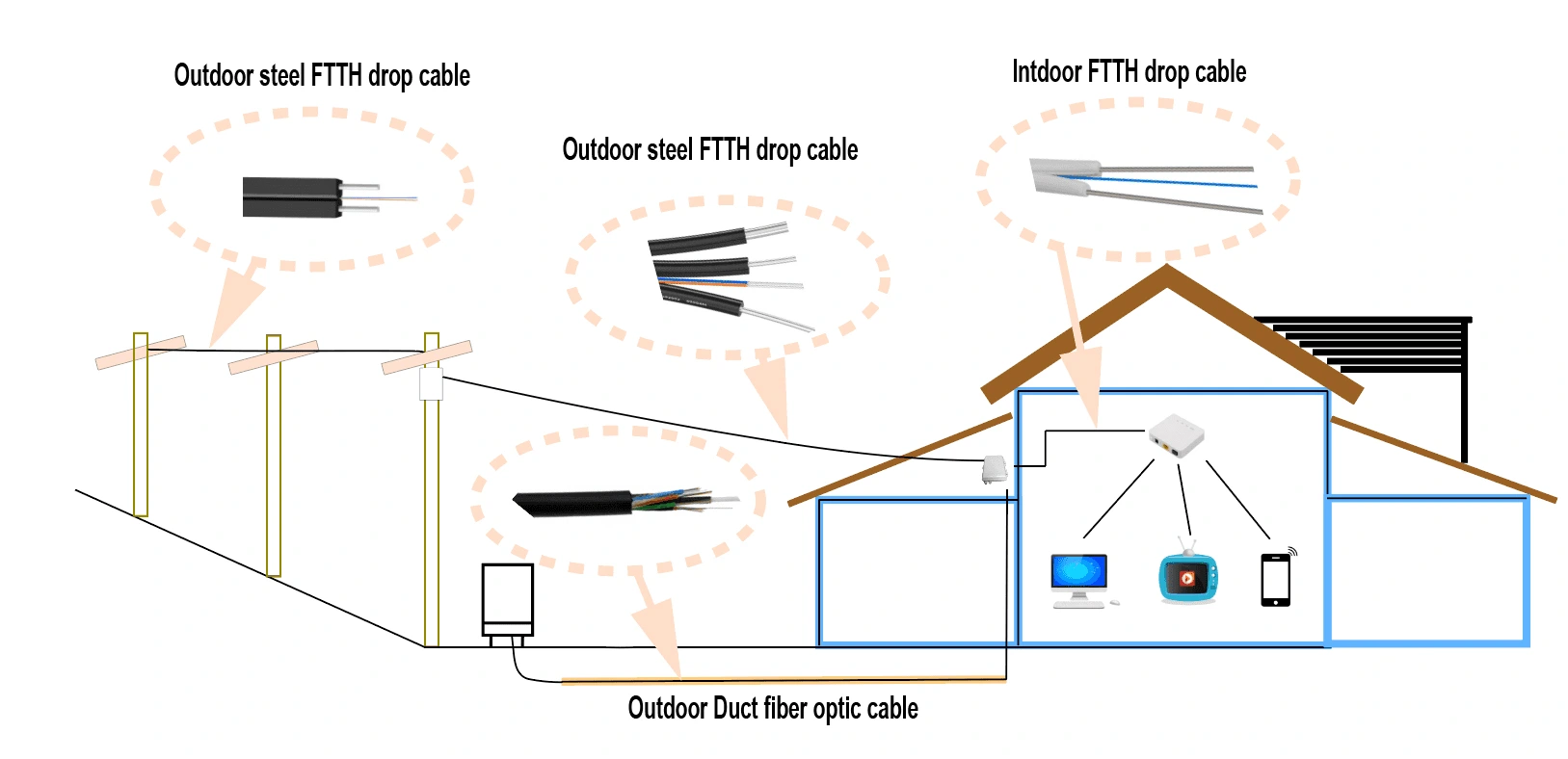
OLT (Optical Line Terminal) -> Fiber Distribution Point -> FTTH Cable -> ONU (Optical Network Unit) -> User Devices
Instead of sending data using electric signals as in copper cables, fiber optic cables send the data through light signals. These features of fiber optic cables give them higher capacity, higher transmission range, and more resistance to electromagnetic interference.
Most FTTH applications use single-mode optical fibers such as G.652D, G.657A1, and G.657A2 fibers. G.657 fiber optics, especially, are very common in home use due to their high flexibility.For example, some of the G.657A2 fibers can be bent down to 10 mm.
2. How to Choose the Right FTTH Fiber Optic Cable for Your Network?
Choosing an ftth fiber optic cable requires evaluating several technical factors based on the actual application. The right choice depends not only on transmission performance but also on installation conditions and future network requirements.
Fiber Type and Transmission Performance
For most FTTH deployments, single-mode fiber is the preferred option due to its low attenuation and long-distance transmission capability.
Compared with traditional fiber types, single-mode fiber provides:
- Lower signal loss over long distances
- Higher transmission capacity
- Better compatibility with modern broadband systems
The use of G.657A1 and G.657A2 fibers in FTTH applications is quite common since they are less susceptible to bend losses compared to other fibers. This is due to the fact that they can easily withstand the high level of bending stresses when passing through tight spots or corners.
Cable Structure and Protection Design
The physical composition of the FTTH fiber optic cable will directly impact its performance and lifespan.
Different cable designs are developed for different environments:
| Cable Type | Typical Application | Main Advantage |
| Flat FTTH Drop Cable | Indoor home installation | Lightweight and easy to install |
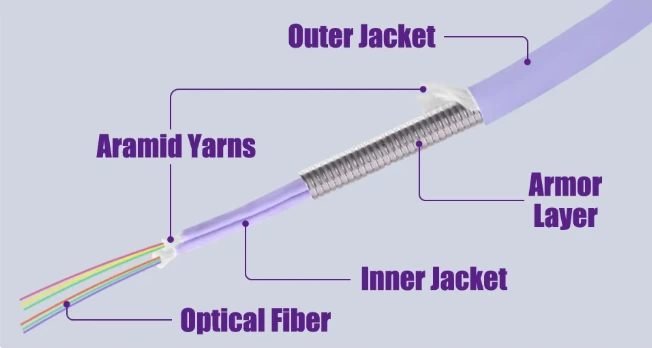
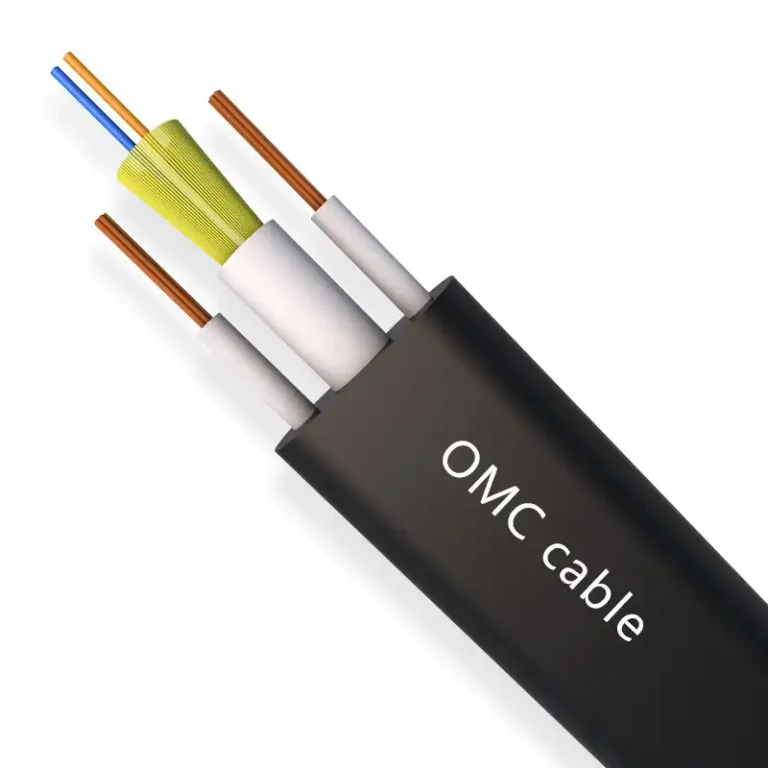
| Armored FTTH Drop Cable | Underground duct installation | Better protection against pressure and moisture |
| Outdoor FTTH Cable | Outdoor networks | Strong weather resistance |
The proper cable design must be mechanically protected while providing adequate flexibility for effective installation.
3. How Many Fiber Cores Does an FTTH Fiber Optic Cable Need?
Fiber count is another important factor when selecting an FTTH fiber optic cable. The required number of cores depends on the network scale and expected future expansion.
For residential applications, a single-core fiber cable is usually enough for basic broadband access. Larger FTTH projects, such as those involving apartment buildings or business centers, will usually entail the use of more fiber cores in order to accommodate more users and offer various services.
Typical selections include:
| Application | Recommended Fiber Count |
| Individual home connection | 1-2 cores |
| Small commercial buildings | 2-4 cores |
| Residential communities | 4-12 cores |
4. How to Select FTTH Fiber Optic Cable for Different Installation Environments?
The installation environment plays a major role in determining which FTTH fiber optic cable should be used. Cables intended for interior installations cannot be suitable for outdoor or underground applications because they lack the necessary protections.
 Indoor Home Installation
Indoor environments usually require cables that are flexible, compact, and easy to install. Since home wiring often involves limited space and multiple bends, good bending performance is an important consideration.
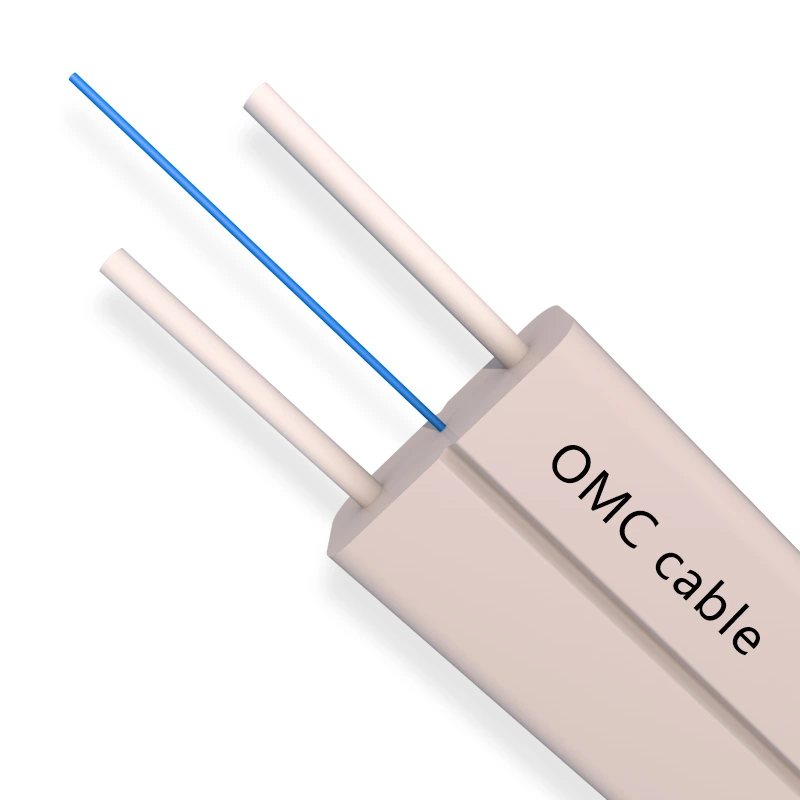
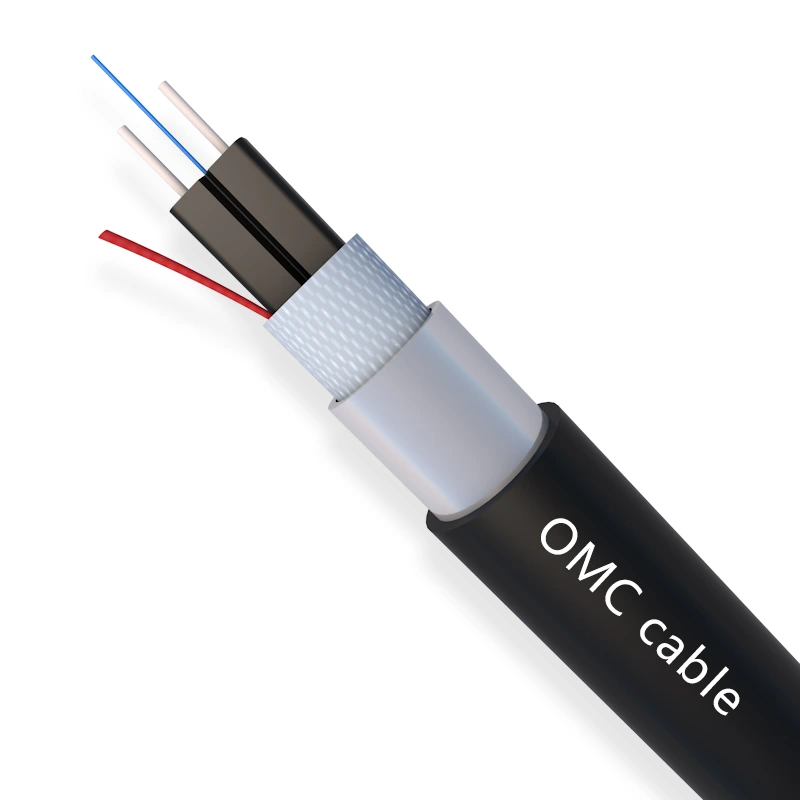
Flat FTTH drop cables are widely used in residential applications because they have a simple structure and can be installed efficiently. For example, OMC’s a 1 Core 2x3mm Butterfly Flat FTTH Drop Cable is designed for indoor fiber installation. It uses a bow-type flat structure with a central G657A1 or G657A2 single-mode fiber unit and two parallel FRP strength members on both sides.
The FRP rods improve crush resistance, while the LSZH jacket provides low smoke, zero halogen, and flame-retardant characteristics. This type of cable is lightweight, easy to strip, and suitable for residential fiber deployment.
 Underground Duct Installation
Underground installation requires stronger protection because cables may face moisture, external pressure, and mechanical stress.
For these applications, armored FTTH cables are commonly selected. OMC’s a 1-4F FTTH Single-Armored Outdoor Drop Cable is designed for placement inside underground ducts. The construction of the cable incorporates a bow-shaped drop cable together with the water-blocking tape and aluminum armor, providing higher resistance to moisture and mechanical stress.
There is also a strong PE outer jacket that adds additional protection and allows installing the cable outdoors for a long period of time.
Outdoor Installation
Outdoor FTTH networks must withstand environmental changes, including sunlight exposure, temperature variation, and physical tension.
When selecting outdoor cables, installers should consider:
- Weather-resistant jacket materials
- Sufficient tensile strength
- Long-term mechanical durability
As compared to interior cables, outdoor FTTH cables employ more robust protective layers, ensuring constant operation in various weather conditions.
5. Which Standards Should Be Considered While Selecting FTTH Fiber Optic Cable?
Quality standards are important indicators when evaluating an FTTH fiber optic cable supplier and product reliability.
Common standards include:
- ITU-T G.652D
- ITU-T G.657A1
- ITU-T G.657A2
- IEC-related fiber optic standards
Products meeting established standards tend to offer higher levels of compatibility and optical performance, as well as better reliability in the long term.
Apart from technical data, other aspects such as manufacturing experience, quality control, and customization services should be considered when choosing suppliers.
Conclusion
As you can see, selecting the right FTTH fiber optic cable requires consideration of several aspects, namely fiber type, cable construction, fiber count, environmental conditions, and cable performance, among others. The selection of a proper cable suitable for your needs is crucial in developing reliable FTTH network infrastructure, regardless of whether the cable is intended to be used in residential buildings or outdoors.
Should you have any inquiries about FTTH fiber optic cable selection or specification, feel free to contact us. The OMC team will be glad to offer you assistance in finding a suitable fiber optic solution for you.