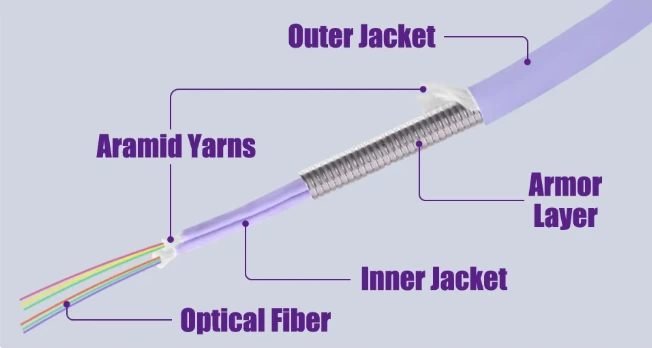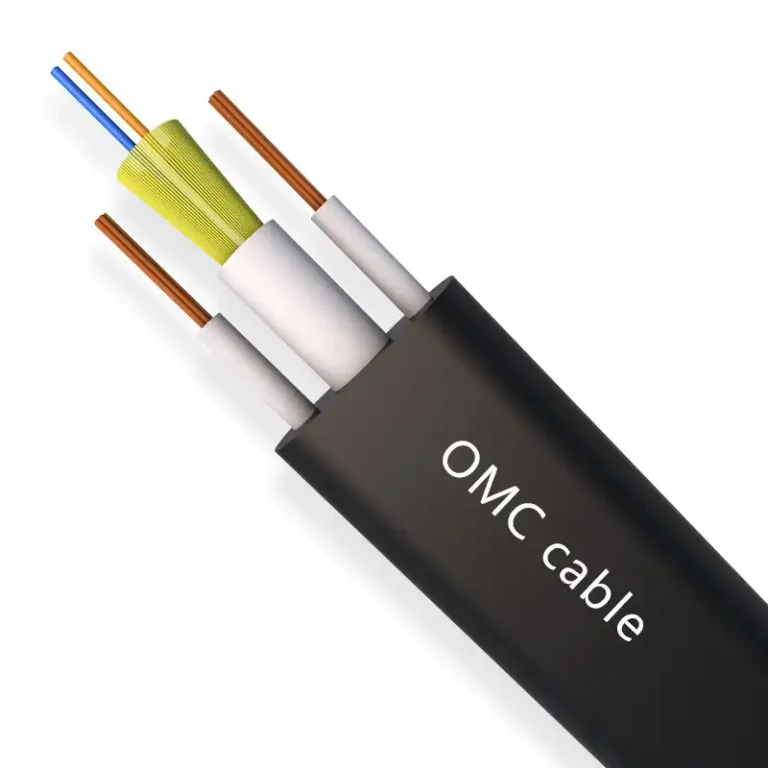








With broadband, terms like FTTC, FTTP, and FTTH are applied loosely, and you may have also heard the term FTTH drop cable being referred to in relation to domestic internet installation. Are they related, however, or are they terms used to explain various systems and technologies? In this article, we will analyze these terms and explain how FTTC, FTTP, and FTTH drop cables are different from each other so that you can better understand how they work in modern broadband infrastructure.
What is FTTC?
FTTC stands for Fiber to the Cabinet, which is a broadband infrastructure in which the fiber-optic cable is brought to a distribution street-level cabinet. The rest of the connection to the home or building is through copper wire, such as DSL (Digital Subscriber Line) or VDSL (Very-high-bit-rate Digital Subscriber Line).
Here, fiber is used for most of the connection, but copper is still used for the “last mile” to the user.FTTC is thus a hybrid service, with very high speeds for the broadband, but very restricted by comparison with a fiber-optic connection to the building or terminal, i.e., FTTP or FTTH.
Key Features of FTTC:
- Fiber to a local cabinet, not directly to the premises.
- Uses copper for the last part of the connection.
- Speed is variable, but typically up to 80 Mbps, depending on the distance from the cabinet.
- Typically take place in urban and suburban regions.
What is FTTP?
FTTP is short for Fiber to the Premises, a phrase that is used to describe a dedicated fiber-optic link from the telemedicine exchange to the premises of the end user. The whole system is fiber-optic cable-based and provides greater and more reliable speeds. FTTP is often employed on new developments and is the benchmark for broadband provision.
Key Features of FTTP:
- End-to-end fiber-optic connection from the exchange to the building.
- Delivers high-speed broadband with much higher download and upload speeds than FTTC.
- Best suited for areas that are urban and rural, with space for the installation of fibers.
- From 100 Mbps up to 1 Gbps or higher, depending on the carrier.

What is FTTH Drop Cable?
Now, let’s discuss the phrase FTTH drop cable. FTTH stands for Fiber to the Home, which is a special kind of FTTP that guarantees a fiber-optic connection to be deployed directly to individuals’ residences, and not organizations or other buildings. The FTTH drop cable is the particular part of the fiber-optic infrastructure linking the primary fiber feeder (from the provider’s point of distribution) to your house or condominium.
Key Features of FTTH Drop Cable:
- Fiber-optic facilities are installed directly at the customer’s residence.
- Used in the scenario of FTTH deployment for providing high-speed broadband services.
- FTTH drop cables are normally thin and flexible compared to conventional fiber cables, thus facilitating easy installation in a home setting.
- They may be combined with a range of connectors (SC, LC, etc.) based on the user terminal and the ISP network infrastructure.
FTTH drop cables are an important factor in facilitating the fiber-optic signal to reach the house directly, providing a quick and secure internet connection that is typically more stable and less prone to interference than copper-based connections.
FTTC vs. FTTP vs. FTTH: Key Differences
| Feature | FTTC | FTTP | FTTH |
| Full Fiber Optic Network | No, uses copper for the final stretch | Yes, full fiber-optic connection | Yes, part of FTTP, fiber direct to home |
| Installation Complexity | Lower uses existing copper infrastructure | Higher requires complete fiber installation | Same as FTTP, focused on residential areas |
| Speed | Up to 80 Mbps (depends on distance) | 100 Mbps to 1 Gbps+ | 100 Mbps to 1 Gbps+ |
| Reliability | Moderate (copper can affect speed) | High (fiber is immune to interference) | High (fiber ensures optimal performance) |
Conclusion
FTTC, FTTP, and FTTH drop cables are all fiber-optic technology, but all three are for different reasons. FTTC uses copper in the final drop, FTTP supplies full fiber to the premise for improved and more reliable performance, and FTTH drop cables supply fiber right to your home for the ultimate speed and stability required by today’s internet usage.
We at OMC provide expert fiber-optic services designed to meet your specific requirements. Whether you’re setting up your home network or adding a new line, call us for additional information on how we can help you get the maximum performance and reliability for your network.