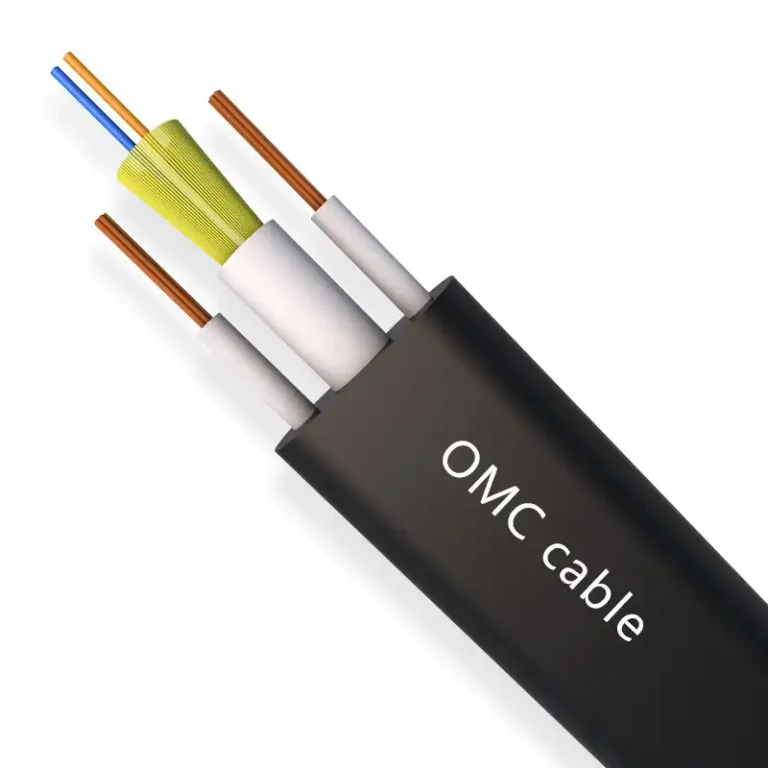








Armored Fiber Optic Cable is widely used in the areas of telecommunications, data centers, industrial purposes, and outdoor communication networks. The armored fiber optic cable differs from the normal fiber optic cable by having an additional layer around the fiber optic core, which makes it resistant to various forms of physical damage like crushing, impact, and rodents.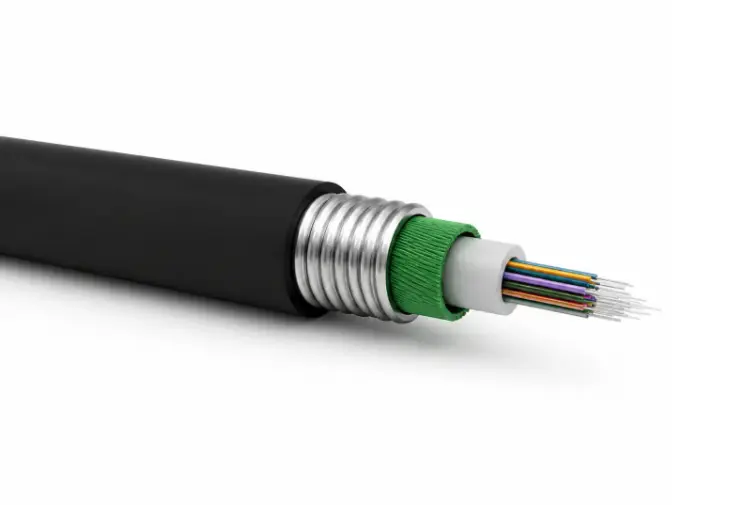
Armored Fiber Optic Cable Defined
An armored fiber optic cable is defined as a fiber optic cable that has been designed in a manner that has an additional layer on the fiber optic for protecting it from physical damage. Unlike normal fiber optic cables, the armored fiber optic cable is suitable in situations where the cable is subjected to some physical pressure.
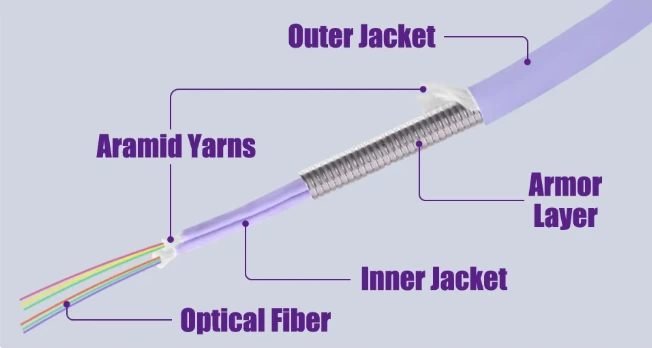
The basic structure is as follows:
Optical Fiber → Buffer Tube →Armor →Strength Member →Outer Jacket
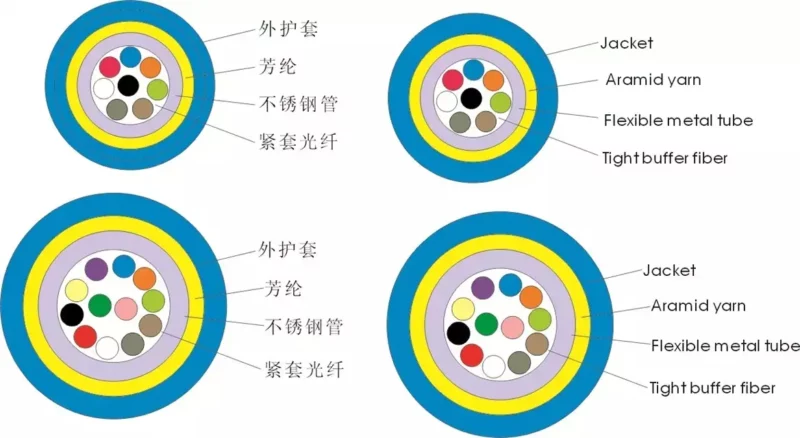
The function of each layer is as follows: The Optical fiber serves as the means of data transfer using light, whereas the buffer tube acts as the first layer of protection. The strength member gives the cable strength to endure pulling when it is being installed, and the armor layer is there for extra protection from various mechanical forces.
The armor could be manufactured using any one of the following materials, depending on the use that the cable is intended for: steel, stainless steel, aluminum, or other non-metallic materials. Various constructions offer different degrees of protection against mechanical and environmental damage.
How Does Armored Fiber Optic Cable Work?
Armored Fiber Optic Cable technology functions by the transmission of information through light. On the transmitting end, electrical data signals are changed into light signals through the optical transmitter. Light pulses are sent through the fiber core and transport digital data over long distances with minimal losses. On the receiving end, the light pulses are changed back to electrical signals, which can then be interpreted by networking equipment.
While the optical fiber transmits information, the surrounding structures of the cable work hand-in-hand to protect the transmission process. The buffer tube acts as an isolating layer between the fibers and external stress. The strength member assists in managing tension forces during the cable pulling process. The armor layer absorbs and distributes the mechanical force that acts on the fibers from outside, hence minimizing damage caused by crushing, impact, bending, or rodents. Therefore, the technology integrates fast optical transmission with robust protection.
What kinds of armored fiber optic cables exist on the market?
Armored Fiber Optic Cable can generally be classified by armor material and installation environment. Based on the armor material, it can be divided into metal armored and non-metallic armored fiber optic cables. Different armor materials provide different levels of mechanical protection and are suited to different installation conditions.
Metal Armored Fiber Optic Cable commonly uses:
- Steel armor: Provides high mechanical strength and excellent crush and impact resistance.
- Stainless steel armor: Offers strong mechanical protection and improved corrosion resistance.
- Aluminum armor: Provides additional protection while helping reduce overall cable weight.
Non-Metallic Armored Fiber Optic Cable commonly uses:
- FRP armor: Provides good mechanical protection, corrosion resistance, and electrical isolation.
- Aramid fiber armor: Offers high tensile strength while keeping the cable lightweight and flexible.
- Other composite materials: Can provide a balance of mechanical protection, low weight, and resistance to harsh environments.
As per installation requirements, armored cables may also be installed indoors, outdoors, and for direct burial. The correct choice will depend upon the installation, environmental and mechanical considerations, and network layout.
What Are the Advantages of Armored Fiber Optic Cable?
Its major strength lies in the fact that it provides additional protection against physical hazards. Its major strengths include:
- Excellent Mechanical Protection: The armor enhances the mechanical strength of the cable, which helps minimize the possibility of damaging the fiber while installing and operating it.
- Resistance to Crush and Impact: The robust construction ensures that the fiber is protected from soil pressure, falling objects, rocks, impacts, and any other kind of external force.
- Resistance to Rodents: The armor makes it more difficult for rodents to get into the cable and damage the fiber core, thus allowing the use of such a cable underground and outdoors.
- Higher Durability: When used along with strength members, water-blocking substances, and outer jackets, the armor adds several layers of protection.
- Useful for Harsh Conditions: These characteristics of the armored cables ensure their suitability for use in industrial networks, outdoor communication, underground installations, and other places where normal cables would require extra protection.
-800x314.webp)
It is very durable mechanically and thus ideal for harsh conditions. The only drawback of the armored cable, when contrasted to other cables without any armor, is that it is relatively heavy and expensive.
Where Is Armored Fiber Optic Cable Used?
Armored Fiber Optic Cable is widely used in environments where fiber cables require additional mechanical and environmental protection. Common applications include:
Telecommunications Networks
Used for long-distance communication, access networks, and outdoor fiber deployments where cables may face mechanical stress, moisture, and changing weather conditions. In these applications, the OMC GYTC8S 12–48 Fiber Optic Cable is an ideal choice, combining an 8-shaped self-supporting structure, corrugated steel tape armor, water-blocking design, galvanized steel messenger wire, and HDPE jacket for reliable protection.
.webp)
Power Communication Systems
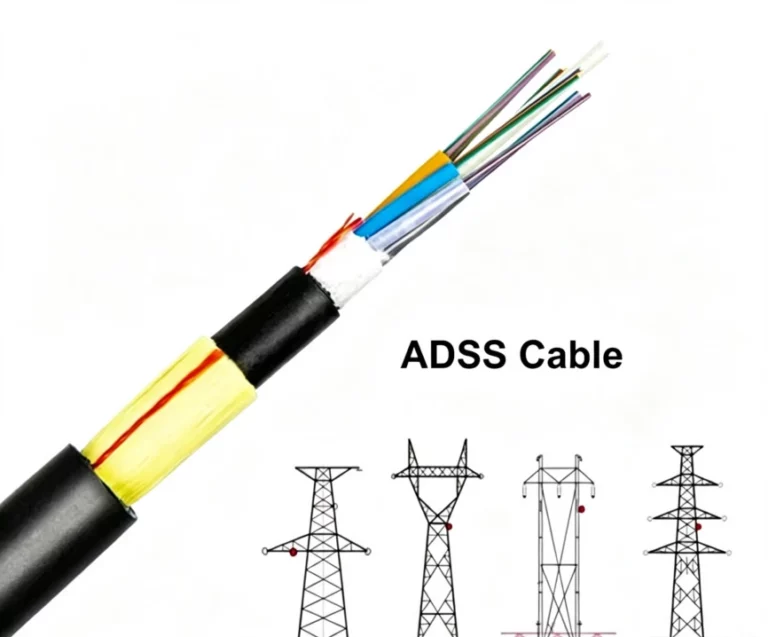
Used in power communication networks where fiber cables require reliable mechanical protection and stable transmission performance. Armored fiber optic cables can withstand outdoor environmental conditions, mechanical stress, and other installation challenges commonly found in power infrastructure.
Industrial Networks
Ideal for factory buildings, plant buildings, and other industrial applications where fiber optic cables are susceptible to impact, crushing, vibration, moisture, and other physical damage. The armor layer is an additional layer of protection and ensures reliable communication in industrial settings.
Outdoors and Buried Applications
It is commonly used outdoors, underground, and in direct burial applications where the cables require protection against weather conditions, ground pressure, moisture, and rodents. The armor layer increases the cable’s resistance and ensures reliable fiber transmission in difficult installation conditions.
Aerial Fiber Applications
Self-supporting armored designs are suitable for aerial fiber installations where cables must withstand wind, tension, and changing weather conditions. These cables combine mechanical protection with a supporting structure, reducing the need for additional support hardware during deployment.
.webp)
How to Choose the Right Armored Fiber Optic Cable?
When selecting, it is important to consider not only the armor material but also the installation environment, fiber specifications, and overall protection requirements.
|
Selection Factor |
What to Consider |
| Installation Environment | Indoor, outdoor, underground, or aerial |
| Fiber Type | Single-mode or multimode |
| Fiber Count | 2, 4, 8, 12, 24, 48 fibers, etc. |
| Armor Type | Metal or non-metallic |
| Cable Jacket |
UV, moisture, temperature, and flame requirements |
Key Selection Considerations
Installation Environment Assessment
Assess whether the cable is installed indoors, outdoors, under the ground, or in the air, and assess the required tensile strength, weather resistance, crush, water, and rodent resistance properties.
Determine Fiber Type and Quantity
Determine whether single-mode fiber or multimode fiber should be chosen based on the required transmission range and choose the number of fibers depending on the capacity requirements.
Selection of Armor Type
Determine whether metal armor or non-metal armor should be chosen depending on mechanical resistance, weight, corrosion resistance, and insulation from electricity.
Selection of the Cable Jacket
Evaluate the UV, moisture, temperature, tensile, crush, and bending resistance requirements for the cable jacket.
Conclusion
The Armored Fiber Optic Cable ensures improved mechanical strength due to its extra armoring and multi-layer design. This type of cable is ideal for outdoor, industrial, underground, and aerial installations when there could be potential threats to the cables. In case you require help in selecting a fiber optic cable for your application or have questions about the structure and usage of a cable, feel free to contact OMC.