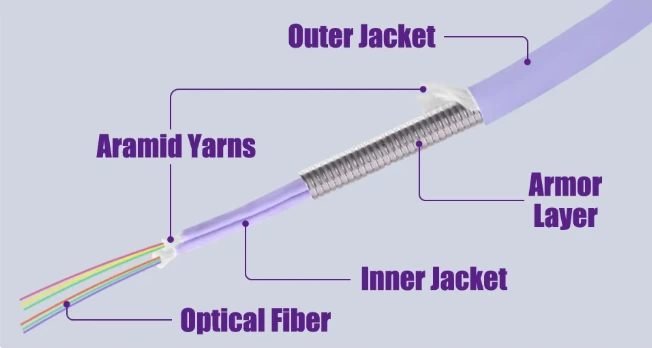








Amid the growing use of digital infrastructure, the need for fiber optic cables with high durability, efficiency, and stable performance has increased exponentially. Unlike traditional fiber-optic cables, armored microfiber cables combine miniaturized micro-duct designs with armored shielding, making them capable of supporting high-speed data communications, aside from their ability to provide improved external resistance to damage. As communication networks expand towards industrial, outdoor, and high-density areas, knowledge of the advantages of armored microfiber cable becomes critical in constructing robust communication networks.
Benefit 1: Improved Mechanical Protection with Armored Microfiber Cable
- Resistance to Physical Damage
One of the main benefits of armored microfiber cables is that they can withstand physical stresses during both installation and use. This is made possible by the armored layer that protects these internal fibers from being crushed, damaged by physical contact, or accidentally bent, all of which can be considered among the top reasons why these fibers may break down within a network setup.
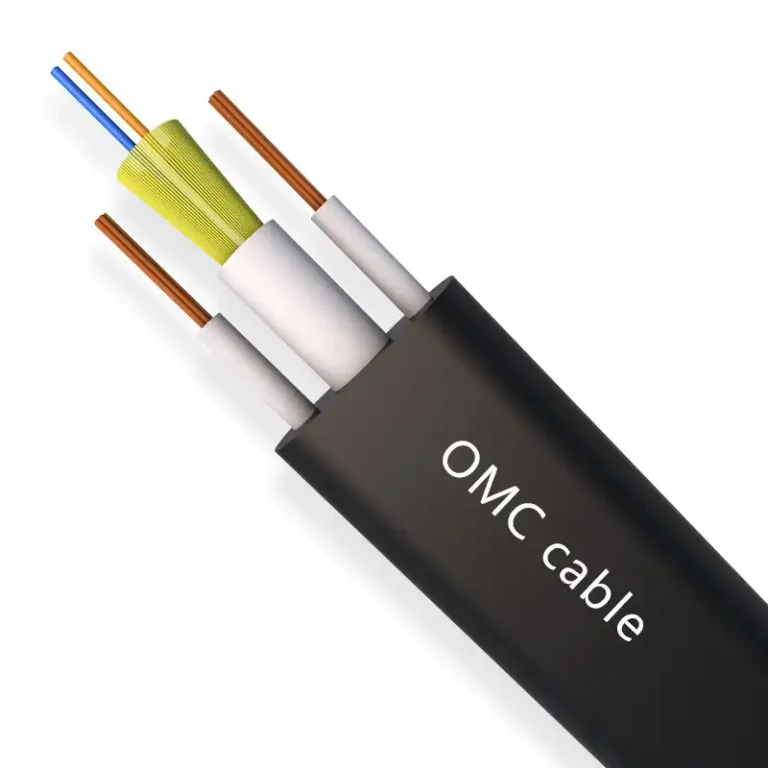
When it comes to real-world implementations, the use of reinforced armor structures has become an essential factor in the effort to avoid risks of failure. For instance, one of the key features of the OMC Armoured shielded cable is its reinforced armored shield, which offers excellent protection against physical damage, rodent attacks, and harsh environmental factors. The armor guarantees the cable’s durability in challenging installations, minimizing the potential for downtime.
- Enhanced Installation Safety
When installing cable, pulling forces and routing difficulties may cause considerable stress to the fiber optic cable. Microfiber cables with armor have enhanced strength, so it is possible to install these cables inside ducts and conduits with minimal disruption to the optical fibers.

Benefit 2: Long-Term Environmental Resistance of Armored Microfiber Cable
- Handling Harsh Environments
Some environmental factors that could hamper the workings of standard fiber cable include moisture, temperature variation, dust, and vibrating conditions. However, armored microfiber cable can support optimal functionality despite environmental factors, due to the protective shield and strong construction it possesses. As such, it can be used in outdoor and underground setups where environmental factors can be unavoidable.
- Shielding from Electromagnetic Interference
Electromagnetic interference (EMI) may be a problem for data transmission in a particular setting. Using an armored microfiber cable with a built-in shielding system will provide an added layer of protection against EMI. This advantageous feature allows the use of the armored microfiber cable in healthcare settings such as hospitals, as well as industries that use electricity.

Benefit 3: Space Efficiency and Flexibility of Armored Microfiber Cable
- High-Density Network and Compact Design
Contemporary networks may demand high cable density in a small physical space. In spite of the robust structure of the cable, the diameter of the armored microfiber cable is comparatively small to efficiently work in ducts and pathways. As a result, cable expansion in the network is possible with minimal changes in the structure.
- Flexibility
Flexibility is an important consideration when routing cables via narrow routes. The armored microfiber cable maintains sufficient bending radius without compromising fiber integrity, allowing it to navigate tight corners and confined spaces.

Benefit 4: Lower Lifecycle Costs with Armored Microfiber Cable
- Increased Energy Savings
Even if the armored microfiber cable is expected to require a comparatively higher start-up cost for installation as compared to other types, its long-term economic advantages are considerable. The increased resilience means that there is less need for repairs and replacement.
- Enhanced Network Availability
In this way, by reducing the chances of failure associated with damage, armored microfiber cable contributes toward minimizing downtime. In the context of mission-critical networks, increased downtime can mean reduced efficiency, thereby emphasizing the cost-effectiveness of armored microfiber cable as an infrastructure solution.

Benefit 5: Stable Signal Performance with Armored Microfiber Cable
- Preservation of Signal Integrity
It is critical for high-speed data transfer that there be a stable level of optical performance. Armored microfiber cable is made for protecting the fiber geometry. It mitigates micro-bending losses and macro-bending losses of signals that may occur within a fiber. These losses may affect optical performance.
In certain technical solutions, the design of low attenuation fibers together with armor can ensure good signal integrity for microfiber cables with armor over long distances. This makes such cables particularly useful for telecommunication backbones, data centers, and business networks requiring guaranteed high-capacity connectivity.
- Support for High-Bandwidth Applications
With ever-escalating bandwidth demands, armored microfiber cable is an ideal foundation for the latest communications solutions. Its resistance to factors that can negatively impact it, such as environmental conditions, makes it highly suitable and future-proof.
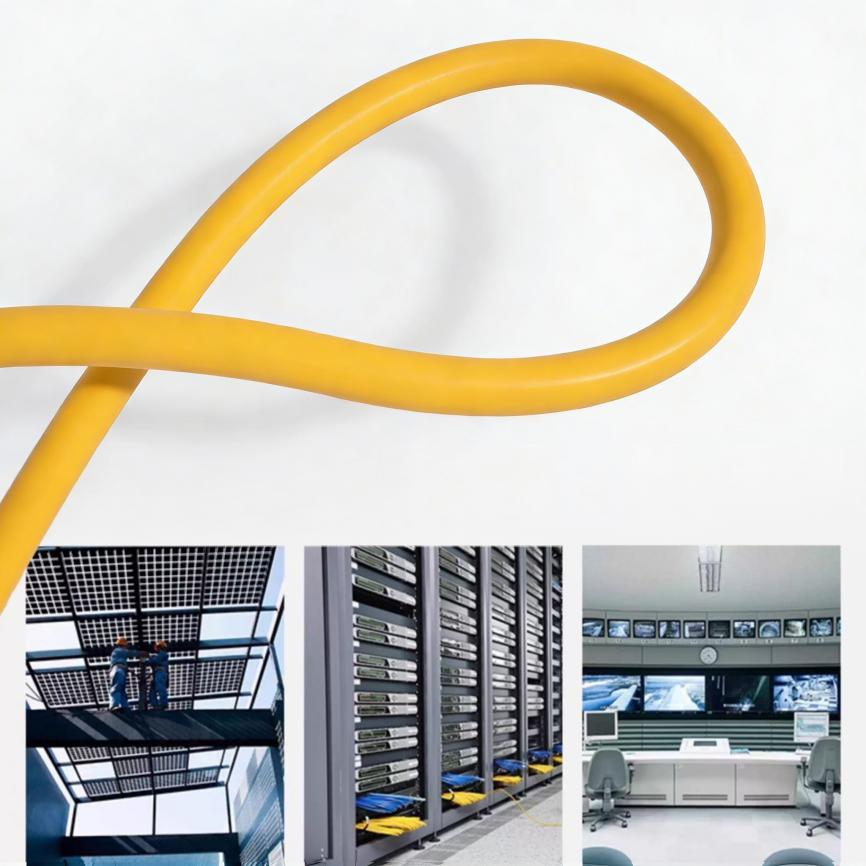
Benefit 6: Versatile Applications Enabled by Armored Microfiber Cables
- Broad Deployment Scenarios
The versatility offered by armored microfiber cables makes it possible for these cables to be applied in a variety of scenarios. The cables work well both inside and outside, including aerial, ADSS, direct burial, and conduit cabling. OMC armored micro duct cable is compatible with both indoor and outdoor installations, making it ideal for use in a wide range of applications. It can be easily installed in aerial, buried, and conduit applications, ensuring long-lasting and high-performance network solutions.
- Compatibility with Contemporary Network Architectures
ARMED microfiber cables are compatible and perfectly-integrated into the latest network topologies, including Fiber-To-The-Home (FTTH), Fiber-To-The-Building (FTTB), and private industrial networks. These cables are resistant to corrosion and can easily meet the connectivity needs of the present and the future.
Conclusion
The increasing complexity of modern communication networks places higher demands on fiber optic solutions, requiring both high performance and high reliability. Armored microfiber cables, with their compact, highly protective, robust, and stable design, can meet these demands. OMC armored microfiber cables exemplify these advantages, combining micro-tube technology with enhanced armor to provide reliable high-speed connectivity in various environments. Choosing our armored micro fiber optic cables means investing in a future-proof network infrastructure and creating a durable environment. Please contact us for more information.