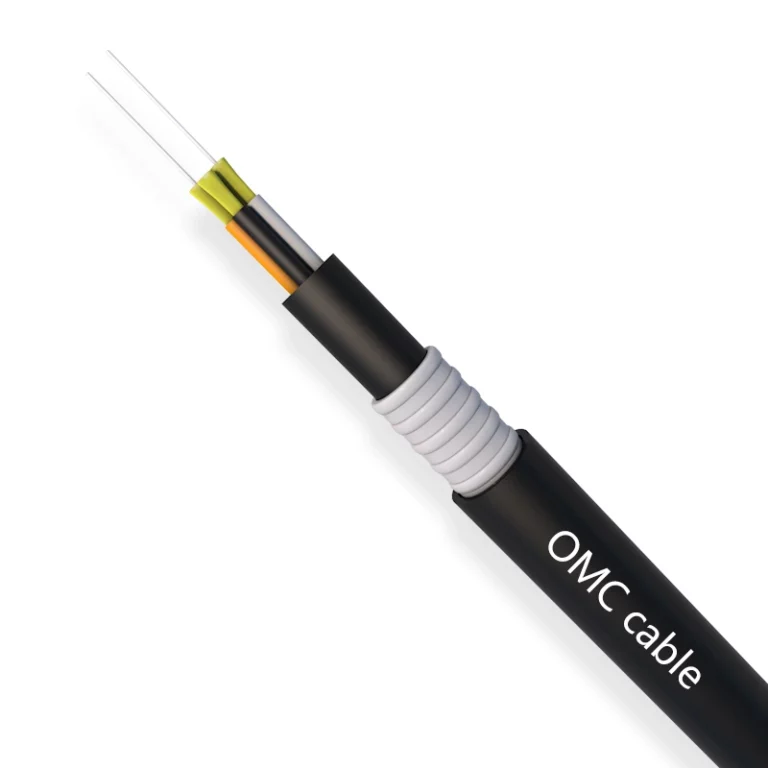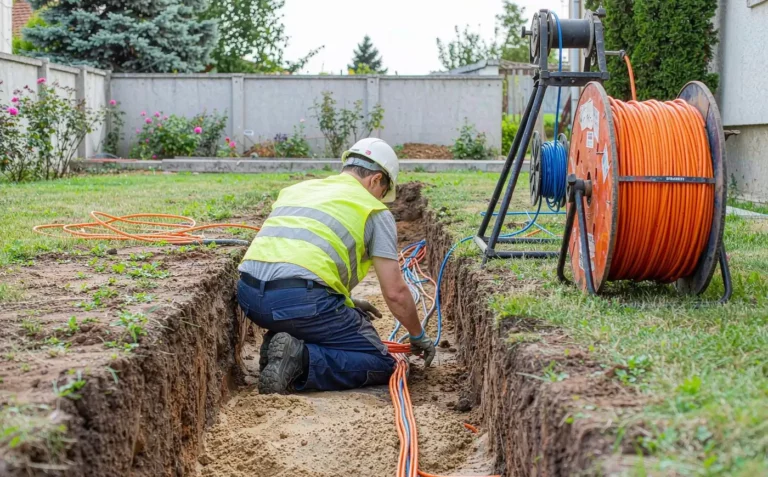








Telecommunication lines and factory networks are not usually set up in pristine, air-conditioned server rooms. Rather, cables may be buried underground, laid across rocky ditches, or suspended on cellular towers where unstable ground, equipment, and rodents compromise the strength of the signal. Conventional cables that do not have any protective coverings cannot stand up to these environments. To ensure protection against the harshness of the physical world without compromising the speed of transmission, engineers employ steel tape armored cable.
1. What Is the Structure of Steel Tape Armored Cable?
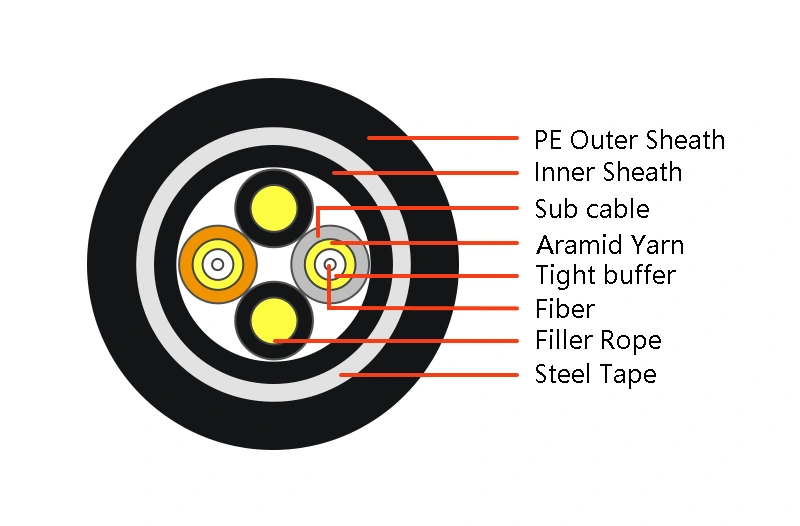
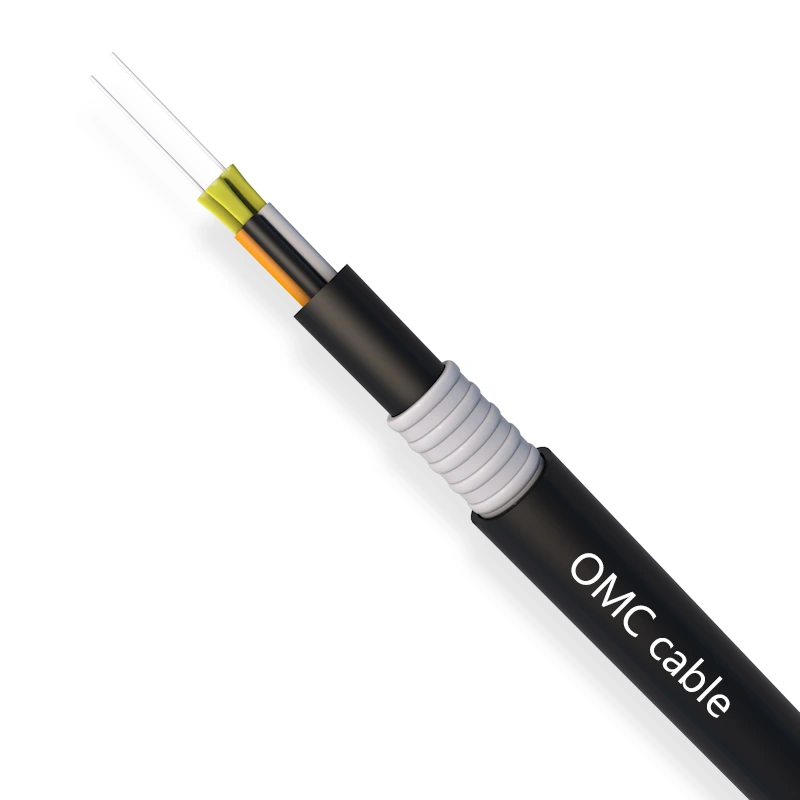
An armored cable can be recognized visually as a large black pipe. However, cutting such cable opens up the view of a precisely designed structure of the cable’s multiple layers. An armored steel tape cable, for instance, does not depend only on one thick wall for protection, but uses various layers as zones to carry environmental and mechanical loads.
Cable Core and Optical Buffer
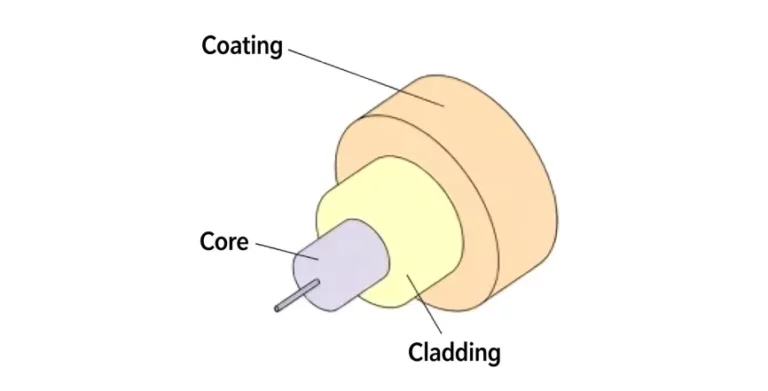
In the middle of the steel tape armored cable, there is the transmitting medium itself—either single-mode (like G.652D) or multi-mode optical fibers with a diameter of 250 micrometers. Glass fibers break quickly under high pressure and sharp bends, so it is necessary to encapsulate them within loose buffer tubes. They are filled with thixotropic water-blocking gel that keeps fibers in a neutral stress condition, protects fibers from micro-vibrations, and prevents moisture penetration into the cable in case of any outer jacket damage.
Central Strength Member and Inner Sheath
Outside the buffer tube, there is the central strength member, usually made of FRP or stranded steel wire, which prevents cable stretching during installation pulling. Outside the core, there is a layer of inner sheath made of PE or PVC, which plays two important roles—it provides a primary water barrier and forms the smooth cylindrical surface to ensure a constant shape of the cable when wrapping it with steel armor.
2. Materials and Functions of Each Layer in Steel Tape Armored Cable
Every material inside an armored cable is selected for a specific physical or chemical property. Changing the thickness of a polymer or the coating on a metal strip alters how the cable behaves underground or on a tower. The table below breaks down the standard architecture of a modern steel tape armored cable, detailing the materials, typical dimensions, and functional roles of each layer.
| Cable Layer | Primary Materials | Typical Specifications | Core Engineering Function |
| Optical Core | High-purity silica glass | 250 μm / 900 μm diameter | Transmits high-bandwidth optical signals with low attenuation. |
| Buffer Tube & Gel | PBT (Polybutylene Terephthalate) & hydrophobic gel | 0.3 mm – 0.5 mm wall thickness | Isolates fibers from mechanical stress and stops longitudinal water ingress. |
| Inner Sheath | MDPE, HDPE, or flame-retardant PVC | 1.0 mm – 1.5 mm thickness | Provides electrical insulation, moisture sealing, and armor bedding. |
| Armored Layer | Copolymer-coated corrugated steel tape (PSP) | 0.15 mm – 0.40 mm thickness | Delivers crush resistance, impact protection, and a rodent-proof barrier. |
| Outer Jacket | UV-stabilized black HDPE or LSZH | 1.5 mm – 2.2 mm thickness | Shields against ultraviolet radiation, soil chemicals, and abrasion. |
Steel Tape Armored Cable
Bare steel isn’t utilized by manufacturers since it corrodes quickly when exposed to groundwater. Thus, for a high-quality steel tape armored cable, electrolytic chrome-coated steel (ECCS) or galvanized steel tapes covered with a very thin film of ethylene copolymer on both sides are used. Under heat generated in the extrusion process of the outer sheath, the copolymer melts and adheres to the outer polyethylene layer.
Weatherproofing of the Outer Jacket
The outermost layer takes most of the environmental stress. For outdoor aerial and direct burial installations, black High-Density Polyethylene (HDPE) is always used. The HDPE jacket is composed of 2.0% to 2.6% carbon black to be resistant to UV exposure and to work at operating temperatures from -40°C to +70°C. In case the cable is used indoors and there is a need for fire protection, LSZH compound substitutes polyethylene.
3. How Does the Steel Tape Armor Layer Function?
Understanding how the steel tape armored cable manages to work in extreme conditions comes down to structural mechanics.
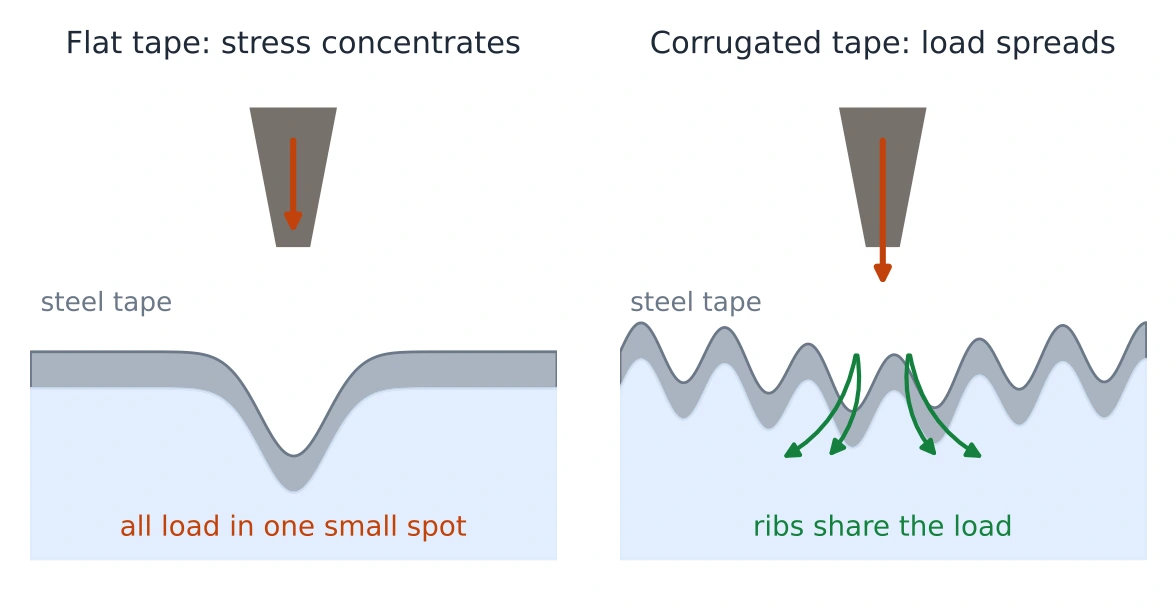
Typically, all armored cables have corrugated steel tape and not flat ones. These tiny waves can be viewed as structural ribs that help to distribute heavy point loads into a broader area in case the cable is pressed due to the movement of an excavator or shifting rocks.
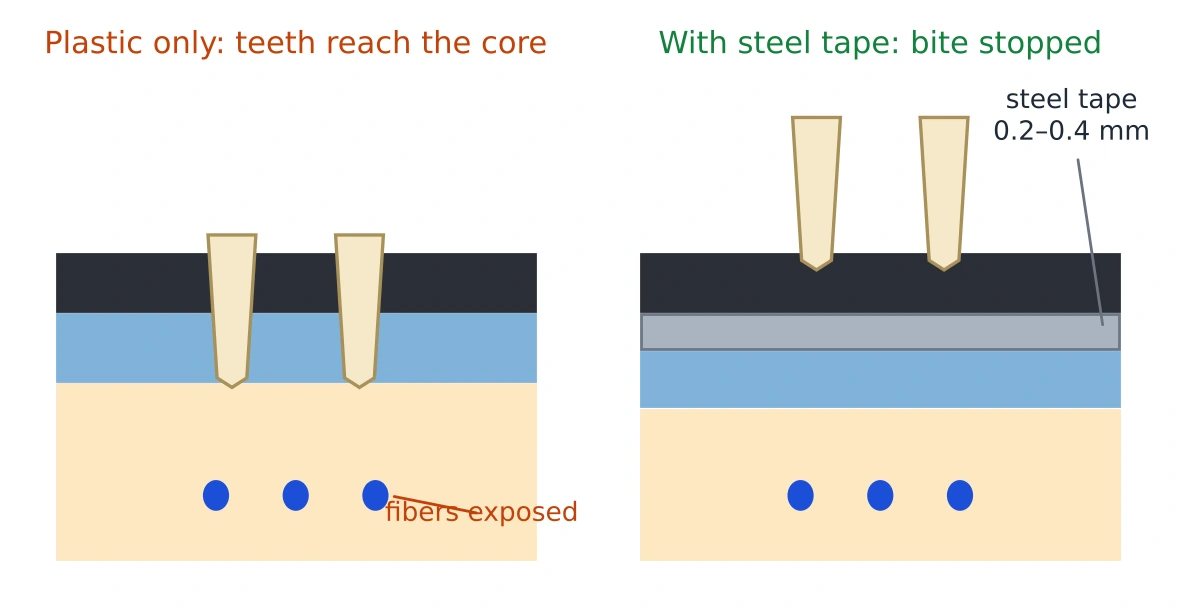
All rodents, including gophers, rats, and squirrels, love chewing on plastic conduits as it allows them to wear down their teeth. As the metal tape layer of a cable is very thick—from 0.2 mm to 0.4 mm—it cannot be bitten by rodents and protects the optical fiber core.
The steel tape during production is formed longitudinally around the inner sheath with an overlap of at least 3 mm to 5 mm in width, depending on the diameter of the cable. It ensures that there will be no gaps even while the cable is curved around tight corners. In addition, the metallic layer serves as an extra EMI shield when the cable is located close to high-voltage power lines.
According to IEC 60794-1-2 mechanical tests, the properly constructed steel tape armored cable withstands crushing loads from 1,000 N/100mm to 3,000 N/100mm without any spikes of optical attenuation.
Conclusion
The choice of the infrastructure of your network determines whether its operation is guaranteed for twenty years or you will need expensive excavation in case of any troubles in one winter. Due to the water-blocking optical core, the copolymer-coated metallic layer, and the UV resistance of the outer jacket, the steel tape armored cable gives unrivaled mechanical resistance to underground trenches, industrial sites, and wireless tower backhaul.
We at omccable specialize in manufacturing robust fiber optic and communication cables to comply with all the strict international requirements for durability. If you want to order a direct burial backbone or upgrade your base station links using steel tape armored cables, our technical team is ready to provide you with assistance with specifications, testing, and production. Please do not hesitate to contact us at omccable whenever you have any questions regarding the cables!