


Data Center Interconnect Optical Cables can be divided into many types, each type being used for its own transmission distances and network topology, as well as for particular installation purposes. There are single-mode and multimode optical cables, which differ from each other in their optical transmission characteristics, and also ribbon, trunk, breakout, and armored cables, which are structurally different.
1. What Is a Data Center Interconnect Optical Cable?
Definition and Basic Working Principles
The Data Center Interconnect Optical Cable is an optical fiber cable for creating high-speed optical connections between networking devices, data centers, or even between various areas in data centers’ infrastructures. It transmits data by light instead of electricity; therefore, it offers high bandwidth and low signal loss within the appropriate distance.
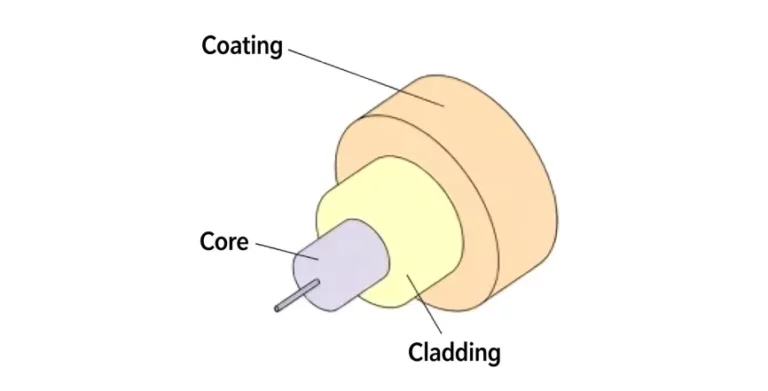
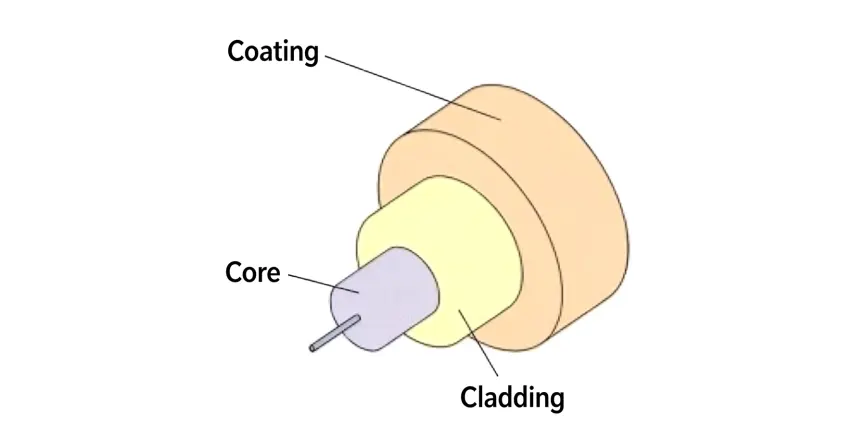
An optical fiber normally includes three major parts:
- Core: This is the central part where light travels.
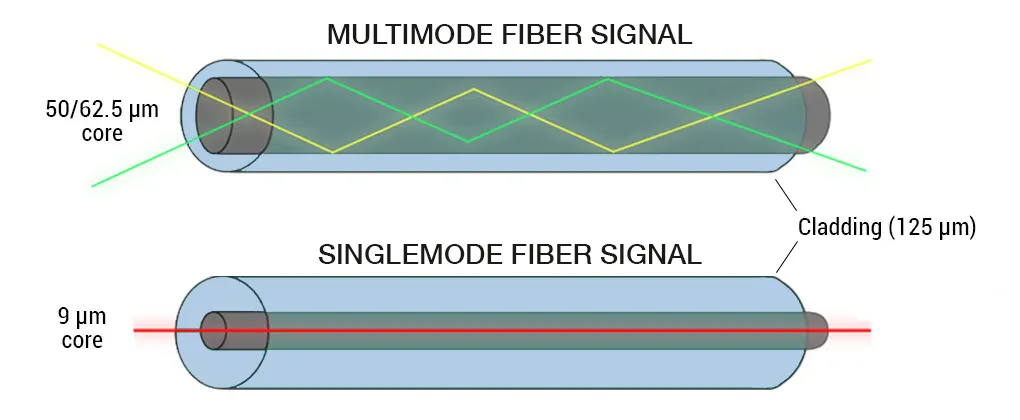
- Cladding: It surrounds the core and confines light within using total internal reflection.
- Coating: It protects the glass fiber from water, scratches, and small damage.
Optical transceivers translate electrical data into optical signals on the transmitter side and optical data into electrical data on the receiving side. The data rate can vary based on the type of transceiver, the fiber, and the connection design, including 10G, 25G, 100G, 400G, and 800G.
Common Applications in Data Center Networks
The Data Center Interconnect Optical Cable is suitable for use in multiple networking scenarios, such as:
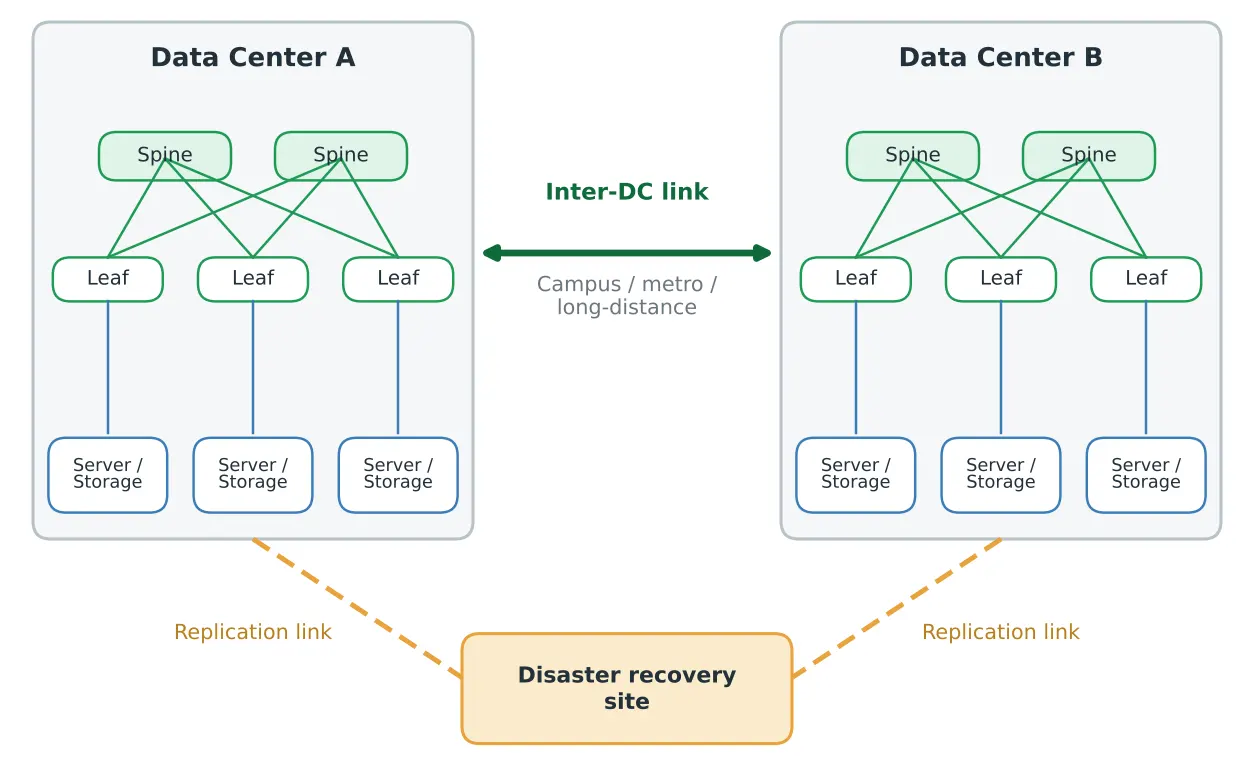
- Links between data centers: Connects different facilities within campus, metropolitan, or long-distance networks.
- Links between switches: Connects leaf, spine, and core switches within a data center facility.
- Server/storage link: Supplies optical links between servers and storage to provide high-performance computing.
- Disaster recovery network: Links between primary and disaster recovery facilities.
2. What Are the Main Types of Data Center Interconnect Optical Cable?
Classification of the Data Center Interconnect Optical Cable is based on either its fiber transmission type or physical structure. However, these two classifications are not mutually exclusive, and a trunk cable may have single-mode fibers, multimode fibers, or ribbon fiber assemblies.
Single-Mode Fiber Optic Cables
Single-mode fibers (SMF) have small cores that are usually 9 microns, hence permitting light to propagate mostly through a single propagation mode. Such an arrangement minimizes modal dispersion, thus increasing the transmission distance compared to multimode fibers.
Single-mode fiber optic cables are mostly used to provide interconnections between various data centers, especially in campus and metropolitan networks. Typical examples of these include optical cables with 100G, 400G, and 800G capacities based on chosen transceiver and transmission technologies.
Multimode Fiber Optic Cables
Multimode optical fiber usually has a core size of either 50 μm or 62.5 μm. The wide core size of multimode fiber accommodates many modes of light propagation, thus making it appropriate for indoor use in buildings and data centers. Examples of multimode fibers include OM3, OM4, and OM5. Some of their typical effective modal bandwidths at 850 nm are:
| Fiber Grade | Effective Modal Bandwidth |
| OM3 | 2,000 MHz·km |
| OM4 | 4,700 MHz·km |
| OM5 | 4,700 MHz·km |
In comparison to OM3, OM4 and OM5 have high bandwidth capacity. Nevertheless, the actual link distance depends on the transceiver standards, the rate of data transmission, and the optical budget. Multimode fiber is primarily used for short-reach applications rather than long-distance inter-data-center links.
Ribbon Fiber Optic Cables
Ribbon fiber optic cables bundle several optical fibers in parallel, normally bonding them together in a flat ribbon form. The typical configuration includes 12-fiber ribbons, although higher fiber counts can be made by putting several ribbons together in one cable. Mass fusion splicing is possible through such a configuration, where several fibers can be spliced at once as opposed to splicing one at a time.
Trunk Fiber Optic Cables
Trunk Cables have several pre-terminated fibers or fiber assemblies within one cable assembly. The Trunk Cables can often have MPO/MTP Connectors that provide the capability to connect several optical channels via one connector interface.
Examples of trunk configurations include an 8-fiber assembly, a 12-fiber assembly, a 16-fiber assembly, and a 24-fiber assembly. One example of a trunk cable application is the Data Center Interconnect Optical Cable.
Breakout Fiber Optic Cables
Multi-fiber breakout optical cables have many individual fiber cables in a single cable design. Each fiber is capable of being plugged into separate pieces of equipment; therefore, these types of cables are ideal for data center applications.
Managing multiple individual fiber connections can increase cable routing complexity. OMC’s 4F Unit-tube Break-out FO Cable is a suitable option. It features four 2.0 mm sub-cables, a central FRP strength member, and aramid yarn reinforcement. Single-mode and multimode options are available to meet different network requirements.
Armored Fiber Optic Cables
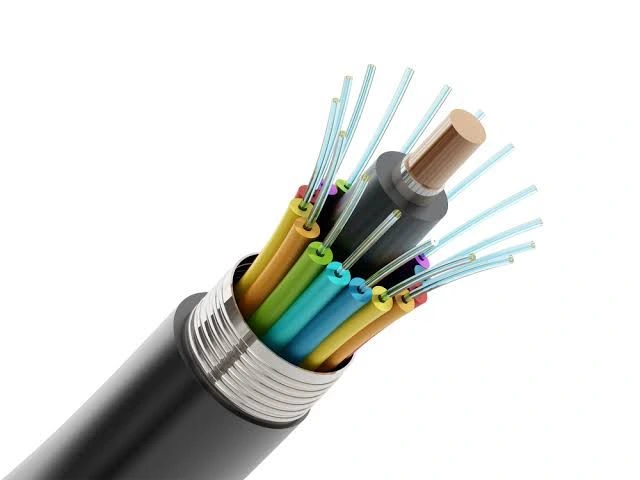
The armored fiber optic cables are built with additional mechanical strength by using metal or non-metal reinforcement. They are intended to increase their strength against crushing, abrasion, and other mechanical stresses.
They are suitable for use in mechanically hostile environments such as industrial plants, outdoor routes, and some types of interbuilding runs. The choice of armor depends on the environment of installation and the grounding requirement.
Comparison of Common Optical Cable Types
| Cable Type | Main Characteristic | Typical Application |
| Single-mode | Long-distance transmission | Inter-building and metropolitan links |
| Multimode | Short-reach transmission | Intra-data-center connections |
| Ribbon | Multiple fibers arranged in flat groups | High-count backbone routes |
| Trunk | High fiber count with centralized connectivity | Switches and distribution panels |
| Breakout | Multiple individual connector branches | MPO-to-LC equipment connections |
| Armored | Enhanced mechanical protection | Physically demanding cable routes |
In choosing a Data Center Interconnect Optical Cable, network designers need to take into account the factors of transmission and physical properties. This is because the fiber mode will affect optical transmission, while the cable type will affect installation, connection, and safety.
3. How Does Data Center Interconnect Optical Cable Support High-Density Network Deployment?
With an increase in the capacity of the data center, the network providers have to support an increasing number of optical connections without allowing cable congestion to hinder the airflow, maintenance, and access to the equipment.
Reducing Cable Congestion in Data Center Racks
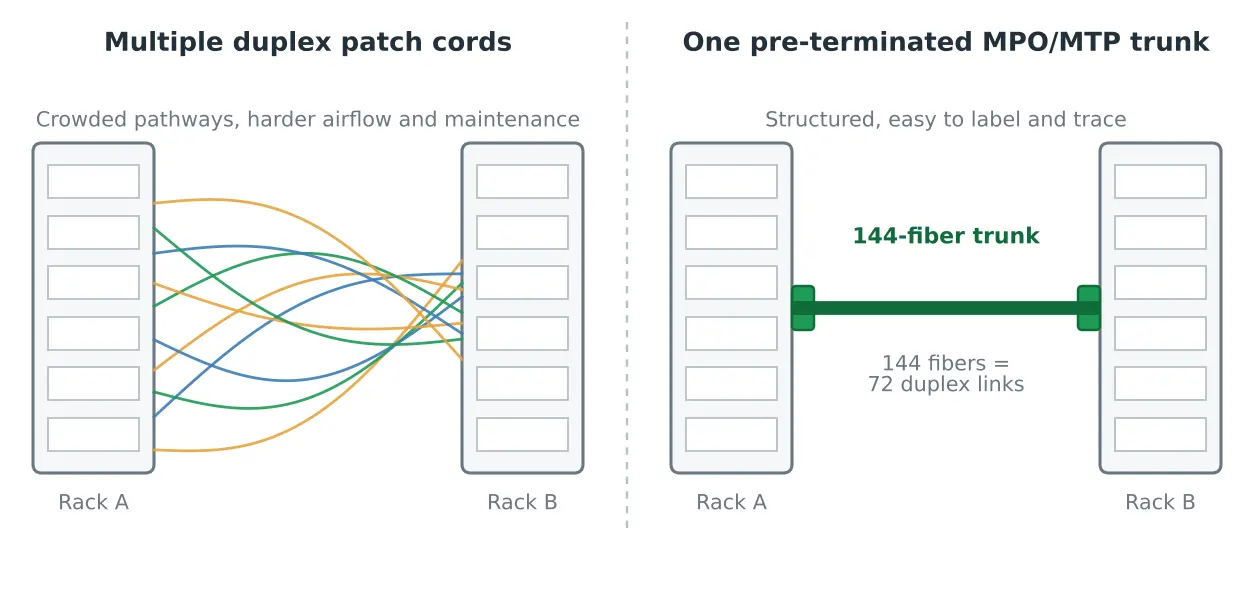
The high-density racks may have hundreds of optical fiber connectors to the switches, servers, and patch panels. In addition, the use of high-fiber-count assemblies can cut down on the total number of individual cabling runs.
For instance, the 144-fiber trunk assembly can combine several connections using a single structured cabling route. It is more organized compared to having multiple individual duplex patch cords in the infrastructure.
Using MPO/MTP Trunk Cables for Structured Cabling
The MPO/MTP trunk cable can offer a parallel connection using multi-fiber connectors. They are commonly found in structured cabling solutions where an optical distribution frame, patch panels, and network switches are connected.
Typical configurations include:
- 12-fiber MPO/MTP: Common in parallel optical connections and structured cabling.
- 16-fiber MPO/MTP: Offers a higher-density interface based on a 16-fiber connection.
- 24-fiber MPO/MTP: Offers additional fiber capability in suitable backbones and distributions.
It is important to check the connector polarity, keying, insertion loss, and fiber mapping before installation. A polarity mismatch will cause alignment problems with TX and RX channels.
Improving Cable Management and Future Network Scalability
Optical networks have to be designed in such a way that they enable technicians to make additions, changes, and perform maintenance on connections without affecting other connections.
Several practices can improve long-term scalability:
- Use standardized cable lengths: Reduce excess slack and unnecessary routing complexity.
- Maintain proper bend radius: Avoid sharp bends that can increase optical attenuation or damage fibers.
- Label both ends: Make individual links easier to identify during troubleshooting.
- Separate cable pathways: Organize fiber routes to improve accessibility and reduce accidental damage.
- Plan for additional capacity: Reserve sufficient rack space, ports, and cable pathways for future upgrades.
Selecting an appropriate Data Center Interconnect Optical Cable from the beginning makes unnecessary recabling much less likely when expanding bandwidth and connection density.
4. Conclusion
Several types of Data Center Interconnect Optical Cables have varied uses within the data center network environment. These include single-mode and multi-mode cables for use over different distances, ribbon cables, trunk cables, breakout cables, and armored cables.
OMC provides Data Center Interconnect Optical Cable solutions for various network configurations. For questions about fiber types, connectors, or custom assemblies, feel free to contact OMC for assistance.