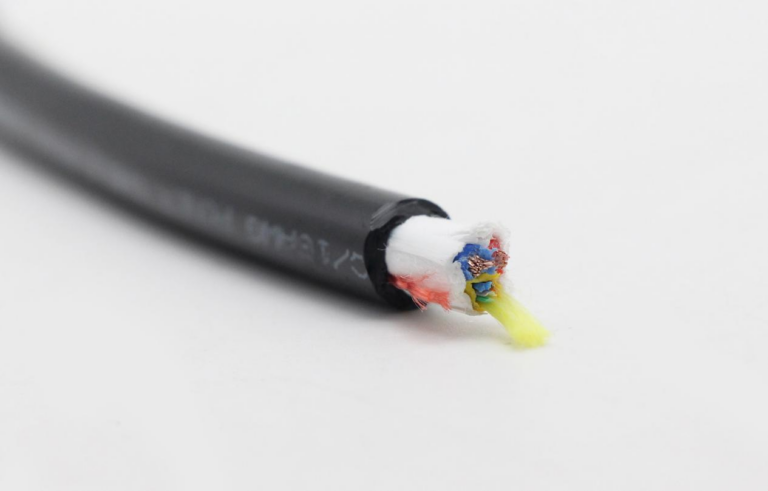








In modern industrial and automation systems, cable efficiency and reliability play a vital role. Hybrid cable assemblies combine various transmission capabilities into one string, while compound lines combine power and communication lines in a simple structure.
By studying and learning more about mongrel and compound lines, engineers and system designers can make better decisions for their respective operations.

What Are Hybrid Cable Assemblies?
Hybrid cable assemblies are special lines designed for combining power, signal, and control lines into one defensive jacket. This is to simplify and integrate various lines into one for easier transmission and reduce individual lines for better reliability.
(1) Components
- Copper Conductors – Efficient power transmission.
- Signal Wires – Signal lines can carry control and data signals.
- Protective Sheath – Mechanical and environmental protection.
- Optional Shielding – Reduces EMI and preserves signal quality.
- Optional Fiber Optic Lines – High-speed data transmission.
(2) Advantages
- Combines multiple functions, saving space.
- Simplifies installation, reducing labor and errors.
- High reliability with integrated shielding.
What are Composite Cables?
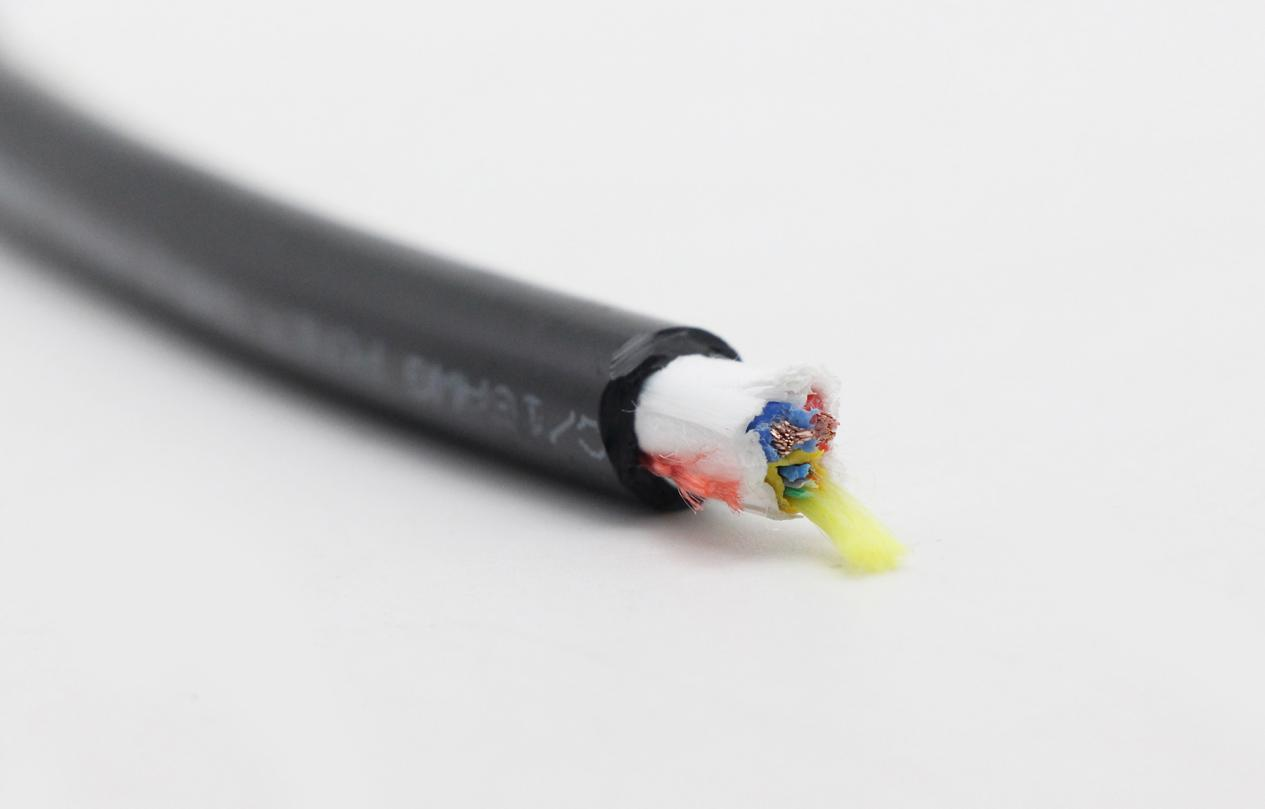
Composite cables combine power and communication lines but with a simpler design. They are suitable for cost-sensitive projects or systems with basic power and data needs.
(1) Components
- Copper Conductors – Efficient power transmission.
- Signal Wires – Signal lines can carry control and data signals.
- Protective Sheath – Basic mechanical protection.
- Optional Shielding – Minimal EMI protection as needed.
(2) Advantages
- Cost-effective due to simple design.
- Easy to install and route.
- Lightweight, easyhandling and installation.
Hybrid Cable Assemblies vs. Composite Cables
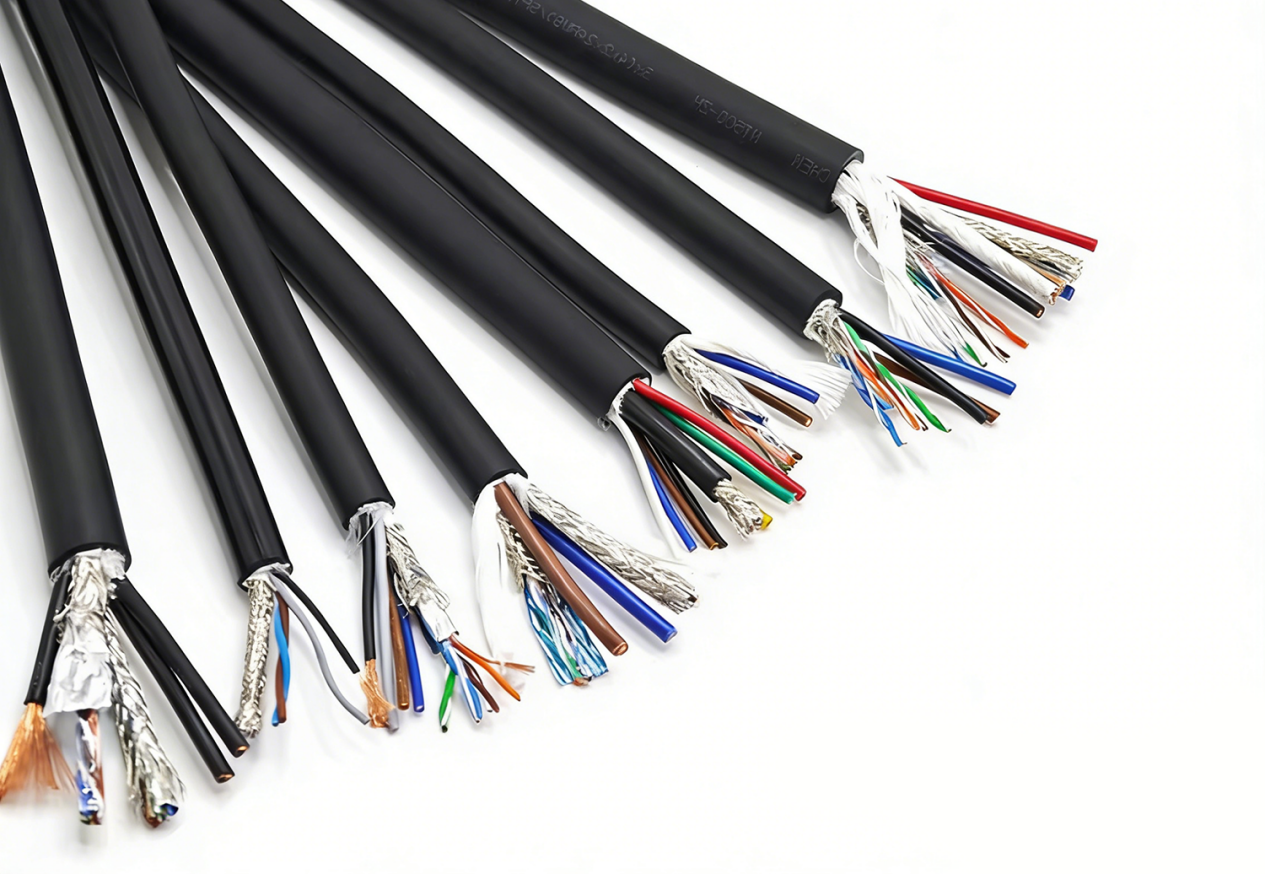
- Integration Concept: The concept of hybrid cable assembliesis to integrate power, signal, and control into a single cable, whereas composite cables mainly bundle similar types of lines without advanced functional integration.
- Design Philosophy: The philosophy of hybrid cable assemblies is reliability and routing in a small space using integrated shielding and multifunction support, while composite cables are for cost-effectiveness and ease of installation.、
- Target Use: The target use of hybrid cables is complex applications, while composite cables are for low-complexity applications.
Key Performance Comparison of Hybrid and Composite Cables
| Performance / Feature | Hybrid Cable Assemblies | Composite Cables |
| Conductors | Copper + optional fiber optic | Copper or Aluminum |
| Power & Signal Capacity | High – supports multiple functions | Moderate – mainly power + signal |
| Shielding | Integrated EMI protection | Optional/minimal shielding |
| Flexibility & Installation | Less flexible, careful routing needed | Lightweight, easy to install |
| Cost | Higher due to integration | Lower |
Application Scenarios of Hybrid Cable Assemblies and Composite Cables
(1) Fiber Optic Communication Systems
In fiber optic communication systems, hybrid cable assemblies can be applied to combine optical fibers with power or control wires to facilitate data communication and power supply at the same time. Composite cables are usually adopted to combine multiple optical fibers to realize standard data transmission in communication systems.
(2) Data Centers and Network Devices
In terms of data center construction, hybrid cable assemblies can be applied to support fiber communication and power supply at the same time. Composite cables usually adopt multiple optical fibers to establish stable data channels among servers and switches.
(3) Intelligent Monitoring and Control Systems
In terms of intelligent monitoring and control systems, hybrid cable assemblies can be applied to realize fiber communication and power supply at the same time to improve system construction efficiency. Composite cables usually adopt multiple optical fibers to realize multi-channel optical signal transmission.
How to Choose Between Hybrid Cable Assemblies and Composite Cables
(1) Consider the Complexity of the System
- Hybrid cable assembliesare more commonly used for their multiple functions integrated into the system.
- In less complicated systems with low-voltage signals and/or power cables, composite cables are used.
(2) Evaluate Space and Installation Requirements
- To reduce cable clutter and ease cable routing, hybrid cable assembliesare used; however, they may require more careful installation planning because they are less flexible.
- In composite cables, each cable is more flexible and can be more space-intensive for more complicated systems.
(3) Check the Transmission Requirements
- In hybrid cable assemblies, simultaneous power, signal, and control line transmissions are possible, providing more reliable performance for critical applications.
- In composite cables, best suited for single-function or low-demand transmissions.
Conclusion
To briefly summarize, hybrid cable assemblies and composite cables have varying functions depending on system complexity, functionality, and requirements.
For engineers and designers who require efficient, multi-functional, and reliable cable systems, choosing to work with a reliable cable assembly provider like OMC ensures quality hybrid cable assemblies and technical support to obtain optimum system performance.