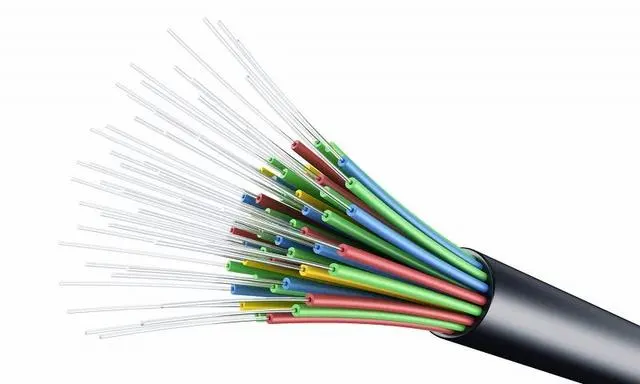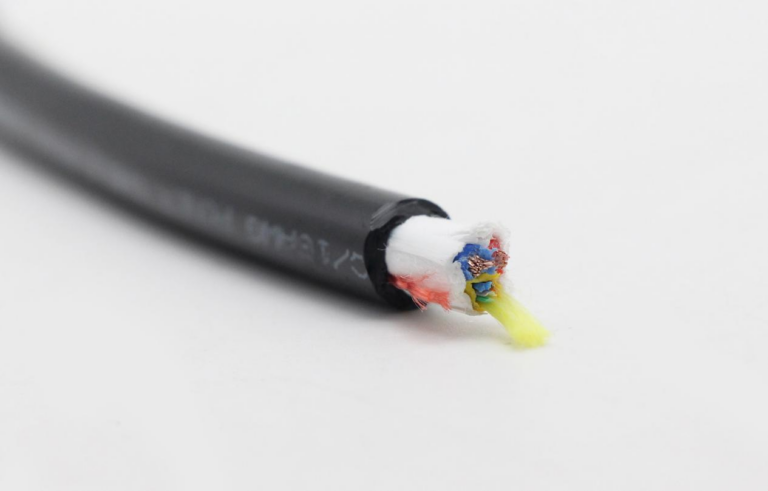








Flat drop cable is considered a significant solution for Fiber to the Home (FTTH) networks in today’s fiber optic networks. Whether for residential internet, enterprise fiber connections, or data transmission systems, flat fiber optic cable is widely used due to its efficiency, durability, and ease of installation.
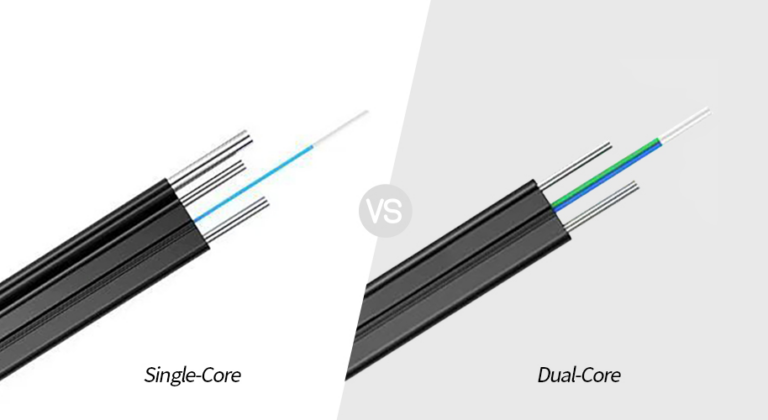
The most common types of flat drop cables are single-core and dual-core. The differences between these types of flat fiber optic cable are discussed in this article, and you may find this information useful for choosing the most appropriate flat fiber optic cable.
1. What is an FTTH Flat Drop Cable?
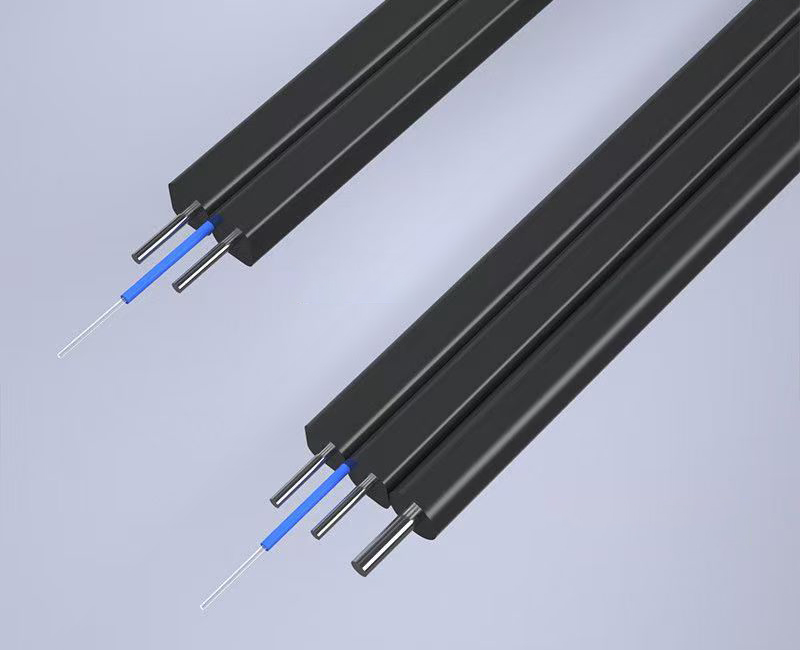
FTTH Flat drop cable, as a type of fiber optic cable, features a flat structure and is typically applied for fiber optic connections between a distribution network and a user. The flat structure of the flat drop cable allows for easier installation of this type of fiber optic cable in narrow spaces.
Additionally, flat fiber optic cable features several advantages, including:
- High tensile and crush resistance
- High water resistance makes this type of fiber optic cable appropriate for outdoor installations
- Suitable for both indoor and outdoor use
- Easy installation, saving labor costs
2. Differences Between Single-Core and Dual-Core Flat Drop Cables
Both types of flat drop cables are considered efficient and reliable. However, there are specific differences between these types of flat drop cables.
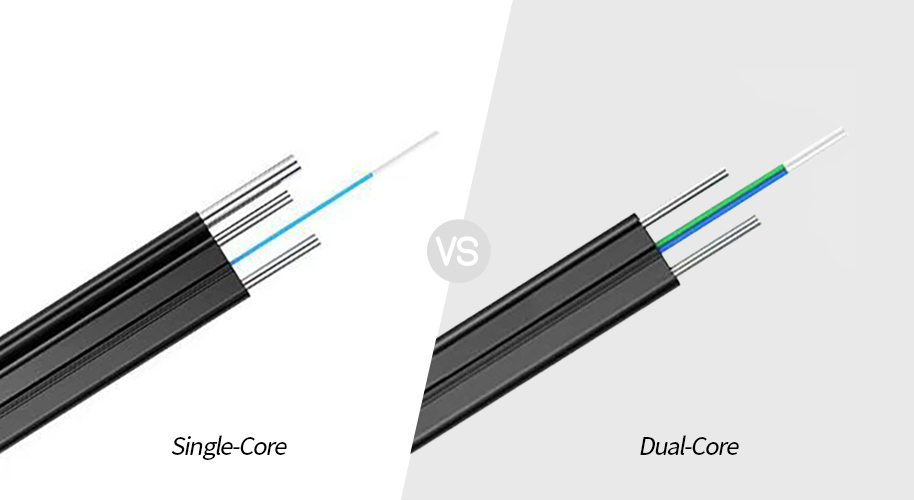
1. Single-Core Flat Drop Cables
A single-core flat fiber optic cable features a single fiber optic wire and may be applied for one-way transmission. The most common applications of this type of flat fiber optic cable are residential FTTH networks. The most important features of a single-core flat fiber optic cable are:
- Lower cost: Simple structure makes it more cost-effective
- Easy installation: Fewer fibers make it simpler to install
- Ideal for point-to-point connections: Suitable for home fiber access connections
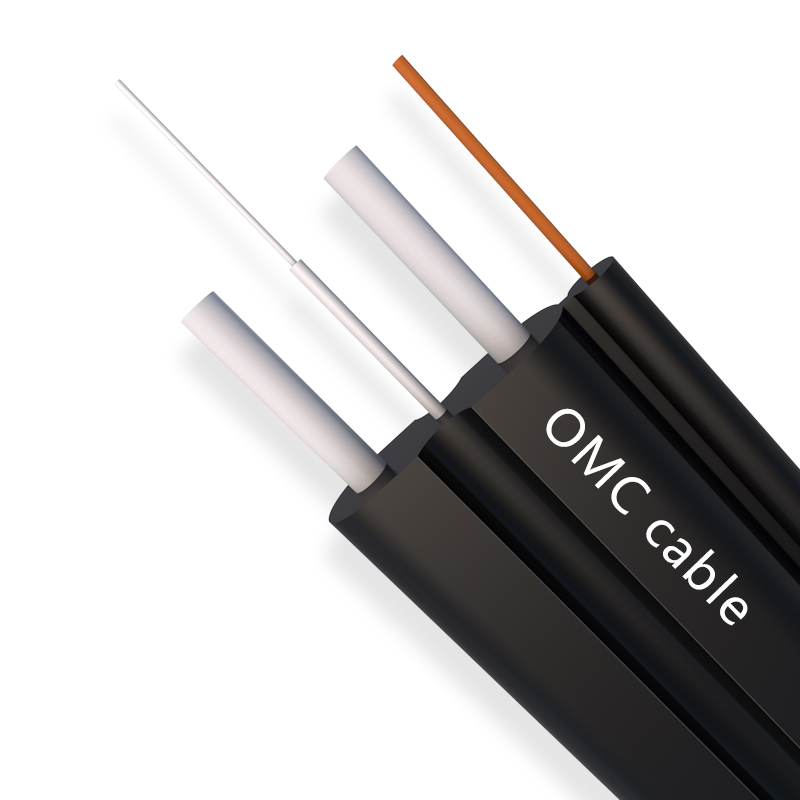
For example, OMC’s 1F Toneable Flat Drop Cable is a standard single-core flat drop cable that is generally used in residential or commercial network environments. The advantages include:
- Efficient single-core construction: Suitable for FTTH point-to-point connections
- High-strength construction: Dual FRP components ensure high tensile and crush resistance
- Detectable and easy to install: Copper wire is used for ease of location and stripping
- Durable and reliable: PE jacket with dry water-blocking technology
2. Dual-Core Flat Drop Cable
This type of flat drop cable contains two optical fibers. Therefore, it is used for bidirectional transmission or redundancy. This type of flat drop cable is generally used in enterprise environments, campuses, or data centers.
The features of the dual-core flat fiber optic cable include:
- Bidirectional transmission: Improves communication efficiency
- Redundancy support: Improves communication reliability
- Higher bandwidth capability: Suitable for high-speed data transmission
3. Comparison Table
|
Feature |
Single-Core Flat Drop Cable | Dual-Core Flat Drop Cable |
|
Fiber Count |
1 | 2 |
|
Transmission |
One-way | Bidirectional |
| Cost | Lower |
Higher |
|
Bandwidth & Speed |
Lower |
Higher |
|
Redundancy |
None | Available |
| Installation Complexity | Simple |
Moderate |
| Application Scenario | Small home or office networks |
Enterprise or data center networks |
| Typical Use Cases | FTTH access, home broadband, small shops, temporary wiring |
Enterprise leased lines, campus networks, data center interconnection, high-reliability systems |
3. How to Choose the Right Flat Drop Cable
The selection of the right flat drop cable is greatly influenced by the environment in which it is going to be used, the data transmission needs, and the budget.
1. Installation Environment
- For outdoor installations: A flat fiber optic cable with better protection, such as tensile strength and water resistance
- For indoor installations: Either a single-core or double-core flat fiber optic cable
2. Data Transmission Needs
- For general data transmission, A single-core flat drop cable is enough for FTTH and small-scale data transmission
- For data transmission with high demand, A double-core flat drop cable is better for data transmission and provides stable communication
3. Budget Considerations
- For installations with low budgets: A single-core flat fiber optic cable
- For installations with higher budgets: A double-core flat fiber optic cable
4. FAQ
Q1: Is it possible to utilize the flat drop cable for both indoor and outdoor applications?
Most flat drop cable products are suitable for indoor and outdoor applications. The cables are usually provided with an outer jacket that can be used in outdoor applications and a buffer fiber that can be used in indoor applications.
Q2: Is it possible to utilize the single-core flat drop cable for home internet access?
Yes, it is possible to utilize the single-core flat fiber optic cable for home internet access. The cable provides the required stability for home internet access. The cable is also cost-effective.
Q3: When should I utilize the dual-core flat drop cable?
The dual-core flat fiber optic cable should be utilized in scenarios that demand more bandwidth. The cable is highly suitable for business needs.
5. Conclusion
When it comes to choosing the right flat drop cable, there is no general answer. The right one for your needs will depend on your application and needs. For instance, the single-core flat fiber optic cable is the right one for residential and small-scale applications. However, the dual-core flat fiber optic cable is the right one for enterprise-level applications.
Regardless of the one you choose, the quality of the cable should be your top priority. For instance, the high-quality cable provided by OMC’s production is the right one for creating the right and stable fiber optic network.